
Never miss whisky news, reviews, and new releases again.
Add Whisky Monkeys as a Google favoriteThe history of Scotch whisky is one of smuggling, illicit stills, and fierce clashes with the authorities. In the Highlands especially, enforcement was nearly impossible, allowing thousands of distillers to operate outside the law for years. The turning point came with new tax legislation in the nineteenth century. One distillery played a starring role: Glenlivet. Did you know it was the first legal distillery?
Illegal whisky production gets out of hand
To put an end to the chaos surrounding illegal whisky production and smuggling, Scotland introduced a range of tax measures. Customs officers faced an almost impossible task tracking down more than 10,000 illicit stills scattered across the rugged Highlands.
In 1784, the Wash Act influenced production methods but also drew a line between the Highlands and Lowlands. The Lowlands were easier to police, so illegal production continued to flourish in the wild Highlands.
Read also
The law that changed everything
On July 18, 1823, the Excise Act was passed. better known as the 1824 Excise Act, setting a fundamental transformation of the Scotch whisky world in motion.
The first distillery to obtain an official license was Glenlivet. Its founder, George Smith, collected his license in Elgin, which did not endear him to the illicit distillers.
The threats never stopped, as he could now legally bring his whisky to market. And Glenlivet’s spirit was of such high quality that demand kept climbing.
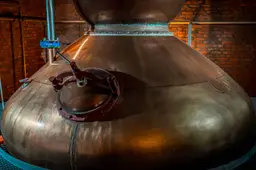
Smith used pure water, large lamp-shaped stills, and new American oak casks, resulting in a soft, fruity whisky: worlds apart from the rough, fiery spirit often produced by illegal distillers.
Read also
Defending his distillery with pistols
George Smith had to defend his distillery with real grit and armed guards. He took his own safety into his own hands, openly carrying two pistols—and he wasn’t afraid to use them. In time, many other distilleries also went legal and often adopted “Glenlivet” in their branding, which certainly boosted their popularity.
When George Smith died in 1871, his son John Gordon Smith took over and, with his legal background, ensured that in 1884 the brand name “The Glenlivet” was reserved exclusively for them. Other distilleries were allowed to add “Glenlivet” only after their own brand name.
This flagship, The Glenlivet, stands shoulder to shoulder with Glenfiddich and Macallan at the very top of the league of distilleries producing between 10 and 20 million liters per year. Just look at the current label—“The Glenlivet” and “1824” leave no room for doubt!
| Whisky Deals from Whisky Exchange | Week 33 |
| Glen Moray Forbidden Fruit | 29,58 pounds |
| Mortlach 2003 21 year old bourbon cask signatory | 158,33 pounds (save 55 pounds) |
| Redbreast 18 year old | 112,50 pounds (save 40 pounds) |
| Red Sport 1991 31 year old Marsala cask | 537,50 pounds (save 300 pounds) |
| Suntory Tsukuriwake Cask Collection 2024 | 2395,83 pounds (save 800 pounds) |
FAQ
- Why was illegal whisky production so widespread in the Highlands?
The rugged terrain made it extremely difficult for customs officers to track down the thousands of illicit stills. - Why wasn’t George Smith popular with illicit distillers?
George Smith obtained an official license, allowing him to produce and sell his whisky legally while many others were still operating outside the law. - Why does 1824 appear on The Glenlivet label?
The year refers to the period when, following the new Excise Act, Glenlivet began producing whisky legally.
loading
POPULAR NEWS
Whisky Names Explained: Octomore
Bowmore Brings Back a Devilish Whisky After More Than 10 Years (and Two Old Casks Take Center Stage)
Glenfiddich, Ardbeg, and Jameson are joined by new names on the 2026 Best Whiskies list

This Japanese whisky is almost too beautiful to open

From Rat to Dragon and Goat: These Whisky Bottles Form a Remarkable Collection
Japanese Oak Lends a Distinctive Twist to This Belgian Whisky (Review)
Belgian Distillery Gone: Old Caperdonich Stills Up for Auction

This Highlander is Glenmorangies oldest whisky ever
5 Indian whiskies that taste like liquid gold

Dutch Investor Unmasks a Massive Whisky Scam After a Failed Investment
LATEST COMMENTS
- Thank you for the compliment. I really appreciate it.M0nkey31-08-2026
- I enjoyed reading the different approaches to building a whisky collection. Whether you collect by region, style, or limited releases, discovering new brands keeps the hobby interesting. Soorahi is another premium whisky worth considering for collectors looking to explore the evolving world of quality whiskies.dinesh04-08-2026
- There is no distillery equipment there and also no licences to produce or sell alcohol.TRC19-12-2025
- Hi Yvonne, Thank you for your response and for sharing the video. Unfortunately, the evidence you referred to consists only of two people talking about the whisky, without any explanation or identification. We have not spoken to the individuals in the video ourselves, nor can we verify who they are. We describe it as a Chinese whisky because it is released by a Chinese distillery. As you mentioned, the distillery has chosen to label the product as “pure malt” instead of “Chinese whisky.” Based on that, we do not believe they are doing anything illegal.M0nkey16-11-2025
- So - you have the proof......where's your write up?Yvonne16-11-2025
- You are absolutely right. Luckily that doesn't matter for the taste of the whisky. Have you tried it yet?M0nkey05-11-2025
- Guess what? Finland is not part of Scandinavia.Gray105-11-2025
- Throw in the towel? You mean restructure to compete and win in a challenging industry environment.WestwardFounder21-10-2025
- There is nothing legally to prevent the English whisky GI from coming into force, it complies with all the relevant laws and the single malt definition follows the precedent of Welsh whisky and US whiskyChefBear15-10-2025
- Three emails sent (two with videos, linked to a Google Drive Share). 1. The original video. 2. The video with subtitles as it was shared on YouTube 3. Screen grab of the YouTube channel where the video was blocked due to Pernod Ricard lobbying. The story was covered on Drinks Intel at the time - link here - https://drinks-intel.com/subscriber-news/pernod-ricards-the-chuan-pure-malt-whisky-not-sourced-solely-from-china-global-drinks-intel-exclusive/Yvonne10-10-2025
Loading