Never miss whisky news, reviews, and new releases again.
Add Whisky Monkeys as a Google favoriteIndia's import duty on Scotch was halved on 15 July 2026, and consumers still aren't seeing lower prices on the shelf. But there is a group that felt the change almost immediately, and it isn't Scotch drinkers. It's the Indian distillers who were supposed to lose out.
Most Scotch entering India never ends up in a Scotch bottle
India is the largest market for Scotch whisky in the world at the moment. In 2025, around 286 million pounds worth of Scotch made its way to the country, the equivalent of roughly 220 million 700-millilitre bottles.
A large share of it is shipped in bulk rather than in finished bottles. Industry estimates put bulk at close to 80 percent of Scotch imports into India by volume. Some of it is bottled locally as Scotch. On the other hand, much of it disappears into Indian whisky brands, where imported malt and grain spirit is blended with domestically produced spirit.
That means the 150 percent import duty was never just a tax on imported bottles. It was a raw-material cost for a big part of India's own whisky industry.
Read also
Why lower import duty cuts the cost of Indian whisky
Halve that duty and you halve the tariff on the blending stock. According to experts the most immediate benefit will be felt by companies exporting both bottled and bulk whisky, and that reduced tariffs may therefore benefit Indian producers who rely on imported Scotch for their own brands.
It is a strange outcome for a trade deal that was reported almost entirely as a win for Scotland. The Scotch industry gets better access to a market of 2.4 billion bottles a year. Indian blenders get their imported component at a lower landed cost. Both sides of the supply chain move at once, because in India they are the same supply chain.
Read also
Indian single malt is the one under pressure
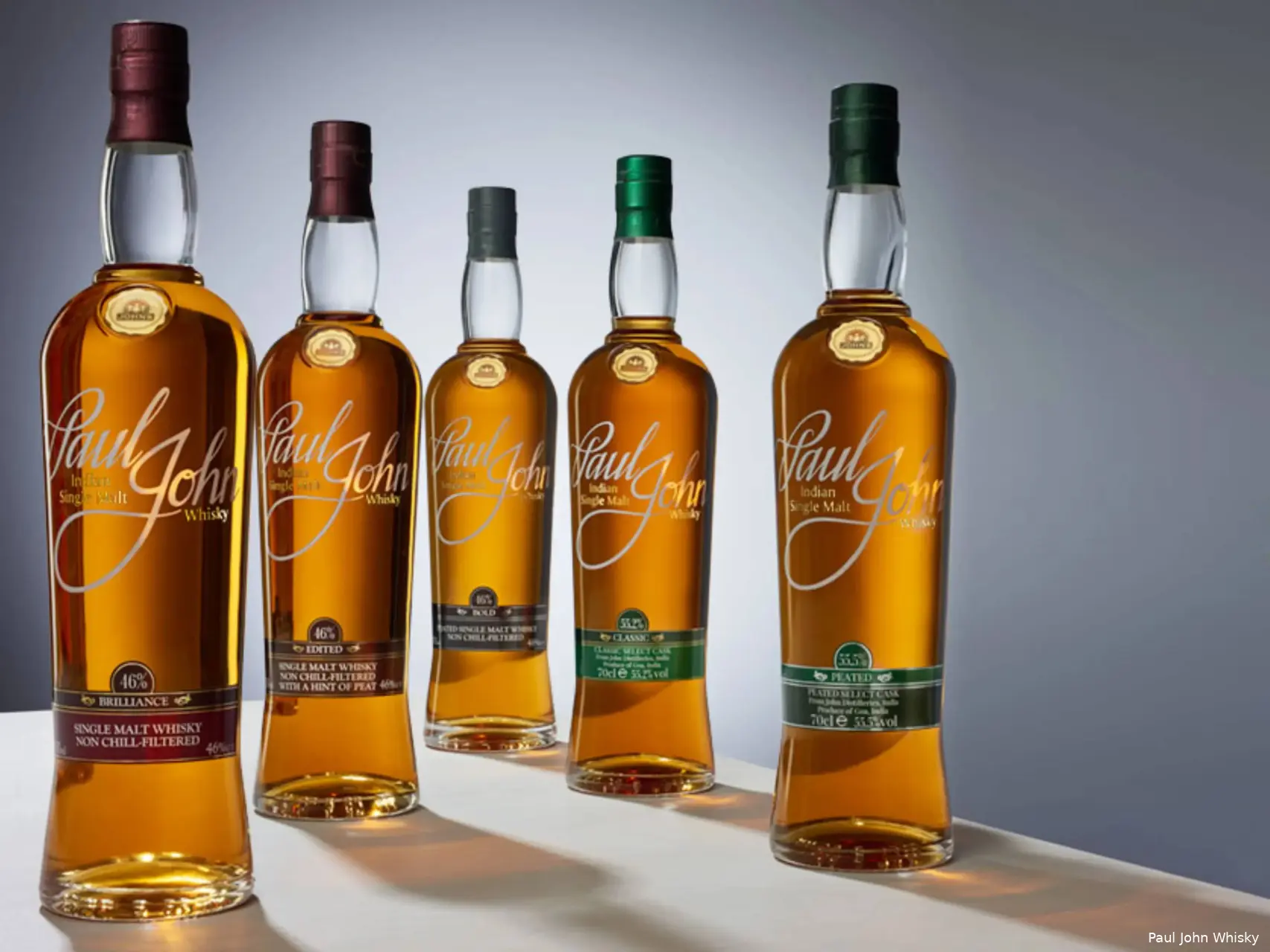
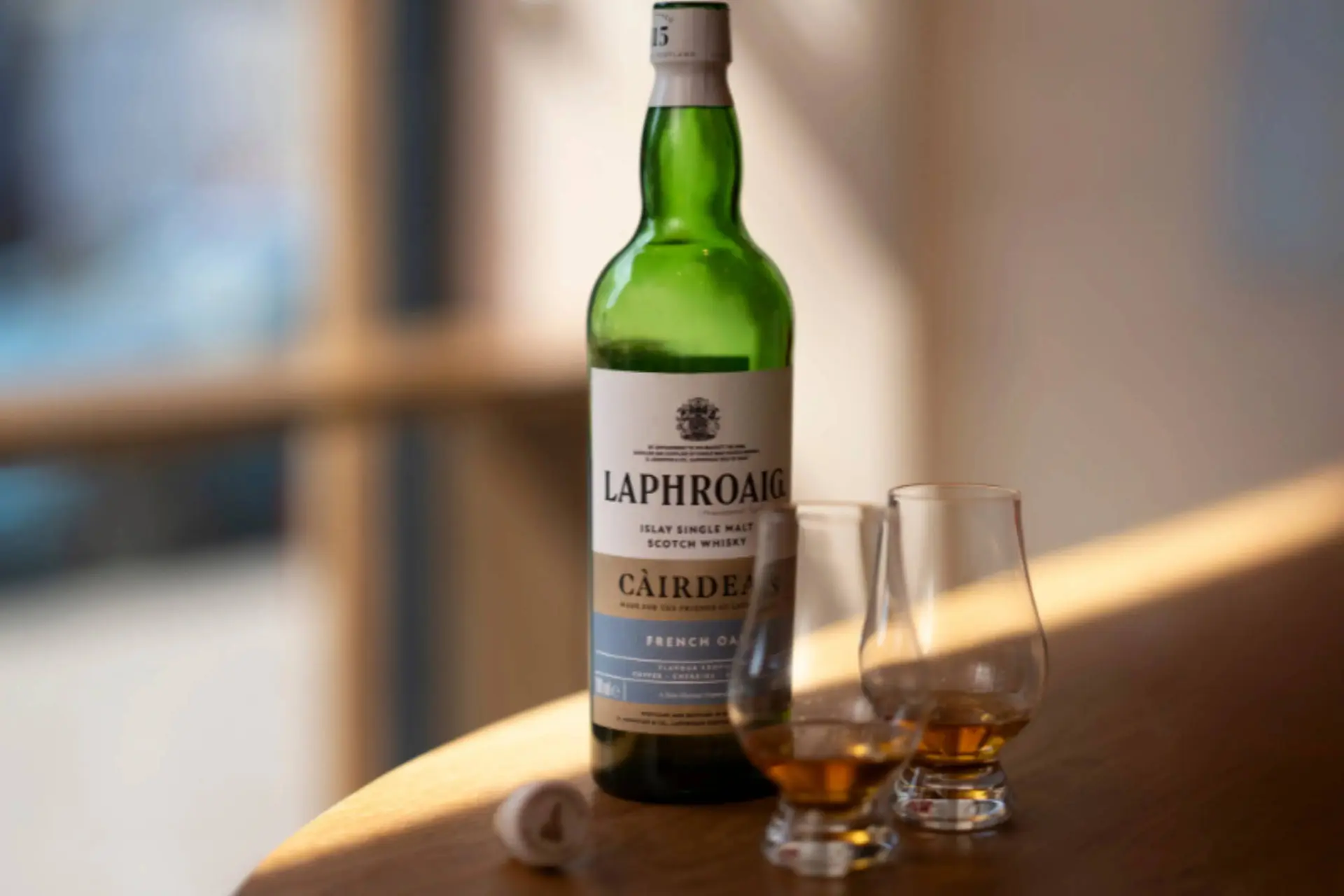
The picture changes when you move up the shelf to look at Indian single malt whisky. Indian single malt has spent a decade winning on quality and price at the same time and that has been working: of all the cases of single malt sold in India in 2023, about 345,000 were Indian in origin, according to figures reported by the Times of India.
That price advantage was built on a competitor carrying a 150 percent tariff. With the tariff at 75 percent and heading to 40 percent over the next decade, the gap narrows every year. Shares in several Indian drinks companies fell by up to five percent on the day the agreement was announced.
Paul P. John, chairman of John Distilleries, warned that a sudden influx of lower-priced Scotch could affect domestic sales, while adding that he was confident in the quality of Indian whisky and hoped the deal would improve access for Indian brands entering the UK.
It also helps explain the timing of the Indian Malt Whisky Association's new certification trademark, announced in New Delhi in June 2026. If you can no longer compete purely on price, you compete on provenance.
| Whisky Deals from Whisky Exchange | Week 30 |
| Aberlour 12 Year Old Non Chill-Filtered | From 58,95 pounds now for 48,75 pounds |
| Chivas Regal 18 Year Old American Oak | From 150 pounds now for 74,95 pounds |
| Port Dundas 1990 35 Year Old Sovereign | From 130 pounds now for 84,95 pounds |
| Rampur 2015 Bourbon Single Cask | From 115 pounds now for 87,95 pounds |
| Glen Spey 2008 14 Year Old Connoisseurs Choice | From 117 pounds now for 91,95 pounds |
So will Indian whisky actually get cheaper?
Not overnight, and for the same reasons Scotch hasn't. India has no single national alcohol market. States set their own excise rates, registration rules and distribution margins, and new retail prices often need approval before they can take effect.
FAQ
- Does India import Scotch in bulk?
Yes. A substantial share of Scotch entering India arrives as bulk spirit, estimated at close to 80 percent by volume, and much of it is used within Indian whisky brands. - Does the lower import duty help Indian distillers?
It helps blenders who use imported Scotch as a component, because their raw material becomes cheaper. It increases competitive pressure on Indian single malt producers. - How much is India's import duty on Scotch now?
Since 15 July 2026 it is 75 percent, down from 150 percent, falling to 40 percent over ten years for whisky that meets the agreement's rules of origin.
loading
POPULAR NEWS
Whisky Names Explained: Octomore
Bowmore Brings Back a Devilish Whisky After More Than 10 Years (and Two Old Casks Take Center Stage)
Glenfiddich, Ardbeg, and Jameson are joined by new names on the 2026 Best Whiskies list

This Japanese whisky is almost too beautiful to open
From Rat to Dragon and Goat: These Whisky Bottles Form a Remarkable Collection
Japanese Oak Lends a Distinctive Twist to This Belgian Whisky (Review)
Belgian Distillery Gone: Old Caperdonich Stills Up for Auction

This Highlander is Glenmorangies oldest whisky ever
5 Indian whiskies that taste like liquid gold

Dutch Investor Unmasks a Massive Whisky Scam After a Failed Investment
LATEST COMMENTS
- Thank you for the compliment. I really appreciate it.M0nkey31-08-2026
- I enjoyed reading the different approaches to building a whisky collection. Whether you collect by region, style, or limited releases, discovering new brands keeps the hobby interesting. Soorahi is another premium whisky worth considering for collectors looking to explore the evolving world of quality whiskies.dinesh04-08-2026
- There is no distillery equipment there and also no licences to produce or sell alcohol.TRC19-12-2025
- Hi Yvonne, Thank you for your response and for sharing the video. Unfortunately, the evidence you referred to consists only of two people talking about the whisky, without any explanation or identification. We have not spoken to the individuals in the video ourselves, nor can we verify who they are. We describe it as a Chinese whisky because it is released by a Chinese distillery. As you mentioned, the distillery has chosen to label the product as “pure malt” instead of “Chinese whisky.” Based on that, we do not believe they are doing anything illegal.M0nkey16-11-2025
- So - you have the proof......where's your write up?Yvonne16-11-2025
- You are absolutely right. Luckily that doesn't matter for the taste of the whisky. Have you tried it yet?M0nkey05-11-2025
- Guess what? Finland is not part of Scandinavia.Gray105-11-2025
- Throw in the towel? You mean restructure to compete and win in a challenging industry environment.WestwardFounder21-10-2025
- There is nothing legally to prevent the English whisky GI from coming into force, it complies with all the relevant laws and the single malt definition follows the precedent of Welsh whisky and US whiskyChefBear15-10-2025
- Three emails sent (two with videos, linked to a Google Drive Share). 1. The original video. 2. The video with subtitles as it was shared on YouTube 3. Screen grab of the YouTube channel where the video was blocked due to Pernod Ricard lobbying. The story was covered on Drinks Intel at the time - link here - https://drinks-intel.com/subscriber-news/pernod-ricards-the-chuan-pure-malt-whisky-not-sourced-solely-from-china-global-drinks-intel-exclusive/Yvonne10-10-2025
Loading