Never miss whisky news, reviews, and new releases again.
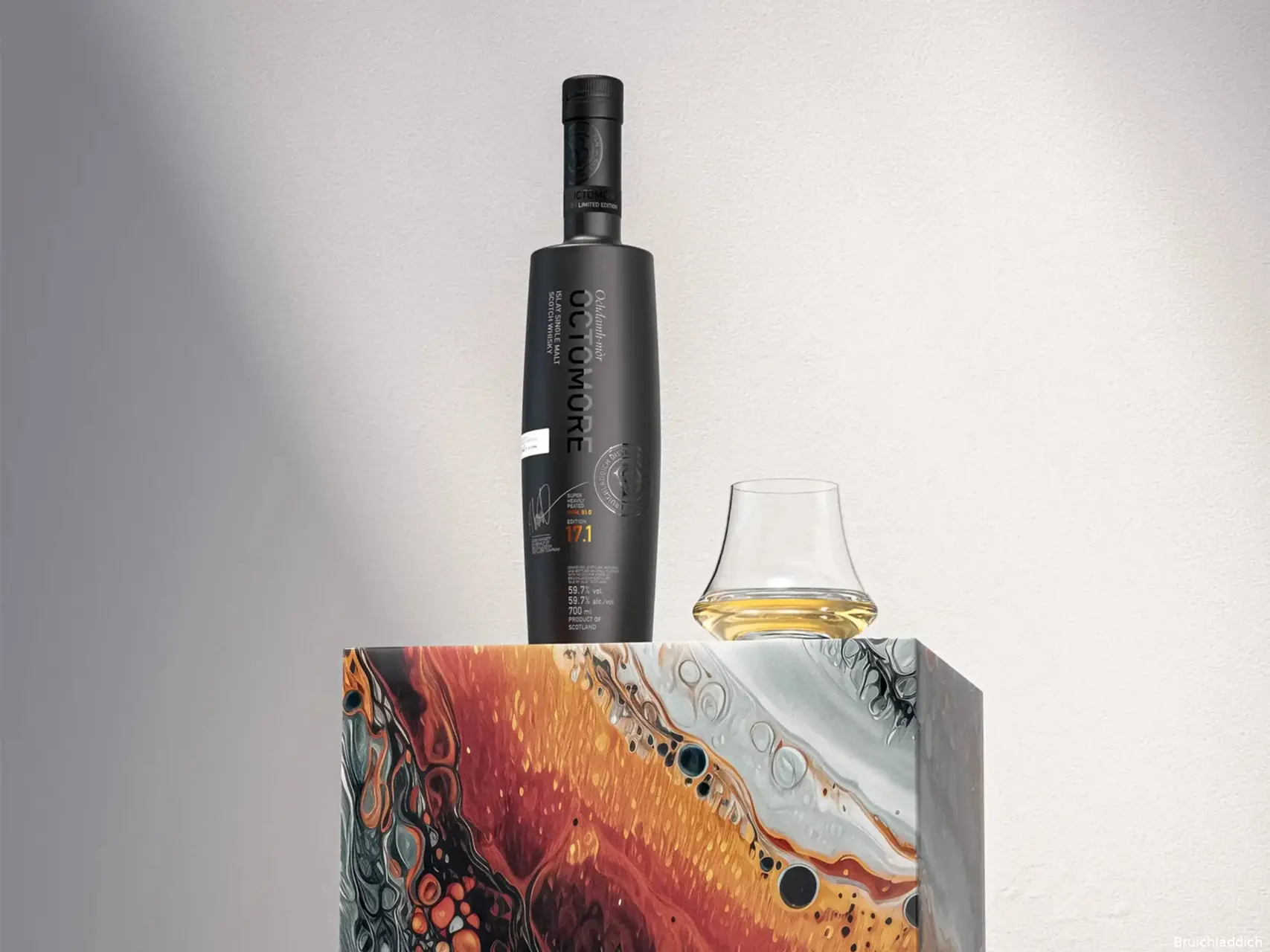
Add Whisky Monkeys as a Google favoriteAfter sixteen Octomore series, Bruichladdich is nowhere near done experimenting with peat, barley, and standout casks. The Islay distillery once again rolls out heavily peated whiskies with the launch of the Octomore Series 17.
This year’s lineup features three whiskies: Octomore 17.1, 17.2, and 17.3. All three are five years old and bottled at robust strengths. Yet they differ greatly when it comes to barley, peat levels, and cask types. Here’s a quick guide to the three new smoke-laden releases.
Bruichladdich continues with the Octomore Series 17
Octomore has become the range where Bruichladdich pushes peat experimentation without much restraint. A sky-high PPM comes with the territory, of course, but the distillery aims to show that beyond all that smoke, there’s far more to discover.
In Octomore Series 17, that exploration comes through different barley varieties and a broad palette of casks: think not just bourbon barrels, but also Port, Sauternes, Eiswein, and various red wine casks.
The differences start right away with the first two whiskies. Octomore 17.1 and 17.2 are both made from the same batch of Concerto barley from mainland Scotland and each sits at 81.0 PPM. Even so, the cask profiles steer them in distinctly different directions.
Octomore 17.3 takes things up another notch. For this whisky, the barley is sourced from Islay itself, and the peat measure climbs to 132.1 PPM.
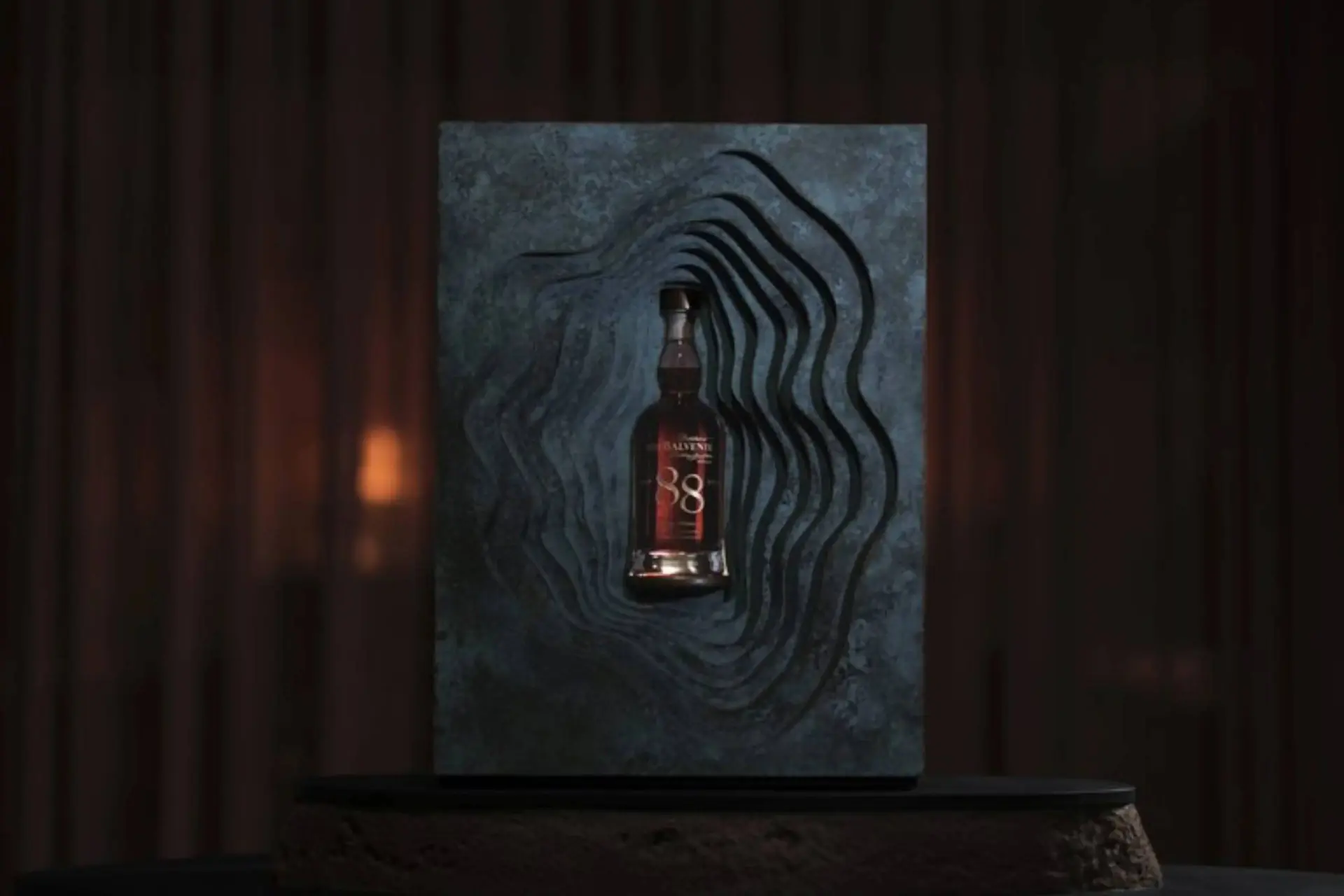
Octomore 17.1 sets the smoky benchmark for the series
As we’ve come to expect from Octomore, the .1 release serves as the series reference point. Accordingly, Bruichladdich keeps the cask program relatively straightforward.
Octomore 17.1 is crafted from 100 percent Scottish Concerto barley peated to 81.0 PPM. The whisky then matured for five full years in first-fill bourbon barrels and was bottled at a brawny 59.7 percent ABV.
Octomore 17.1 tasting notes
Bruichladdich’s official tasting notes are as follows:
- Nose: Sweet malt and creamy vanilla custard with toasted coconut, butterscotch, citrus peel, and green melon. Gentle peat smoke follows, alongside a salty sea breeze, light ginger, and mineral notes.
- Palate: Full and creamy with vanilla milkshake, warm custard tart, pear drops, and malt syrup. Dry, earthy peat smoke then builds with smouldering oak, ash, coconut, and a hint of spice.
- Finish: Long and increasingly dry, as sweetness slowly gives way to minerality, peat smoke, warm embers, salt, and lightly charred wood.

Octomore 17.2 gets a bold Port influence
Move from 17.1 to Octomore 17.2 and you’ll find the same barley and the same peat level, but that’s where most of the similarities end.
Bruichladdich has leaned hard into cask maturation here. The whisky spent four years in second-fill French oak that previously held Californian red wine and bourbon, followed by a finish in first-fill Port barriques.
It’s again five years old, peated to 81.0 PPM, and bottled at 59.5 percent ABV.
Octomore 17.2 tasting notes
The Port casks make their presence felt. Red fruits and dark berries step into the spotlight while Octomore’s signature smoke builds in the background. Official tasting notes:
- Nose: Ripe red fruits and jammy sweetness with raspberries, blackcurrants, and floral tones. Toasted oak, clove, anise, coconut, and ginger mingle with dry smoke, leather, and a touch of saline iodine.
- Palate: Full and syrupy with strawberry, blackberry, and cassis, followed by barley sugars and dark syrup. Earthy, peppery peat smoke then swells, while lemon zest and lime oil add freshness.
- Finish: Long and rich with raisins, toasted oak, and sweet malt. Finally, dry sea air, charred wood, spices, and lingering peat smoke remain.

Octomore 17.3 cranks the peat up dramatically
Now to the powerhouse of the trio: Octomore 17.3. It’s not just the peat level that changes, barley provenance takes center stage as well.
Bruichladdich used only Concerto barley from Irene’s Field at Octomore Farm. The field sits on Islay, just a few kilometers from the distillery, allowing Bruichladdich to trace the barley back to a single plot.
The barley was peated to 132.1 PPM. The whisky then matured for five years in a combination of first-fill bourbon barrels and second-fill European oak, including casks that previously held Ribera del Duero, Sauternes, Eiswein, and Syrah.
| Whisky Deals from Whisky Exchange | Week 36 |
| Glenfiddich 18 Year Old | 77,59 euros |
| The Perfect Measure 25 Whisky and Spirits Advent & Tasting Set | 99,75 euros |
| 20 Whiskies That Changed The World Tasting Set | 119,76 euros |
| Port Charlotte 10 Year Old | 49,85 euros |
| Glenmorangie A Tale of Tokyo | 60,13 euros |
Octomore 17.3 tasting notes
Despite the hefty PPM figure, Bruichladdich says this whisky isn’t just about raw smoke. These are the official tasting notes:
- Nose: Robust, coastal peat smoke with saline, tarry and medicinal tones. Beneath that lie malt, brown sugar, lemon zest, green apple, pear, vanilla and marzipan, with fresh spicy and floral accents.
- Palate: Full-bodied, firm and lightly peppery, with salted caramel, smoked apple, toasted coconut, praline and vanilla cream. Then earthy, deeply charred peat takes over, with dry ashy smoke, citrus oil and a mineral salinity.
- Finish: Long, dry and smoky. Sweet malt, gentle florals and vanilla fade slowly, giving way to earthy peat smoke and sea salt. The smoke lingers remarkably long.
The three whiskies in the Octomore Series 17 are available via Bruichladdich’s official webshop and selected whisky retailers. An Octomore 17.1 will set you back £143, while the Octomore 17.2 carries a £158 price tag. At £199, the Octomore 17.3 is the most expensive of the trio.
FAQ
- Which whiskies are in the Bruichladdich Octomore Series 17?
The series comprises three whiskies: Octomore 17.1, Octomore 17.2 and Octomore 17.3. All three are five years old, but differ in cask maturation, barley and peat levels. - Which Octomore 17 whisky has the highest peat level?
That would be the Octomore 17.3. It’s made with barley peated to 132.1 PPM. Both the Octomore 17.1 and 17.2 sit at 81.0 PPM. - What’s the difference between Octomore 17.1 and 17.2?
Both whiskies are made from the same batch of Scottish Concerto barley and have a peat level of 81.0 PPM. The 17.1 matured entirely in first-fill bourbon casks, while the 17.2 underwent a more complex cask regime and finished in first-fill Port casks.


loading
POPULAR NEWS
Whisky Names Explained: Octomore

Bowmore Brings Back a Devilish Whisky After More Than 10 Years (and Two Old Casks Take Center Stage)

Glenfiddich, Ardbeg, and Jameson are joined by new names on the 2026 Best Whiskies list

This Japanese whisky is almost too beautiful to open

From Rat to Dragon and Goat: These Whisky Bottles Form a Remarkable Collection

Japanese Oak Lends a Distinctive Twist to This Belgian Whisky (Review)

Belgian distillery unveils Brussels’ first whisky, but you’ll need to act fast if you want one

This Highlander is Glenmorangies oldest whisky ever

5 Indian whiskies that taste like liquid gold

There’s a remarkable idea behind the name of this ultra-rare Macallan TIME: SPACE whisky
LATEST COMMENTS
- Thank you for the compliment. I really appreciate it.M0nkey31-08-2026
- I enjoyed reading the different approaches to building a whisky collection. Whether you collect by region, style, or limited releases, discovering new brands keeps the hobby interesting. Soorahi is another premium whisky worth considering for collectors looking to explore the evolving world of quality whiskies.dinesh04-08-2026
- There is no distillery equipment there and also no licences to produce or sell alcohol.TRC19-12-2025
- Hi Yvonne, Thank you for your response and for sharing the video. Unfortunately, the evidence you referred to consists only of two people talking about the whisky, without any explanation or identification. We have not spoken to the individuals in the video ourselves, nor can we verify who they are. We describe it as a Chinese whisky because it is released by a Chinese distillery. As you mentioned, the distillery has chosen to label the product as “pure malt” instead of “Chinese whisky.” Based on that, we do not believe they are doing anything illegal.M0nkey16-11-2025
- So - you have the proof......where's your write up?Yvonne16-11-2025
- You are absolutely right. Luckily that doesn't matter for the taste of the whisky. Have you tried it yet?M0nkey05-11-2025
- Guess what? Finland is not part of Scandinavia.Gray105-11-2025
- Throw in the towel? You mean restructure to compete and win in a challenging industry environment.WestwardFounder21-10-2025
- There is nothing legally to prevent the English whisky GI from coming into force, it complies with all the relevant laws and the single malt definition follows the precedent of Welsh whisky and US whiskyChefBear15-10-2025
- Three emails sent (two with videos, linked to a Google Drive Share). 1. The original video. 2. The video with subtitles as it was shared on YouTube 3. Screen grab of the YouTube channel where the video was blocked due to Pernod Ricard lobbying. The story was covered on Drinks Intel at the time - link here - https://drinks-intel.com/subscriber-news/pernod-ricards-the-chuan-pure-malt-whisky-not-sourced-solely-from-china-global-drinks-intel-exclusive/Yvonne10-10-2025
Loading