Never miss whisky news, reviews, and new releases again.
Add Whisky Monkeys as a Google favoriteThis week we’re crossing the border to Scotland. Not a Dutch distillery, but a Scottish one. We’re telling you about the InchDairnie Distillery in Fife, where whisky is crafted in a remarkable way with one clear goal: to delight our taste buds to the fullest.
You may have read about it last month: InchDairnie Distillery has released its first Scottish whisky, named RyeLaw. It’s the first in a series of whiskies distilled with an innovative approach. InchDairnie makes whiskies with tradition in mind, but innovation firmly in sight.
But before we dive into what InchDairnie does, let’s go back to the beginning of the career of Ian Palmer, the founder of InchDairnie.
From father to son
He grew up in a family where whisky was part of everyday life. Palmer’s father had worked in the industry for years. The love for the water of life was passed from father to son, and Palmer began his career in whisky at Invergordon Distillery. He then worked with various whisky brands in his role at Whyte & Mackay. Brands he worked with during this time include Jura, Bruichladdich, and Tamnavulin.
Eventually, Palmer decided to found his own distillery. In 2011, he went in search of a site for a distillery he had been planning for some time. The ideal spot was soon found in Fife, where construction finally began in 2014. It wasn’t until 2015 that everything was ready and the first spirit could be distilled. The choice Palmer and his team made was to do almost everything just a little differently than other distilleries.
Doing everything a little differently than the rest
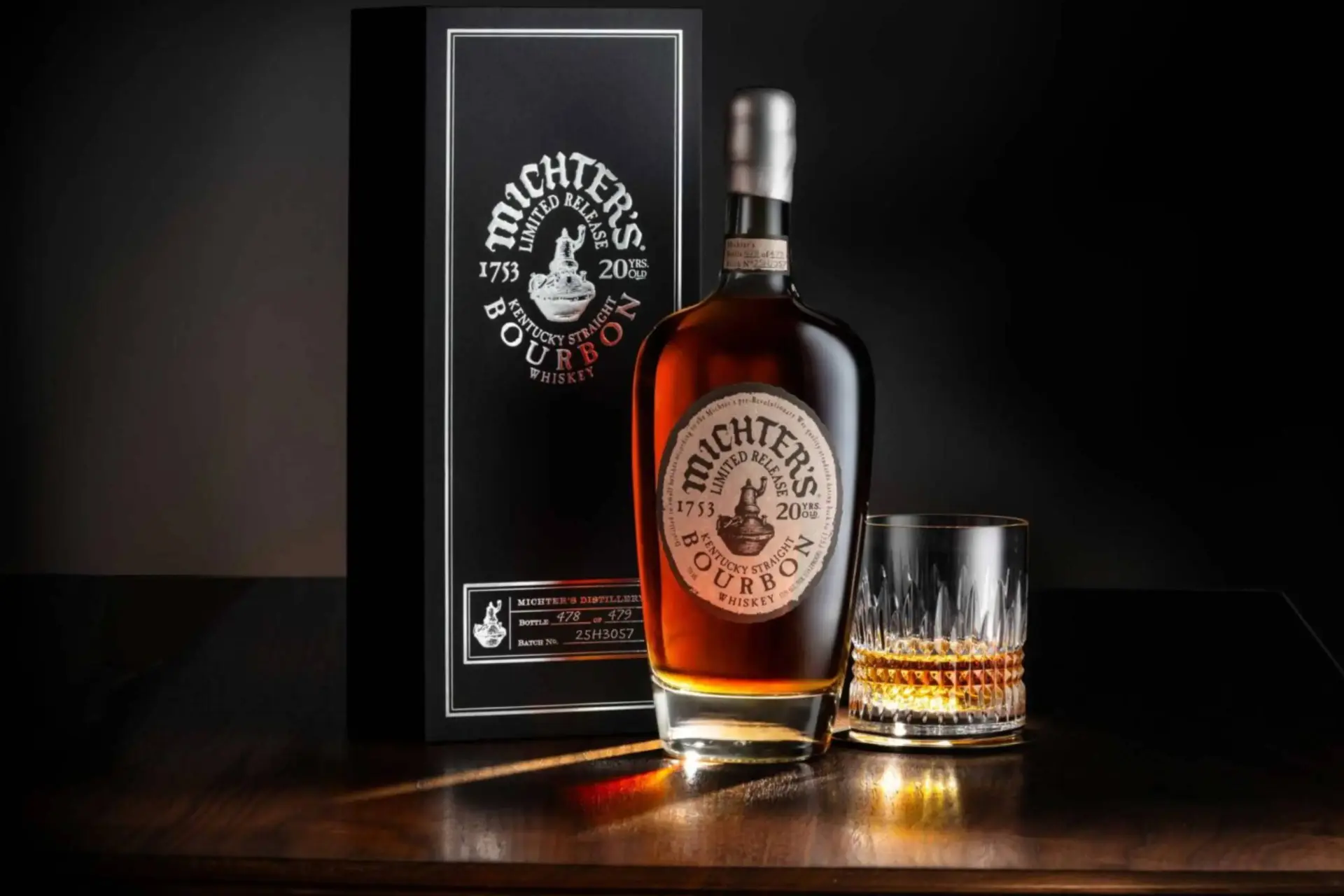
You can tell InchDairnie doesn’t follow the beaten path from the way the distillery was built. The distillery was literally constructed around the mash filter. It was the very first thing installed—before the roof and the rest of the distillery in Fife were even built. Only then did the building itself take shape.
InchDairnie is one of only two distilleries in Scotland that uses a filter instead of a mash tun. This mash filter is a crucial component for the operation. It allows the distillery to extract more from the raw materials, yielding more sugars and ultimately more flavor. Combined with a special yeast strain, it creates a unique recipe with which the Fife distillery crafts its spirits.
InchDairnie also works with a wide variety of grains. Think rye, as used in RyeLaw, but also wheat, oats, and hard winter barley. Roller mills won’t cut it for grinding all of that, so hammer mills are used—smashing everything beneath them like a wrecking ball. A traditional mash tun would clog with the resulting mash like a blocked artery, but the mash filter handles it all without a hitch.

With a little help from Fife
The distillery does an incredible amount in-house, but also lets the local environment lend a hand in making whisky. When it’s time for fermentation, Fife’s climate steps in. Various yeasts are used, but fermentation takes place in the open air. After 60 hours, it’s time to distill.
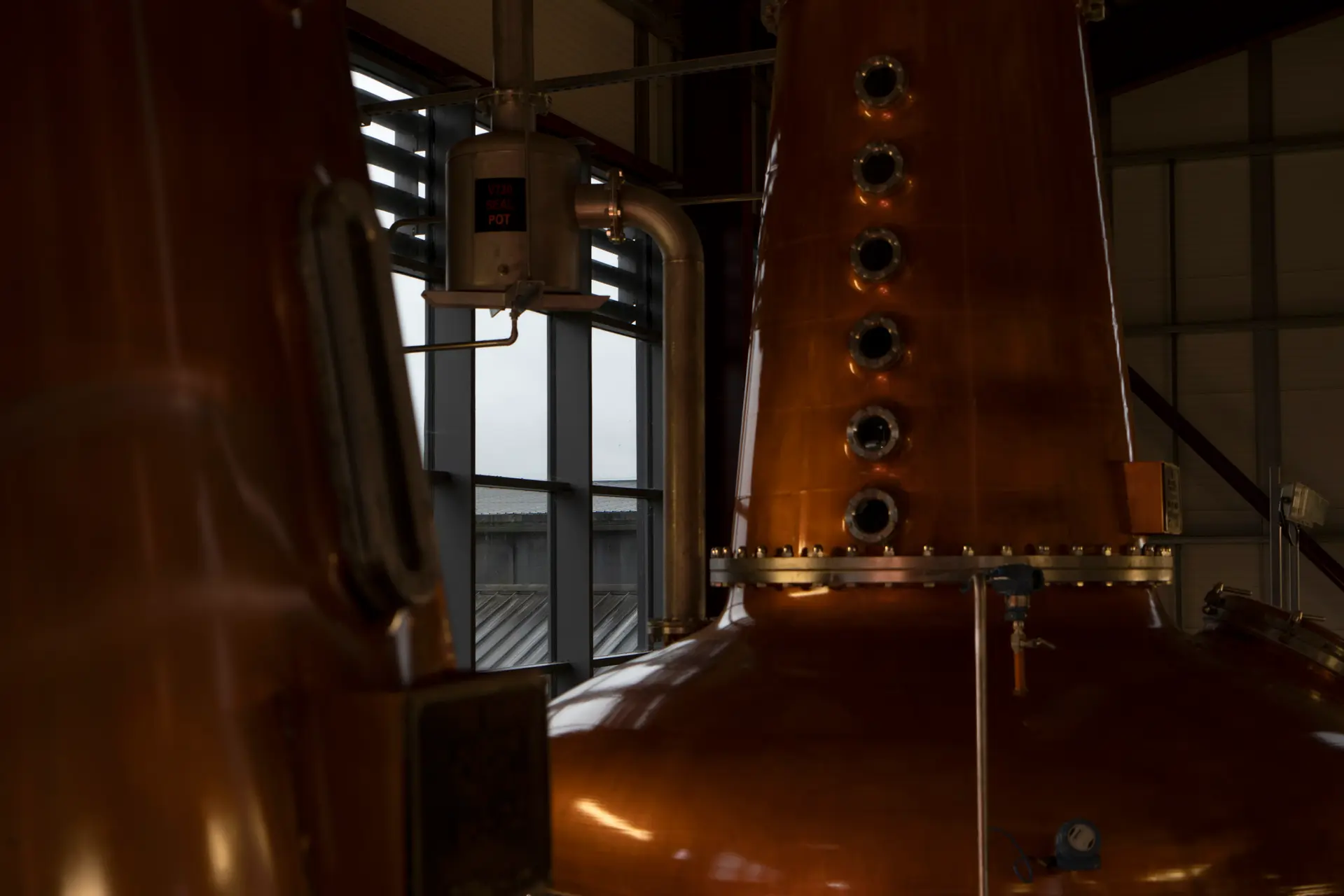
Distillation happens in the distillery’s two pot stills and in InchDairnie’s pride and joy: the Lomond Hill Still. This copper still was designed especially for InchDairnie in Italy by manufacturer Frilli, and named for the view it offers. Stand by the still and you look out across the hills beside the distillery: the Lomond Hills.

De Lomond Hills Still van InchDairnie Distillery
A different darling each season?
InchDairnie Distillery distills year-round. Each season brings something different. For example, rye for RyeLaw is distilled for just two weeks a year. A week to ten days is set aside for producing a peated single malt: KinGlassie. The first bottles were filled in 2025.
Another week is reserved for one-off distillation runs such as oats, wheat, sour mash, and the like. These whiskies are eventually be released under the Prinlaws label. InchDairnie is also working on a single malt simply called InchDairnie Single Malt. If you want to taste it, mark 2029 in your calendar, that’s when the distillery’s first Vintage will be released.
By Vintage, InchDairnie refers to the different seasons in which they distill. Each season will yield its own character thanks to open-air fermentation and the use of different barley varieties. Casks from the various seasons will ultimately be married into a unique single-year Vintage single malt. When it’s gone, it’s gone:no second chances.

loading
POPULAR NEWS
Whisky Names Explained: Octomore
Bowmore Brings Back a Devilish Whisky After More Than 10 Years (and Two Old Casks Take Center Stage)
Glenfiddich, Ardbeg, and Jameson are joined by new names on the 2026 Best Whiskies list

This Japanese whisky is almost too beautiful to open

From Rat to Dragon and Goat: These Whisky Bottles Form a Remarkable Collection
Japanese Oak Lends a Distinctive Twist to This Belgian Whisky (Review)

Belgian distillery unveils Brussels’ first whisky, but you’ll need to act fast if you want one
This Highlander is Glenmorangies oldest whisky ever
5 Indian whiskies that taste like liquid gold
There’s a remarkable idea behind the name of this ultra-rare Macallan TIME: SPACE whisky
LATEST COMMENTS
- Thank you for the compliment. I really appreciate it.M0nkey31-08-2026
- I enjoyed reading the different approaches to building a whisky collection. Whether you collect by region, style, or limited releases, discovering new brands keeps the hobby interesting. Soorahi is another premium whisky worth considering for collectors looking to explore the evolving world of quality whiskies.dinesh04-08-2026
- There is no distillery equipment there and also no licences to produce or sell alcohol.TRC19-12-2025
- Hi Yvonne, Thank you for your response and for sharing the video. Unfortunately, the evidence you referred to consists only of two people talking about the whisky, without any explanation or identification. We have not spoken to the individuals in the video ourselves, nor can we verify who they are. We describe it as a Chinese whisky because it is released by a Chinese distillery. As you mentioned, the distillery has chosen to label the product as “pure malt” instead of “Chinese whisky.” Based on that, we do not believe they are doing anything illegal.M0nkey16-11-2025
- So - you have the proof......where's your write up?Yvonne16-11-2025
- You are absolutely right. Luckily that doesn't matter for the taste of the whisky. Have you tried it yet?M0nkey05-11-2025
- Guess what? Finland is not part of Scandinavia.Gray105-11-2025
- Throw in the towel? You mean restructure to compete and win in a challenging industry environment.WestwardFounder21-10-2025
- There is nothing legally to prevent the English whisky GI from coming into force, it complies with all the relevant laws and the single malt definition follows the precedent of Welsh whisky and US whiskyChefBear15-10-2025
- Three emails sent (two with videos, linked to a Google Drive Share). 1. The original video. 2. The video with subtitles as it was shared on YouTube 3. Screen grab of the YouTube channel where the video was blocked due to Pernod Ricard lobbying. The story was covered on Drinks Intel at the time - link here - https://drinks-intel.com/subscriber-news/pernod-ricards-the-chuan-pure-malt-whisky-not-sourced-solely-from-china-global-drinks-intel-exclusive/Yvonne10-10-2025
Loading