Never miss whisky news, reviews, and new releases again.
Add Whisky Monkeys as a Google favoriteEnglish whisky recently gained officially protected status. That sounds like good news for whisky lovers, but opinions across the border are rather different. The Scots aren’t happy with the new rules. In fact, they’ve already filed an appeal. But why are they making such a fuss about whisky from England?
Since 1 October 2026, English Whisky has had its own Geographical Indication (GI). This legally protects the name, just as it does for Scotch Whisky. However, there’s a significant difference between the rules in the two countries.
That difference has caused quite a stir in the whisky world. What exactly is going on, and why are the Scots so unhappy about the new status of English single malt whisky?
What does protected status mean for English whisky?
A Geographical Indication is a protected geographical designation. It means a product must meet certain requirements to be sold under a particular name.
For English Whisky, this means, among other things, that the whisky must be distilled in England and matured for at least three years. The grain used must also come from the United Kingdom.
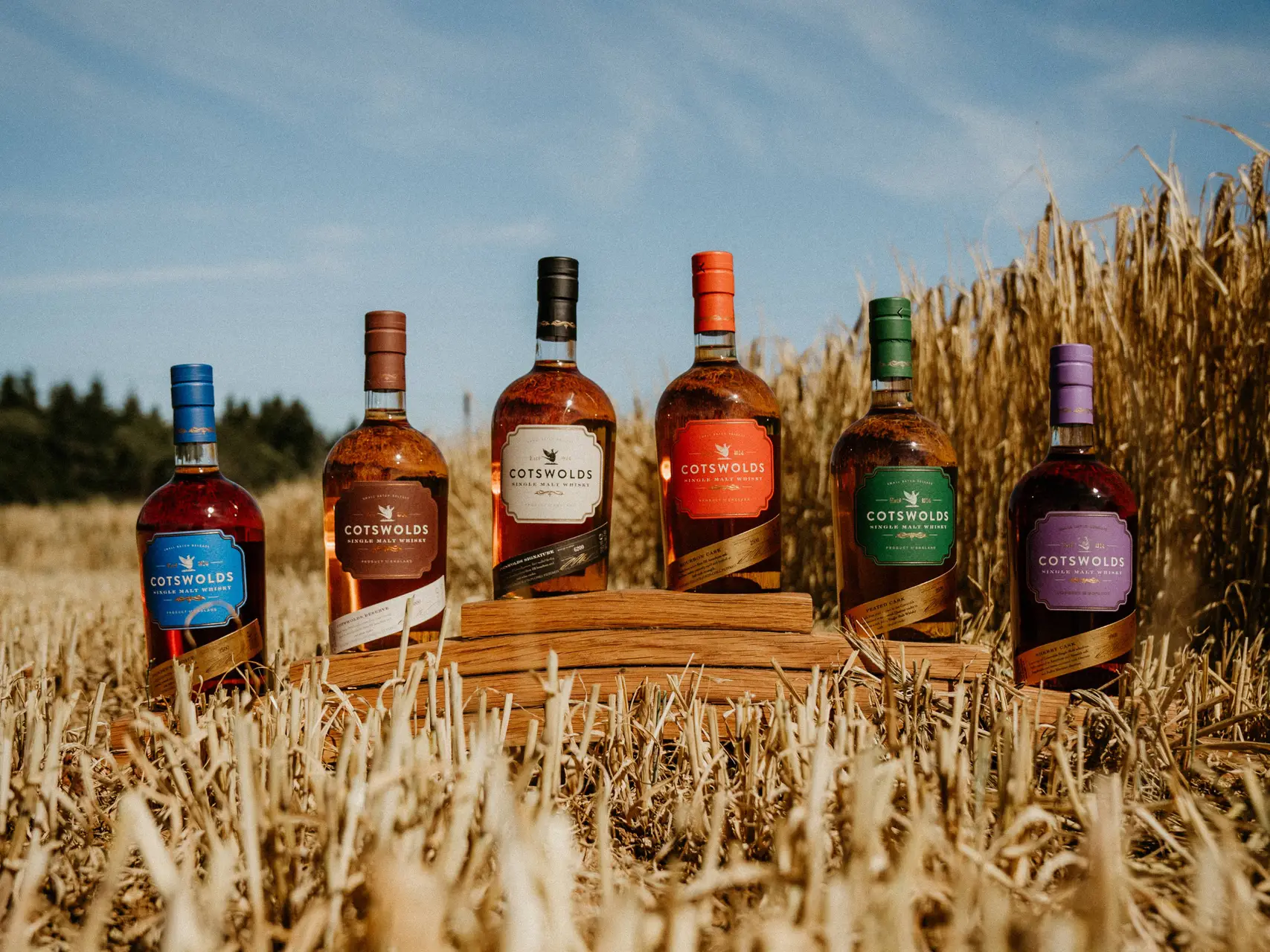
The new protection marks a major milestone for England’s whisky industry. The country now has more than 70 whisky distilleries, up from just 46 in 2023.
Why aren’t the Scots happy?
The Scotch Whisky Association (SWA) is unhappy with the situation. Its main concern is how English single malt can be produced. In particular, the definition of single malt whisky has become a point of contention.
For Scotch single malt, mashing, fermentation and distillation must all take place at the same distillery. This is enshrined in law and, according to the Scots, is a key part of what makes single malt what it is.
The rules are different in England. Mashing and fermentation can take place elsewhere, as long as the final distillation happens at a single English distillery. So, for example, an English distillery can outsource part of the production process to a brewery and then distil the resulting liquid itself.
The SWA argues that this undermines the meaning of single malt. It fears that consumers may no longer know exactly what they’re buying when they see “single malt” on a bottle. On 8 October, the SWA therefore formally appealed against the English GI.
Are the Scots right to be angry with England?
What’s interesting is that Scotch whisky rules aren’t followed everywhere in the world. Different whisky-producing countries have their own definitions of single malt.
In the United States, for example, single malt producers don’t necessarily have to mash their grain at the same location where distillation takes place. Wales also currently has rules that are closer to the English approach than the Scottish one.
There’s another twist that’s even more surprising than the Scots’ protest: the Welsh Whisky Association has joined the campaign against England. Meanwhile, it is working to change its own rules so that mashing, fermentation and distillation must all take place at a single location in Wales, too.
England sees an opportunity
The criticism hasn’t exactly been welcomed with open arms in England. Morag Garden, CEO of the English Whisky Guild, says the objections are hard to understand. In her view, the new rules simply formalise the way English distilleries have worked for years.
Garden also says the debate affects only a relatively small group of producers. Of the roughly 70 English distilleries, only 12 are said to use the method in question.
The English also believe their GI should leave room for innovation. They can use different types of wood for maturation and explore modern distillation techniques. Scotch Whisky, by contrast, must be matured in oak.
Read also

What does this mean for whisky lovers?
Whisky lovers are unlikely to notice much difference as a result of the dispute between the Scots and the English. Nothing is changing about the bottles on shop shelves. Scotch single malt remains what it has always been, and so does English whisky. The debate is about the term itself.
When you buy a Scotch single malt, you know the mashing, fermentation and distillation all took place at the same distillery. That isn’t necessarily the case with an English single malt.
That doesn’t mean English whisky is automatically inferior. A different production method doesn’t, by itself, determine the finished whisky’s flavour or quality. The real question is whether the same term should apply to whiskies made in different ways.
It remains to be seen how the Scotch Whisky Association’s appeal will turn out. One thing is certain: the battle over what “single malt” means is far from over.
FAQ
- What is the GI status of English Whisky?
The Geographical Indication protects the name English Whisky and sets out the production requirements that English whisky must meet. The protection has been in force since 1 October 2026. - Why is Scotland opposed to the English whisky rules?
The Scotch Whisky Association believes mashing, fermentation and distillation should all take place at the same distillery for a whisky to be called single malt. The English rules allow some of these steps to take place elsewhere in England. - Is English single malt inferior to Scotch single malt?
No. The production rules differ, but that doesn’t automatically mean English whisky is lower in quality or flavour.
loading
POPULAR NEWS
Whisky Names Explained: Octomore
Bowmore Brings Back a Devilish Whisky After More Than 10 Years (and Two Old Casks Take Center Stage)
Glenfiddich, Ardbeg, and Jameson are joined by new names on the 2026 Best Whiskies list
This Japanese whisky is almost too beautiful to open
From Rat to Dragon and Goat: These Whisky Bottles Form a Remarkable Collection
Japanese Oak Lends a Distinctive Twist to This Belgian Whisky (Review)

Belgian distillery unveils Brussels’ first whisky, but you’ll need to act fast if you want one
5 Indian whiskies that taste like liquid gold

This Highlander is Glenmorangies oldest whisky ever
There’s a remarkable idea behind the name of this ultra-rare Macallan TIME: SPACE whisky
LATEST COMMENTS
- Thank you for the compliment. I really appreciate it.M0nkey31-08-2026
- I enjoyed reading the different approaches to building a whisky collection. Whether you collect by region, style, or limited releases, discovering new brands keeps the hobby interesting. Soorahi is another premium whisky worth considering for collectors looking to explore the evolving world of quality whiskies.dinesh04-08-2026
- There is no distillery equipment there and also no licences to produce or sell alcohol.TRC19-12-2025
- Hi Yvonne, Thank you for your response and for sharing the video. Unfortunately, the evidence you referred to consists only of two people talking about the whisky, without any explanation or identification. We have not spoken to the individuals in the video ourselves, nor can we verify who they are. We describe it as a Chinese whisky because it is released by a Chinese distillery. As you mentioned, the distillery has chosen to label the product as “pure malt” instead of “Chinese whisky.” Based on that, we do not believe they are doing anything illegal.M0nkey16-11-2025
- So - you have the proof......where's your write up?Yvonne16-11-2025
- You are absolutely right. Luckily that doesn't matter for the taste of the whisky. Have you tried it yet?M0nkey05-11-2025
- Guess what? Finland is not part of Scandinavia.Gray105-11-2025
- Throw in the towel? You mean restructure to compete and win in a challenging industry environment.WestwardFounder21-10-2025
- There is nothing legally to prevent the English whisky GI from coming into force, it complies with all the relevant laws and the single malt definition follows the precedent of Welsh whisky and US whiskyChefBear15-10-2025
- Three emails sent (two with videos, linked to a Google Drive Share). 1. The original video. 2. The video with subtitles as it was shared on YouTube 3. Screen grab of the YouTube channel where the video was blocked due to Pernod Ricard lobbying. The story was covered on Drinks Intel at the time - link here - https://drinks-intel.com/subscriber-news/pernod-ricards-the-chuan-pure-malt-whisky-not-sourced-solely-from-china-global-drinks-intel-exclusive/Yvonne10-10-2025
Loading