Never miss whisky news, reviews, and new releases again.
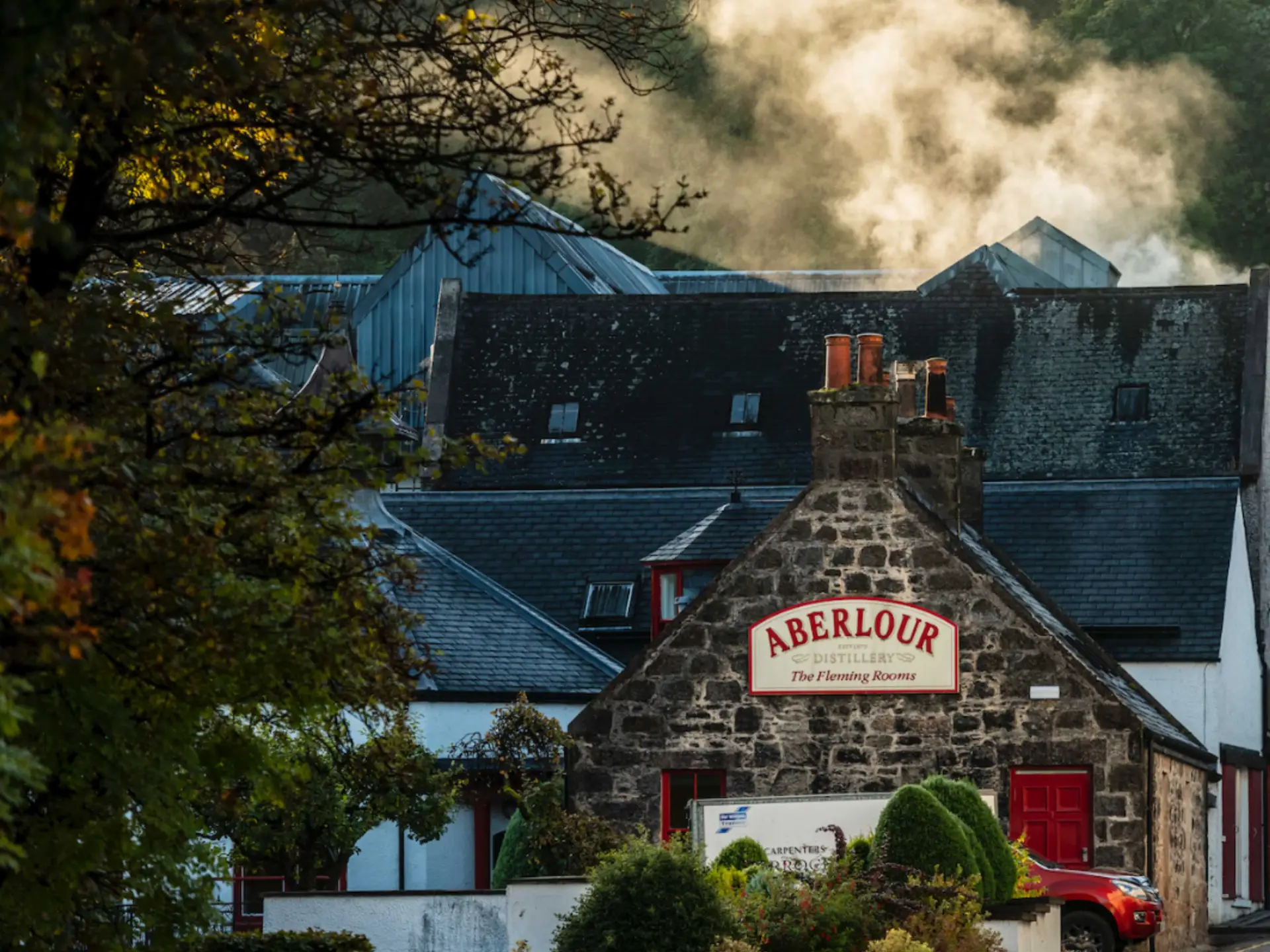
Add Whisky Monkeys as a Google favoriteIt’s Thursday again, which means it’s time to dive into the rich history of a distillery. This week we’re heading to Scotland to unravel the story behind the Aberlour Distillery. To do so, we’re traveling almost 200 years back in time to beautiful Speyside. Welcome to another Distillery Thursday.
The original Aberlour distillery
If you have a bottle of Aberlour whisky at home, you’ll see the words “est. 1879” on the label. While this is correct for the founding of the modern Aberlour distillery, we need to go much further back to uncover the true origins of this Speyside icon. In fact, the story of the Aberlour Distillery begins more than 50 years earlier, in 1826.
That year, Peter Weir and James Gordon established the original Aberlour distillery. The stillhouse was built near the River Spey in the village of Aberlour. Within about a year the ownership changed hands: in 1827 Peter Weir stepped away from the project, passing ownership to brothers James and John Grant.
They soon decided to move on and build a distillery of their own. In 1838 they founded the Glen Grant Distillery, while Aberlour fell dormant. In 1879, a devastating fire broke out, destroying most of the buildings.
A thunderous blast
James Fleming, a banker from Aberlour and the distillery’s new owner, chose to rebuild the stillhouse at a different site. He selected a location beside two watermills, a grain mill and a sawmill, situated on the Burn of Aberlour, a tributary of the River Spey. With the Earl of Fife’s blessing, construction began, and a year later the distillery was ready to produce once more.
At that time, Aberlour Distillery was the most modern working distillery in the region. Spirit once again flowed into casks to mature into Speyside whisky, and things went well for years. In 1892, Fleming sold the Speyside distillery to focus on other ventures in the village. The new owners were the distillery’s managers.
Under their leadership, output increased—until 1898, when a thunderous blast shook the site. A massive explosion ignited a fierce blaze that reduced most of the new Aberlour distillery to ashes. The majority of the maturing whisky was lost as well. The owners didn’t hesitate: they immediately began rebuilding. With the fire having destroyed almost everything, they used the opportunity to modernize again, installing the latest stills and equipment available at the time.

De Aberlour Distillery stills - Foto: Pernod Ricard
Changing of the guard
After Aberlour was rebuilt, it was eventually sold to a brewing family. W.H. Holt & Sons took the helm and operated successfully in Speyside for more than 24 years. In 1945, they sold the distillery to S. Campbell and Sons. The new owner invested heavily to expand capacity, replacing the two existing copper stills with four new ones.
This made Aberlour Distillery one of the largest in Scotland at the time—and rightly so, as demand for whisky was soaring. The distillery also revamped its production and maturation approach. From then on, all new whiskies were double-distilled and matured almost exclusively in red wine and sherry casks. Only locally grown barley from the Aberlour region was used.
The resulting whiskies became quintessentially Aberlour: smooth, with a predominantly sweet profile. They drew a new following of enthusiasts who favor notes of dark fruit and a nutty character. In 1974, there was another change of ownership when S. Campbell and Sons was acquired by French drinks company Pernod Ricard. Aberlour thus joined the Chivas Brothers portfolio. Under Pernod Ricard’s wing, Aberlour has seen remarkable growth in recent years.
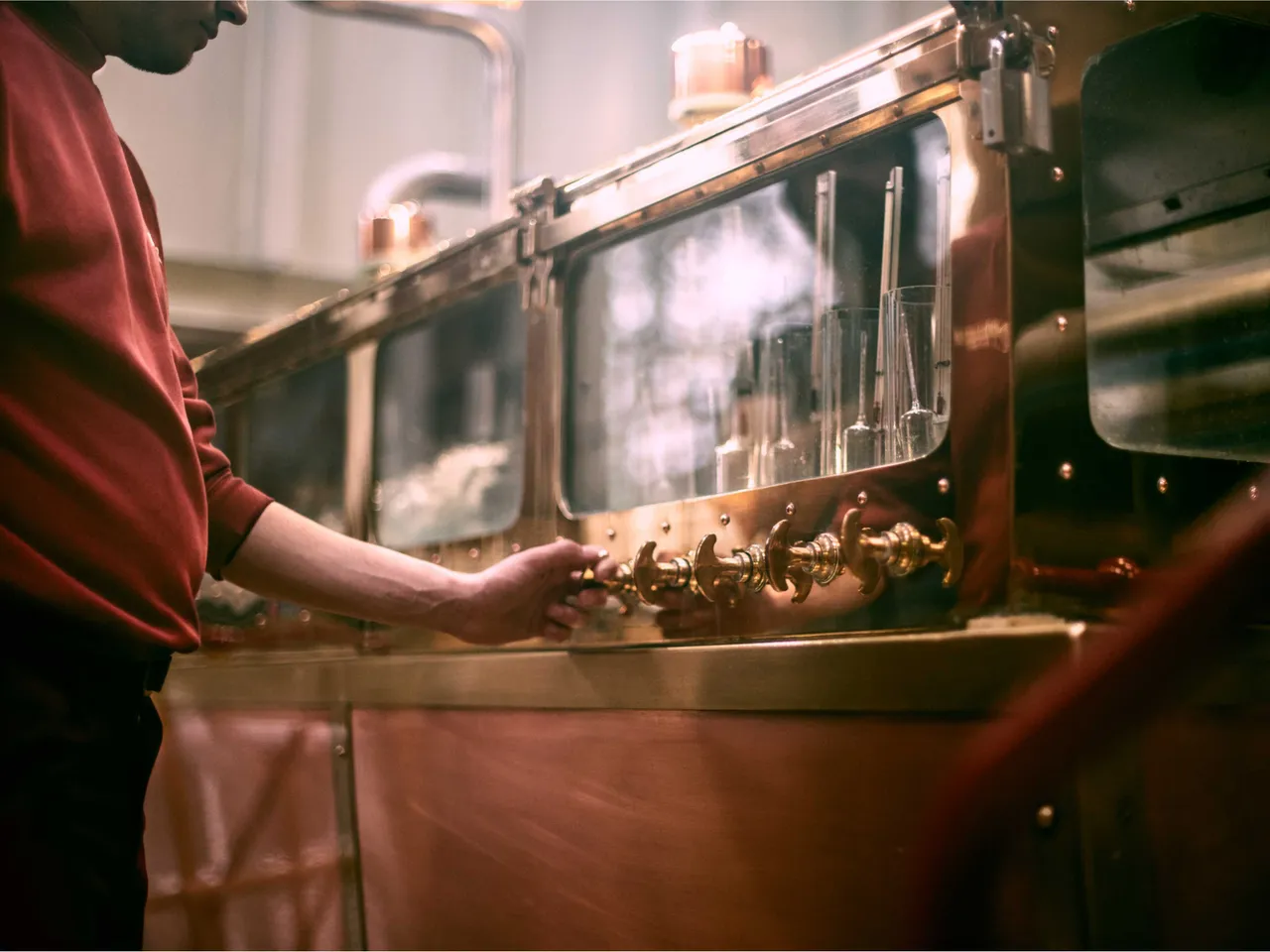
De Aberlour Distillery Spirit Safe- Foto: Pernod Ricard
A broad range of whiskies
The brand has firmly established itself as a single malt, and the range has expanded significantly. There are various age-statement expressions spanning from 10 to 21 years old. The 12 and 14 Year Old Double Cask whiskies sit at the core of the lineup, alongside A’bunadh. For this latter whisky, the Speyside distillery drew inspiration from Old Gaelic.
A’bunadh roughly translates to “the original” or “of the origin.” The story behind this whisky dates back to the distillery’s renovation, when an old bottle, containing this style of whisky, was discovered.
Want to read more on Aberlour? Find the latest on the brand on this special page.
Header photo: Pernod Ricard

loading
POPULAR NEWS
Yamazaki’s New Japanese whisky reveals a surprising side of Spanish oak casks
These 5 Japanese Whiskies Have Been Crowned Liquid Gold (And You Won’t Know Every Name)
A famous whisky distillery has closed – now 20,600 bottles are up for grabs
Scotland Fears for the Future of Single Malt Whisky: Here’s Why

Did you know India’s most popular whisky often has a Scottish secret?
From Amrut to Indri: These Indian Whiskies Are Turning Heads in 2026
Hazelburn whisky's historic name hides details that might surprise the whisky lover

Johnnie Walker Embraces K-Pop with a New Collaboration
Scottish whisky brand reveals three new 10-year-old single malts in major shake-up
Lagavulin 8 vs Lagavulin 16: Why the Younger Islay Single Malt Could Come Out on Top
LATEST COMMENTS
- Thank you for the compliment. I really appreciate it.M0nkey31-08-2026
- I enjoyed reading the different approaches to building a whisky collection. Whether you collect by region, style, or limited releases, discovering new brands keeps the hobby interesting. Soorahi is another premium whisky worth considering for collectors looking to explore the evolving world of quality whiskies.dinesh04-08-2026
- There is no distillery equipment there and also no licences to produce or sell alcohol.TRC19-12-2025
- Hi Yvonne, Thank you for your response and for sharing the video. Unfortunately, the evidence you referred to consists only of two people talking about the whisky, without any explanation or identification. We have not spoken to the individuals in the video ourselves, nor can we verify who they are. We describe it as a Chinese whisky because it is released by a Chinese distillery. As you mentioned, the distillery has chosen to label the product as “pure malt” instead of “Chinese whisky.” Based on that, we do not believe they are doing anything illegal.M0nkey16-11-2025
- So - you have the proof......where's your write up?Yvonne16-11-2025
- You are absolutely right. Luckily that doesn't matter for the taste of the whisky. Have you tried it yet?M0nkey05-11-2025
- Guess what? Finland is not part of Scandinavia.Gray105-11-2025
- Throw in the towel? You mean restructure to compete and win in a challenging industry environment.WestwardFounder21-10-2025
- There is nothing legally to prevent the English whisky GI from coming into force, it complies with all the relevant laws and the single malt definition follows the precedent of Welsh whisky and US whiskyChefBear15-10-2025
- Three emails sent (two with videos, linked to a Google Drive Share). 1. The original video. 2. The video with subtitles as it was shared on YouTube 3. Screen grab of the YouTube channel where the video was blocked due to Pernod Ricard lobbying. The story was covered on Drinks Intel at the time - link here - https://drinks-intel.com/subscriber-news/pernod-ricards-the-chuan-pure-malt-whisky-not-sourced-solely-from-china-global-drinks-intel-exclusive/Yvonne10-10-2025