Never miss whisky news, reviews, and new releases again.
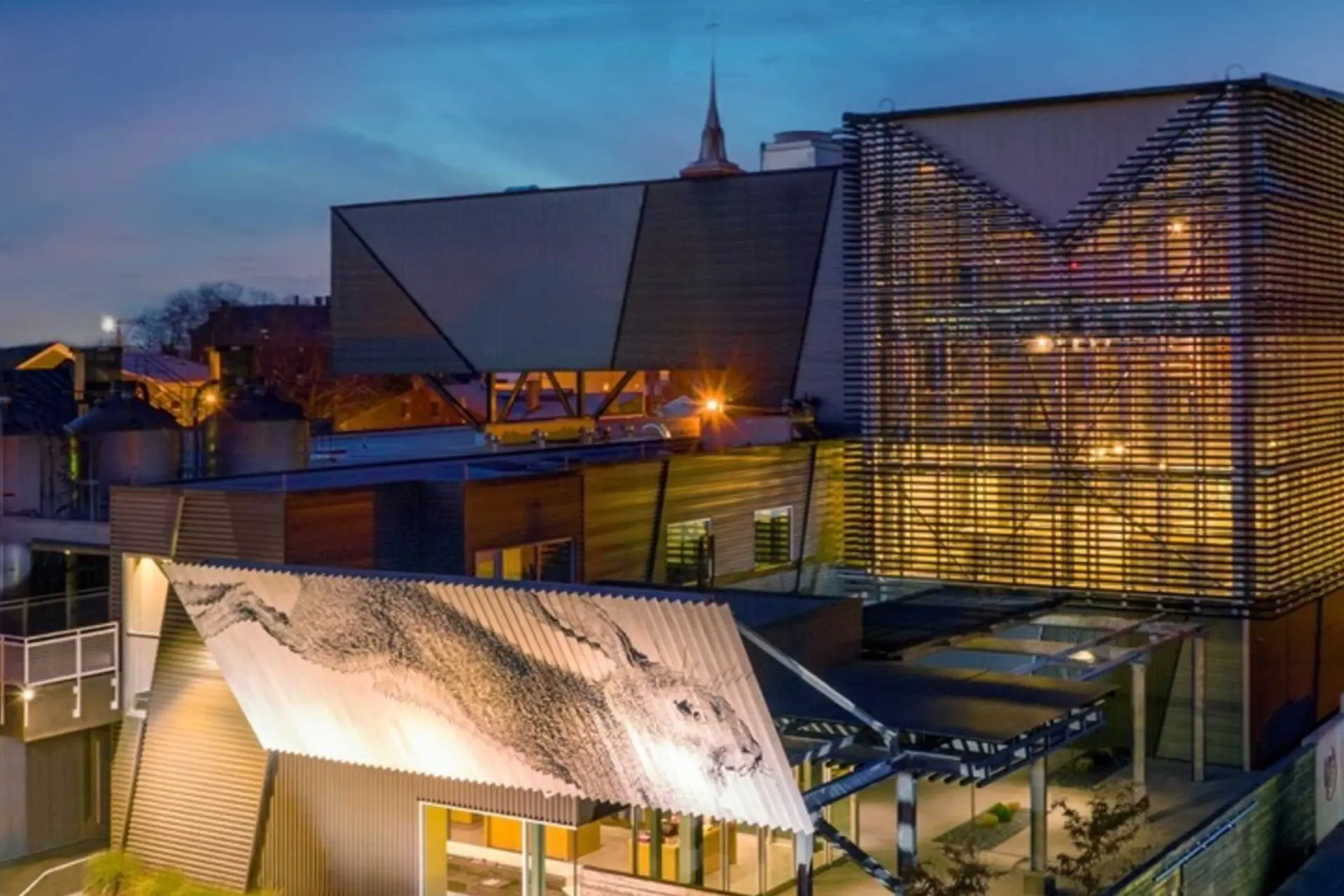
Add Whisky Monkeys as a Google favoriteThis week we’re heading back to Scotland, taking you to the Springbank Distillery in Campbeltown on the Kintyre peninsula, the place Paul McCartney sang so beautifully about, and where handcrafted whisky flows from the stills.
The Kintyre peninsula lies between the islands of Arran and Islay a landscape of rolling hills, rugged shores, and wide forests. Ruins of ancient castles, like the Royal Castle of Tarbert, still echo with stories from the past. Arrive in the town of Campbeltown and you can’t miss the white lighthouse on Davaar Island, a fitting gateway into the town’s rich whisky heritage.
Campbeltown, once the whisky capital of the world
In an era when Campbeltown was best known as a smuggler’s haven, Archibald and Hugh Mitchell founded the Springbank distillery, the fourteenth licensed distillery on the peninsula. Not long after, Campbeltown was home to 34 working distilleries and wore the crown as the whisky capital of the world.
The golden years, however, didn’t last forever. The whisky market collapsed, for reasons as varied as they were severe. In the early 20th century, Europe was plunged into the First World War, and Prohibition in the United States dealt Campbeltown a heavy blow.
Overproduction compounded the problem, while consumer tastes shifted from robust single malts to softer, more approachable whiskies. Interest in Campbeltown’s style waned dramatically. Leading distilleries like Rieclachan and Kinloch closed their doors, and the era of Campbeltown as the world’s whisky capital came to an end.
Sirvuval of the fittest
Only Glen Scotia and Springbank survived the downturn. It was a close-run thing: the region’s decline threatened Campbeltown’s official status as a recognized whisky region. The Scotch Whisky Association sets a high bar for the nation’s flagship export.
Fortunately, the Mitchell family stepped in, reopening the old Glengyle distillery and ensuring Campbeltown retained its status as a Scotch whisky region.
For many enthusiasts, that was a masterstroke and we’re still grateful for it today.
Read also
One distillery, three labels
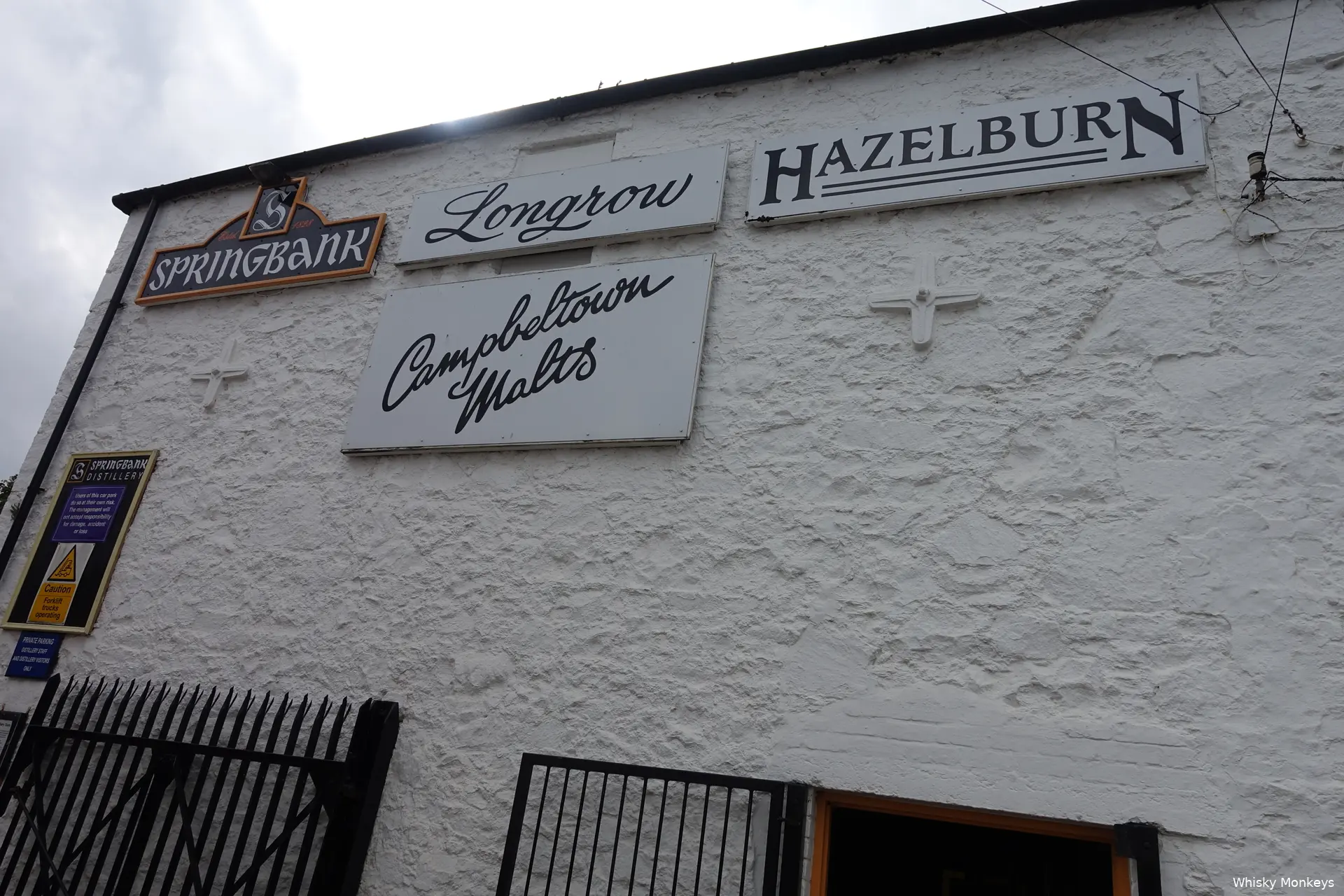
Springbank produces no fewer than three distinct whiskies: Longrow, Hazelburn, and of course Springbank. Longrow is heavily peated and distilled twice. Hazelburn is its stylistic counterpoint—triple distilled and unpeated.
The distillery’s flagship, Springbank, is lightly peated, a meeting point of those two worlds. While most whiskies are distilled either twice or three times, Springbank does things differently: it’s distilled two and a half times.
That might sound odd, but it isn’t. Think of it like cooking, where a different method can bring out a whole new character. You’ve got regular pizza, and then you’ve got stone-baked pizza.
Anyway, back to the whisky. This unusual approach comes from using different stills. The first distillation run happens in a pot still. For the second, they use a spirit still made up of two parts: the wash still and the spirit still. By taking only a portion from the spirit still, Springbank earns that unique “two and a half times distilled” distinction.
A not so secret secret
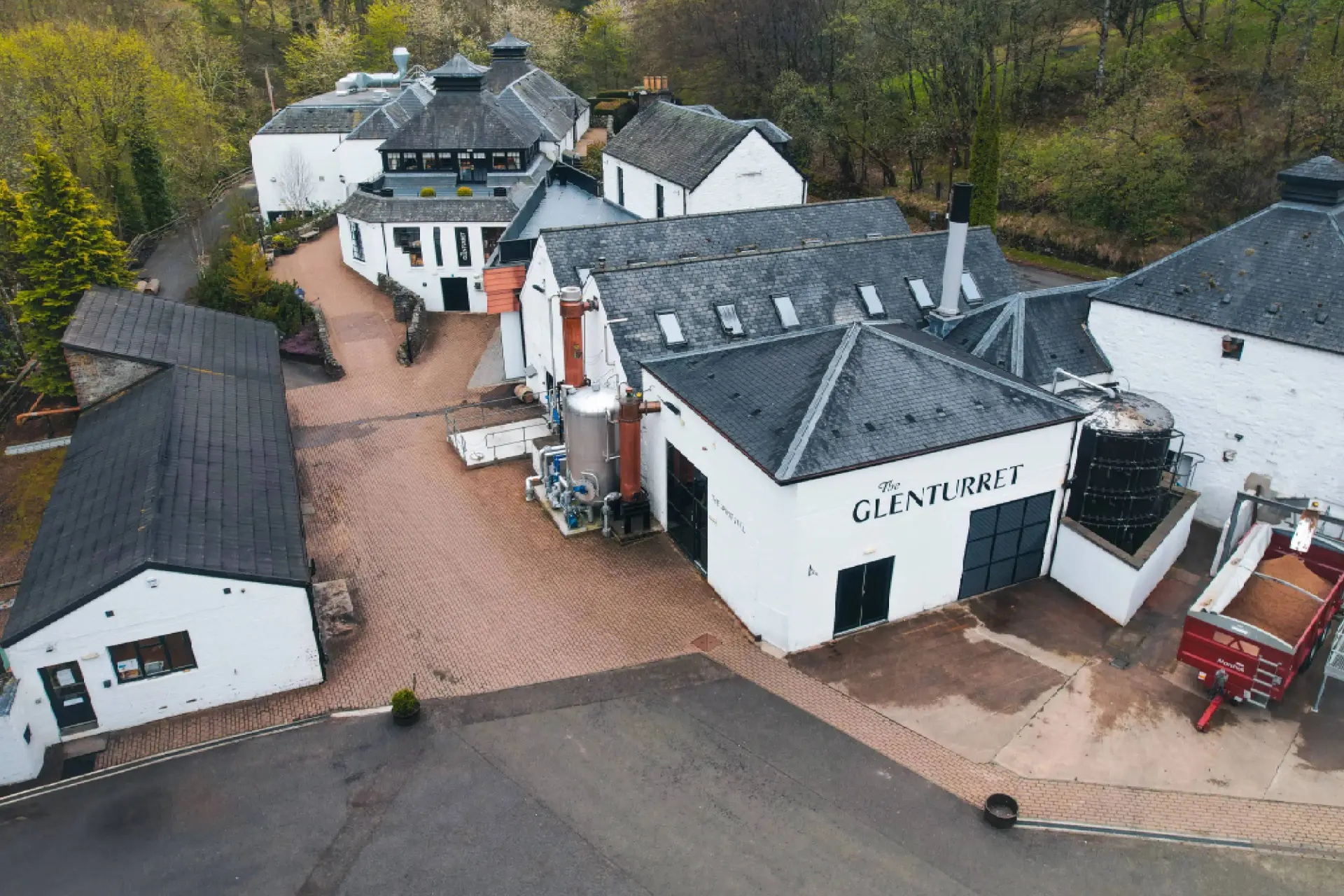
The not-so-secret secret of Springbank Springbank is revered by whisky lovers around the globe. But what truly sets this single malt apart? At Springbank, whisky is still crafted the traditional way. It’s the only producer in Scotland that carries out every step of production on site—right down to growing and malting its own barley. Most other distilleries buy their barley already malted.
Much of Springbank’s process is done by hand. You’d be right to assume that takes time—and it does. Each year, “only” around 750,000 litres of pure alcohol (LPA) flow from the stills. For context: The Macallan produces 9 to 10 million LPA annually.

Planning a visit to Springbank?
Don’t forget the neighbors! If you want to experience Springbank’s rich history first-hand, you can reach the maritime town on Campbeltown Loch by ferry, car, or plane. There are various tours and tastings, and if you want the full experience, you can even stay on-site for three nights, priced at £800, to immerse yourself in everything Springbank.
Short on time? The Springbank Tour is perfect for a day trip to Campbeltown. In about an hour, a guide walks you through every stage of production, finishing with a lovely dram from the core range. You’ll take home a glass and a miniature as a keepsake, all for just 12 pounds.
Not ready to say goodbye to Campbeltown? For an extra 12 pounds, you can tour the neighbors next door: the revived Glengyle Distillery, where the whiskies go by the name Kilkerran. The sister distillery sits right beside Springbank and crafts a single malt that, like Longrow, Hazelburn, and Springbank, is of outstanding quality.
Want more of our Distillery Thursday features? See the full overview.
loading
POPULAR NEWS
Whisky Names Explained: Octomore
Bowmore Brings Back a Devilish Whisky After More Than 10 Years (and Two Old Casks Take Center Stage)
Glenfiddich, Ardbeg, and Jameson are joined by new names on the 2026 Best Whiskies list
This Japanese whisky is almost too beautiful to open
From Rat to Dragon and Goat: These Whisky Bottles Form a Remarkable Collection
Japanese Oak Lends a Distinctive Twist to This Belgian Whisky (Review)

Belgian distillery unveils Brussels’ first whisky, but you’ll need to act fast if you want one
This Highlander is Glenmorangies oldest whisky ever
5 Indian whiskies that taste like liquid gold
There’s a remarkable idea behind the name of this ultra-rare Macallan TIME: SPACE whisky
LATEST COMMENTS
- Thank you for the compliment. I really appreciate it.M0nkey31-08-2026
- I enjoyed reading the different approaches to building a whisky collection. Whether you collect by region, style, or limited releases, discovering new brands keeps the hobby interesting. Soorahi is another premium whisky worth considering for collectors looking to explore the evolving world of quality whiskies.dinesh04-08-2026
- There is no distillery equipment there and also no licences to produce or sell alcohol.TRC19-12-2025
- Hi Yvonne, Thank you for your response and for sharing the video. Unfortunately, the evidence you referred to consists only of two people talking about the whisky, without any explanation or identification. We have not spoken to the individuals in the video ourselves, nor can we verify who they are. We describe it as a Chinese whisky because it is released by a Chinese distillery. As you mentioned, the distillery has chosen to label the product as “pure malt” instead of “Chinese whisky.” Based on that, we do not believe they are doing anything illegal.M0nkey16-11-2025
- So - you have the proof......where's your write up?Yvonne16-11-2025
- You are absolutely right. Luckily that doesn't matter for the taste of the whisky. Have you tried it yet?M0nkey05-11-2025
- Guess what? Finland is not part of Scandinavia.Gray105-11-2025
- Throw in the towel? You mean restructure to compete and win in a challenging industry environment.WestwardFounder21-10-2025
- There is nothing legally to prevent the English whisky GI from coming into force, it complies with all the relevant laws and the single malt definition follows the precedent of Welsh whisky and US whiskyChefBear15-10-2025
- Three emails sent (two with videos, linked to a Google Drive Share). 1. The original video. 2. The video with subtitles as it was shared on YouTube 3. Screen grab of the YouTube channel where the video was blocked due to Pernod Ricard lobbying. The story was covered on Drinks Intel at the time - link here - https://drinks-intel.com/subscriber-news/pernod-ricards-the-chuan-pure-malt-whisky-not-sourced-solely-from-china-global-drinks-intel-exclusive/Yvonne10-10-2025
Loading