Never miss whisky news, reviews, and new releases again.
Add Whisky Monkeys as a Google favoriteThis weekend, Amsterdam was the place to be. A former ship-engine factory hall now provides the industrial backdrop for the Netherlands’ biggest drinks event. Whiskymonkeys was there to take you on a tour of some fascinating stories and stands.
At three o’clock on the dot, we step inside the magnificent Kromhouthal. The Art of Drinks is spaciously laid out, with plenty of room for everyone looking to explore the world of drinks this weekend.
Beneath the steel beams of this industrial event venue, we find stands offering alcohol-free drinks, beer, wine and a range of spirits—including, of course, whisky. There’s a food corner serving delicious sandwiches and pizza, plus a little coffee cart pouring expertly made espresso. Both are well worth a visit. But naturally, we’re here for the water of life.
Cara Laing’s personal favourite
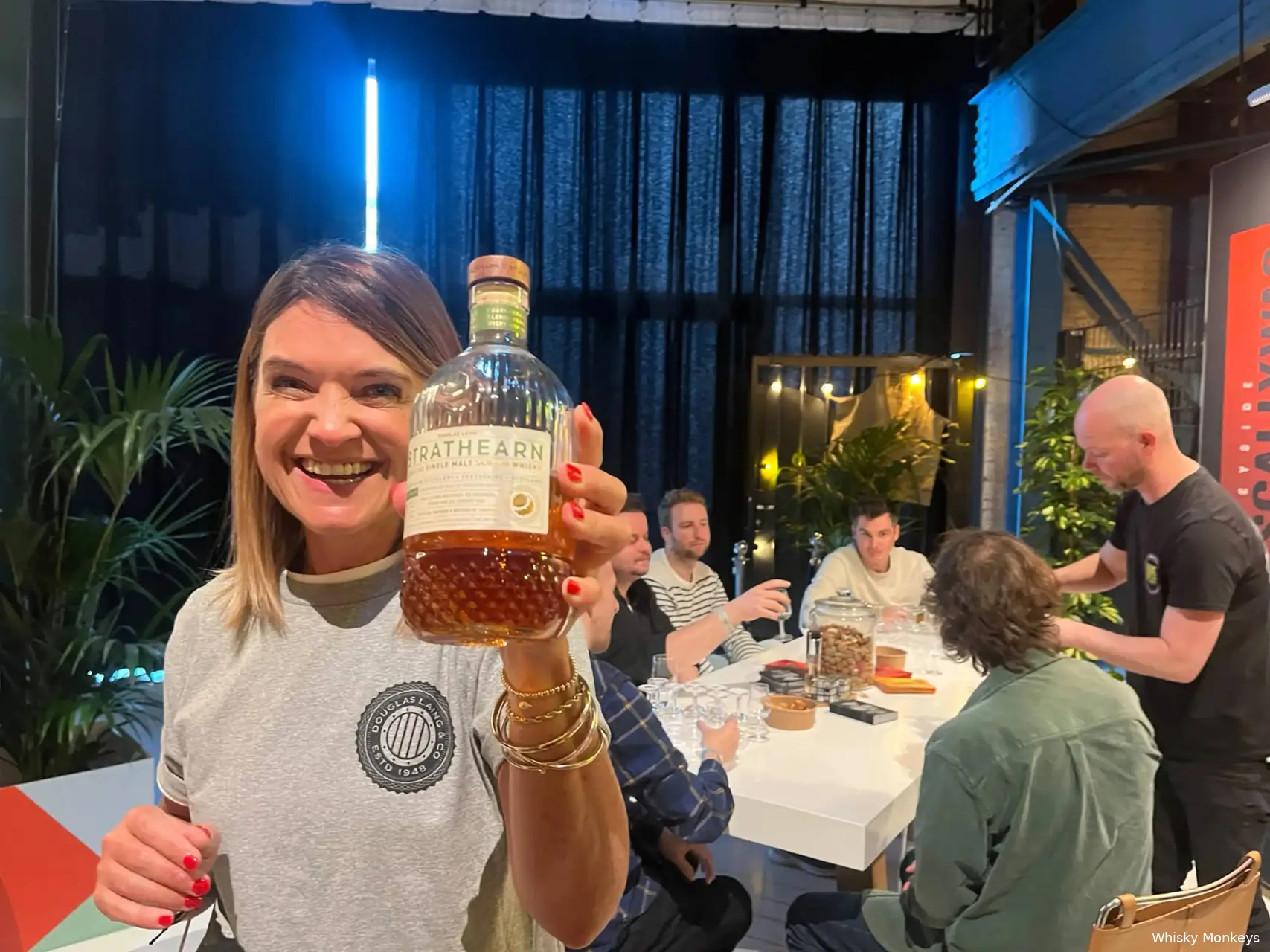
After a first look around, we enjoy our first dram with Valentijn Klop of De Monnik Dranken and Cara Laing of Douglas Laing. All three Strathearn batches are available to taste. The first batch makes extensive use of virgin oak casks, while the second focuses more on bourbon casks. Batch three is our favourite, with its greater emphasis on sherry casks giving it a richer flavour.
We’re treated to a cask sample of a single-cask Strathearn matured in a port cask: a flavour-packed powerhouse at a hefty 60% ABV. Cara Laing, managing director of independent bottler Douglas Laing, proudly tells us about the new Big Peat 10 Years, which has enjoyed an additional 18 months in a former French red wine cask. This flavourful peated blended malt, with its beautiful rosé hue, is her personal favourite at the moment.

Read also
Dutch Gold at the Dam Dranken stand
After some great conversations at Douglas Laing, we make our way through the former factory hall to the Hogshead Import stand. There, we spot Toon de Rooij with an enormous 4.5-litre whisky bottle from which visitors can pour their own dram. We also meet Martijn van Opstal, who joined the Hogshead Import team this year.
He has an exclusive to share: Joris Dam of Dam Dranken is a new addition to the Hogshead Import portfolio. Martijn and Joris tell us about the tall ship Thalassa and the casks ageing on board through a process known as “dynamic ageing”.
We try a Speyside whisky from Elchies in the latest “Waddengoud” series, though its exact identity must remain a secret. What makes this series special is that the Scotch whiskies in these casks can no longer be called Scotch whisky. Dam brought the casks to the Dutch Island Terschelling, where they continued to mature before being bottled, so they no longer qualify as Scotch whisky. Waddengoud offers some beautiful whiskies at prices that may be just as appealing—and, as far as we’re concerned, the Elchies malt is a hit.
As Dam and Van Opstal share their stories, we meet two visitors: Mats Kuhlman (27) and Lot Reekers (30). Dam pours them rum straight from the cask, and they’re clearly impressed. The two young visitors used to work as bartenders at the same bar in Castricum and still enjoy going to food and drink festivals. Rum is their main love, but they’re always happy to enjoy a good glass of whisky too.
A delicious accident
Our search for memorable experiences, great stories and delicious drams continues. We wander across the factory floor and come across a wonderful tale told by Joe Whittaker, global brand ambassador for Berry Bros. & Rudd. At the Craft Spirits stand, he tells us the story of the St. James 10 Year Old blend—a rather spectacular, and costly, accident for the London bottler.
As Whittaker explains, during a cleaning round, some of one of their blends found its way from a pipe into a cask of single malt from the 1980s. We know these kinds of accidents can happen: the earlier 99+1 release from Living Souls was supposedly created by mistake, too.
At the time, the Berry Bros. & Rudd team didn’t know what to do with the cask, so they set it aside. Ten years later, it was rediscovered by chance in the warehouse. They decided to bottle it, giving us the St. James 10 Year Old blend we’re tasting today.
We think it’s an exceptionally tasty whisky, with a distinct old-school character—and it turns out to cost an absurdly low 45 euros a bottle. Robbert van Harskamp of Craft Spirits joins the conversation. “For every sip we take here, someone in London sheds a tear,” we joke.

The coach trip from Bergen op Zoom
Father and son Albert and Corné Weeda, from Bergen op Zoom, are listening alongside us. They love the story and agree that the whisky is excellent. Albert has a bottle at home, but had never heard the story behind it. The two Brabanders are here with their whisky club, DH17.
The Whiskymonkeys recognise the name. “DH17—that’s a liquor store in the south of the country, isn’t it?” The two men confirm with a smile. Today, they’ve even travelled to The Art of Drinks by coach, joining a whole group of loyal customers from the shop. They’ve just enjoyed a delicious dram at GlenAllachie, which they mistook for an Irish distillery. After clearing that up, they head back to the Craft Spirits stand to try a Finnish Teerenpeli matured in PX casks, as dark as cola.

The Kromhouthal fits like a glove
After grabbing a bite in the food court, the Whiskymonkeys wrap up their drinks fair visit at Saburomaru. On our way to the stand, we bump into Albert van Beeck Calkoen. We chat with him about the different editions of The Art of Drinks: previously held at the Westergasfabriek, and now at the Kromhouthal.
Van Beeck Calkoen says the Westergasfabriek was a beautiful venue, but the Kromhouthal is a much better fit for the character of The Art of Drinks. A true perfectionist, he keeps scanning the hall to see what’s working well and what could be improved. We agree that the lighting isn’t ideal for him as a photographer, but the layout and selection of drinks more than make up for it.

A hidden Japanese gem
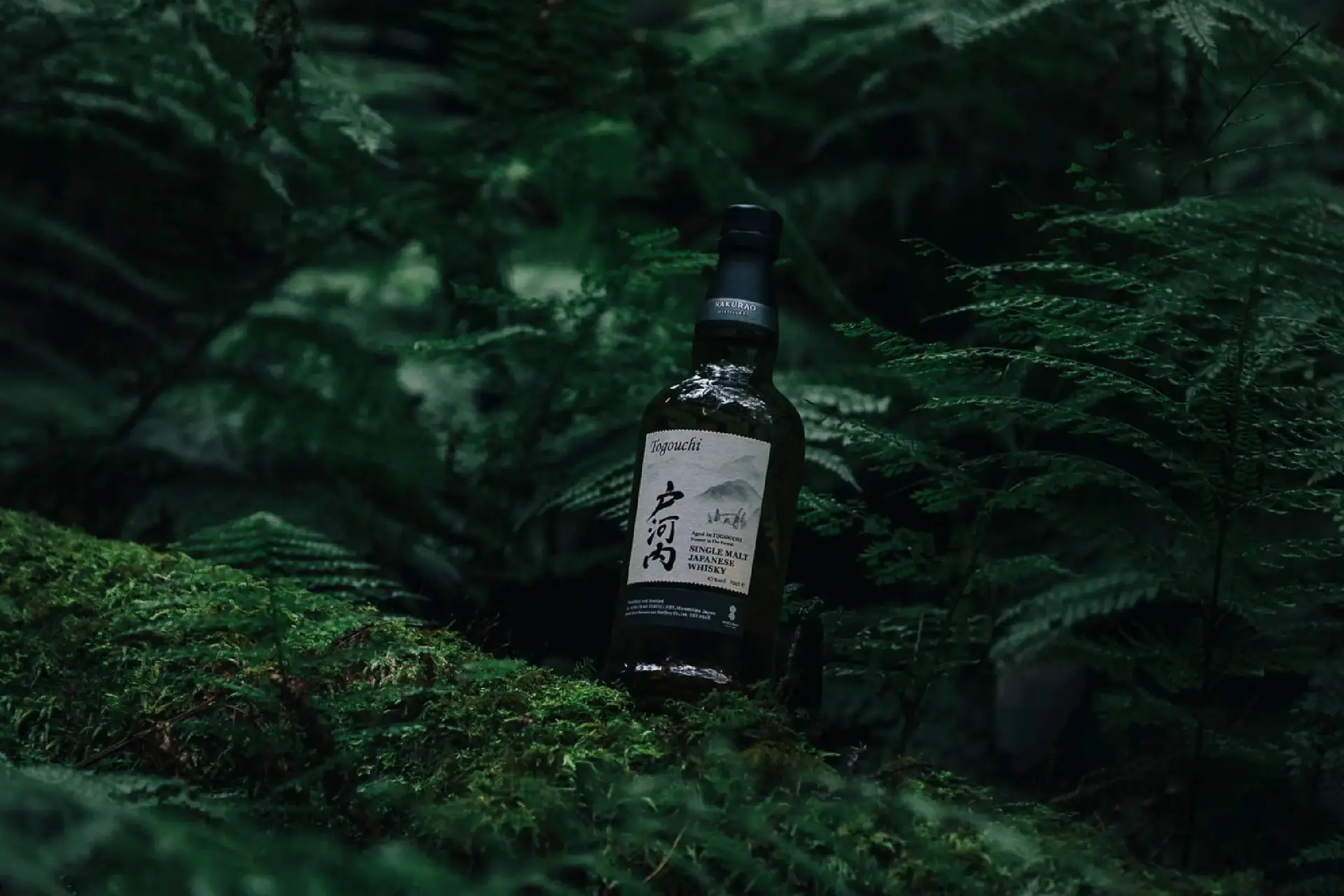
We say goodbye and head over to the stand of Japan’s Saburomaru Distillery. Not only is Saburomaru tricky to pronounce, it’s also a relatively new name on the Dutch whisky scene. We have a long conversation with Natty, the brand ambassador and PR manager. She tells us about the beautiful tarot cards on Saburomaru’s bottle labels, which tell a story of human growth as well as the distillery’s own evolution.
Natty enthusiastically explains that the Japanese distillery is unique in using a ZEMON still—the world’s first pot still made largely from cast bronze. Saburomaru uses only Scottish peated barley for its whiskies, at around 50 parts per million (ppm), choosing both Highland barley and the harder-to-find Islay barley. These two styles come together on the label of Edition VI, ‘The Lovers’, before each takes a bolder path of its own in the heavily peated 80 ppm Editions VII, ‘The Chariot’, and VIII, ‘Strength’.

Before we say goodbye to Natty, we get a first look at something special. Saburomaru is teaming up with Milk & Honey from Israel. The whisky has already been blended, and we even get a glimpse of the labels: a design in a distinctly Japanese style, bringing a dragon and a tiger together.
The whisky hasn’t been released yet and won’t be available in the Netherlands for some time, but we’re already looking forward to its arrival. Impressed by this distillery, and by all the other stories and encounters, we bid farewell to The Art of Drinks. We leave the Kromhouthal feeling satisfied and smiling, and on the train we add four bottles that made a lasting impression to our wishlist.

loading
POPULAR NEWS
Whisky Names Explained: Octomore
Bowmore Brings Back a Devilish Whisky After More Than 10 Years (and Two Old Casks Take Center Stage)
Glenfiddich, Ardbeg, and Jameson are joined by new names on the 2026 Best Whiskies list

This Japanese whisky is almost too beautiful to open

Japanese Oak Lends a Distinctive Twist to This Belgian Whisky (Review)

From Rat to Dragon and Goat: These Whisky Bottles Form a Remarkable Collection

Belgian distillery unveils Brussels’ first whisky, but you’ll need to act fast if you want one

5 Indian whiskies that taste like liquid gold

There’s a remarkable idea behind the name of this ultra-rare Macallan TIME: SPACE whisky
This Highlander is Glenmorangies oldest whisky ever
LATEST COMMENTS
- Thank you for the compliment. I really appreciate it.M0nkey31-08-2026
- I enjoyed reading the different approaches to building a whisky collection. Whether you collect by region, style, or limited releases, discovering new brands keeps the hobby interesting. Soorahi is another premium whisky worth considering for collectors looking to explore the evolving world of quality whiskies.dinesh04-08-2026
- There is no distillery equipment there and also no licences to produce or sell alcohol.TRC19-12-2025
- Hi Yvonne, Thank you for your response and for sharing the video. Unfortunately, the evidence you referred to consists only of two people talking about the whisky, without any explanation or identification. We have not spoken to the individuals in the video ourselves, nor can we verify who they are. We describe it as a Chinese whisky because it is released by a Chinese distillery. As you mentioned, the distillery has chosen to label the product as “pure malt” instead of “Chinese whisky.” Based on that, we do not believe they are doing anything illegal.M0nkey16-11-2025
- So - you have the proof......where's your write up?Yvonne16-11-2025
- You are absolutely right. Luckily that doesn't matter for the taste of the whisky. Have you tried it yet?M0nkey05-11-2025
- Guess what? Finland is not part of Scandinavia.Gray105-11-2025
- Throw in the towel? You mean restructure to compete and win in a challenging industry environment.WestwardFounder21-10-2025
- There is nothing legally to prevent the English whisky GI from coming into force, it complies with all the relevant laws and the single malt definition follows the precedent of Welsh whisky and US whiskyChefBear15-10-2025
- Three emails sent (two with videos, linked to a Google Drive Share). 1. The original video. 2. The video with subtitles as it was shared on YouTube 3. Screen grab of the YouTube channel where the video was blocked due to Pernod Ricard lobbying. The story was covered on Drinks Intel at the time - link here - https://drinks-intel.com/subscriber-news/pernod-ricards-the-chuan-pure-malt-whisky-not-sourced-solely-from-china-global-drinks-intel-exclusive/Yvonne10-10-2025
Loading