Never miss whisky news, reviews, and new releases again.
Add Whisky Monkeys as a Google favoriteArchaeologists in Scotland have made a striking discovery: a hidden illegal whisky still has been uncovered in the middle of a nature reserve. The remarkable find was made at the Ben Lawers National Nature Reserve, near Killin, and is more than 200 years old.
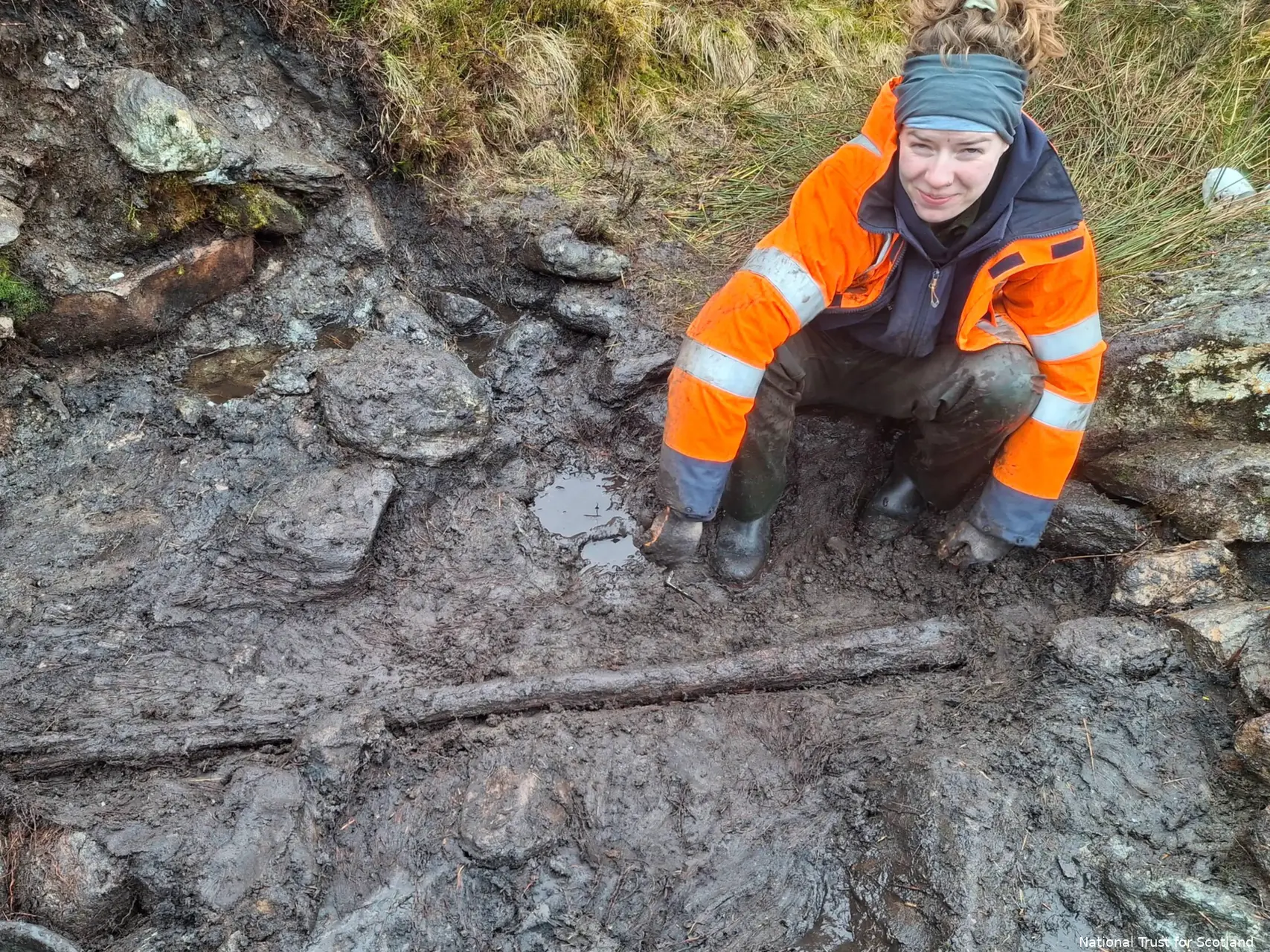
Researchers from the National Trust for Scotland uncovered the remains of a so‑called bothy during fieldwork: a simple shelter used to conceal illicit distilling equipment. Excavations revealed stone walls, a wooden post, a hearth, and a drain beneath a stone floor.
The bothy’s location appears to have been chosen with care. Not only does it sit in the heart of a national park, it’s also tucked into a bend of the burn, making the still hard to spot from both upstream and downstream. It suggests the illicit distillers knew exactly how to keep their activities out of sight of the authorities.

A rare discovery comes to light
One of the most striking finds is a piece of copper alloy. According to the archaeologists, it’s likely a connector leading to the lyne arm. That makes this discovery especially noteworthy. Several illegal distilleries have now been identified in the nature reserve, but this is the first site where an actual metal component of a still has been found.
Illicit whisky makers were known for traveling light and leaving as few traces as possible. The metal part may therefore have been left behind by accident: perhaps when the distillers were forced to break down their kettles and other equipment in a hurry as the Excise man approached.
Shedding new light on illicit distilling after the Excise Act
This whisky discovery sheds fresh light on a pivotal period in Scotland’s whisky history. In the late 18th and early 19th centuries, illicit distilling surged, especially after the Excise Act of 1788, which banned the use of small household stills.
Through the project The Pioneering Spirit, which investigates illegal whisky sites across Scotland, researchers are exploring the true scale of the practice and where it took place. The project has already identified 30 locations where whisky was likely distilled illicitly in the past.
Evidence of illegal distilling has also turned up elsewhere in Scotland. In 2008, foresters discovered the remains of a small still in Glen Affric, in the Highlands. And in 2019, two abandoned farms in Loch Lomond and The Trossachs National Park were recognized as former illicit whisky sites.
An important find for Scotch whisky history
The Ben Lawers discovery shows how archaeology can unearth hidden stories of whisky, smuggling, and local communities. Where documents often fall short, stones, wood fragments, and a small piece of copper can still tell the tale of people quietly making whisky in the Scottish hills.
How many illegal distilleries will ultimately come to light remains to be seen.
Want to see more from Whisky Monkeys?
Good news. You can now let Google know that you’d like to see more articles from us. This helps us, and it means you won’t miss out on whisky news, reviews, tips, deals, and stories about special bottles. Best of all, it doesn’t cost you anything.
loading
POPULAR NEWS
India halves the import duty on Scotch, so why aren’t whiskies not getting cheaper?

Whisky import duty halved overnight in deal with a major whisky nation
The whisky deal helps almost everyone in India, except one group
5 whiskies that pair surprisingly well with a barbecue
From Taiwan to India: the Asian whiskies making waves in 2026
This Summer, Skip the Highball: Mix a Skyeball with This Scotch Whisky
From Lagavulin to Glen Scotia: The very best Scotch whiskies of 2026
Harrison Ford made a Glenmorangie whisky, but is it actually good? (Review)
10 Chocolate whisky pairings you need to try
This Macallan whisky hints at aroma's deeper than it's name
LATEST COMMENTS
- I enjoyed reading the different approaches to building a whisky collection. Whether you collect by region, style, or limited releases, discovering new brands keeps the hobby interesting. Soorahi is another premium whisky worth considering for collectors looking to explore the evolving world of quality whiskies.dinesh04-08-2026
- There is no distillery equipment there and also no licences to produce or sell alcohol.TRC19-12-2025
- Hi Yvonne, Thank you for your response and for sharing the video. Unfortunately, the evidence you referred to consists only of two people talking about the whisky, without any explanation or identification. We have not spoken to the individuals in the video ourselves, nor can we verify who they are. We describe it as a Chinese whisky because it is released by a Chinese distillery. As you mentioned, the distillery has chosen to label the product as “pure malt” instead of “Chinese whisky.” Based on that, we do not believe they are doing anything illegal.M0nkey16-11-2025
- So - you have the proof......where's your write up?Yvonne16-11-2025
- You are absolutely right. Luckily that doesn't matter for the taste of the whisky. Have you tried it yet?M0nkey05-11-2025
- Guess what? Finland is not part of Scandinavia.Gray105-11-2025
- Throw in the towel? You mean restructure to compete and win in a challenging industry environment.WestwardFounder21-10-2025
- There is nothing legally to prevent the English whisky GI from coming into force, it complies with all the relevant laws and the single malt definition follows the precedent of Welsh whisky and US whiskyChefBear15-10-2025
- Three emails sent (two with videos, linked to a Google Drive Share). 1. The original video. 2. The video with subtitles as it was shared on YouTube 3. Screen grab of the YouTube channel where the video was blocked due to Pernod Ricard lobbying. The story was covered on Drinks Intel at the time - link here - https://drinks-intel.com/subscriber-news/pernod-ricards-the-chuan-pure-malt-whisky-not-sourced-solely-from-china-global-drinks-intel-exclusive/Yvonne10-10-2025
- Hi Yvonne, Thank you for your interesting comment. Could you share your copy with us, so we can adjust our item accordingly? Mail us at [email protected]. Thank you in advance.M0nkey09-10-2025
Loading