How illicit stills gave rise to Scotland’s oldest distillery (Distillery Thursday)
SectionsThursday, 18 December 2025 at 15:03
Never miss whisky news, reviews, and new releases again.
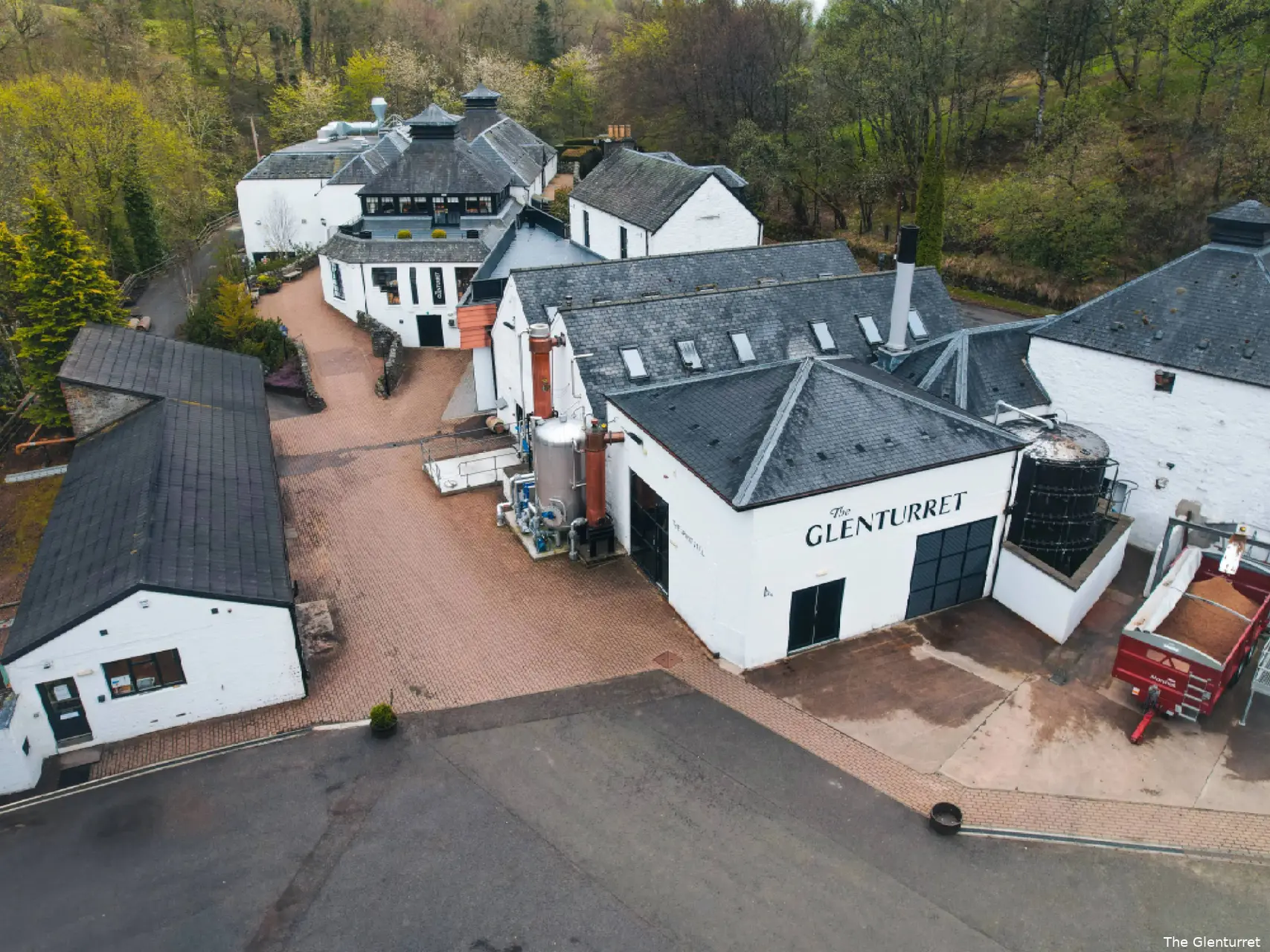
Add Whisky Monkeys as a Google favoriteAmid the green hills of Perthshire stands a distillery that has weathered more than almost any other: The Glenturret. What today is a luxurious, artisanal single malt began centuries ago as a clandestine operation. Discover the story of Scotland’s oldest working distillery in this Distillery Thursday.
Nestled among the rolling hills of Perthshire, just outside the town of Crieff, The Glenturret lies tucked along the River Turret. Step onto the grounds today and you walk straight into a tale spanning more than three centuries: a history of smuggling, craftsmanship, quiet years, and rebirth.
Illegal stills in a remote valley
Long before The Glenturret bore its current name, the secluded valley around the Turret was a haven for illicit distilling. The landscape couldn’t have suited secret stills better.
Thanks to its vantage points and sightlines, you could spot the taxman from a long way off. The entire valley is easy to survey, and the natural cover kept excisemen from discovering the operations too quickly.
Although it’s unclear exactly when distillation at The Glenturret first began, a document does confirm that it is Scotland’s oldest working distillery.
A 1763 lease from Sir Patrick Murray of Ochentyre shows that whisky was already being made that year under the name Thurot Distillery. The clandestine production continued for years until a new owner arrived in 1814.
From the shadows to modest legal distilling
The Murray family sold the distillery to Thomas MacInnes, who had a new name in mind: The Hosh Distillery, after the foot of the hills. The name derives from the Gaelic ‘cois’, meaning ‘foot’.
Meanwhile the local whisky economy was growing and becoming increasingly legitimate. Eventually, The Hosh Distillery stepped out of the shadows and went legal. In 1818 a license was granted to John Drummond, who immediately set about expanding the distillery.
The valley’s whisky was no longer a secret; it was sold openly. This happened on a modest, small scale. From day one, the craft production focused on quality, not quantity.

A distinctive profile
John and Hugh Drummond knew their craft. They secured an official document stating that The Hosh Distillery alone was permitted to use water from Loch Turret. It also granted the distillery exclusive rights to the peat along the riverbanks.
That proved crucial, because in the 19th century Perthshire became dotted with small distilleries. Many disappeared during economic downturns, tax hikes, or simply through overproduction.
Hosh endured, thanks in part to the whisky’s unique character and the small-batch, artisanal approach. Around 1870 the distillery’s name changed again, though not yet officially.

The arrival of Glenturret
The official change came in 1875 under Thomas Stewart. The new name is the one that still gleams on the facade and the bottles today: The Glenturret.
The name permanently ties the whisky to its origins. It blends two words: ‘glen’ and ‘turret’. While ‘glen’ denotes the valley, ‘turret’ points to the crystal-clear water that shapes the whisky’s gentle style.

Bloom, silence, and near-oblivion
Up to this point, the Scottish distillery had fared reasonably well, but like so many others, The Glenturret struggled in the early 20th century. The First World War forced the stills to go cold and the doors to close.
That pause lasted beyond the war. An attempt to restart was stifled by American Prohibition and its economic fallout. In 1923, the curtain finally fell.
The buildings served only as storage for more than 350,000 liters of maturing whisky. Otherwise, the distillery stood still: a monument to a once-thriving whisky industry. The aromas of grain, yeast, and aging spirit gave way to dust.

The revival of The Glenturret
Signs of life returned only in the 1950s. Whisky enthusiast James Fairlie revived the distillery in 1957, choosing traditional methods and a hands-on approach.
Using the original equipment, he brought the Scottish distillery back to life, distilling for 20 years as owner and master distiller. Around him, industrialization gathered pace and handcraftsmanship receded.
Thanks to its relatively small pot stills and artisanal process, The Glenturret is defined by a profile of fruity aromas, delicate florals, creamy vanilla, and subtle oak, occasionally threaded with a wisp of smoke in certain expressions.
In 1980, The Glenturret opened its doors to the public, welcoming over one million visitors in the years that followed. Meanwhile, the distillery changed hands, first to Highland Distillers and later to The Edrington Group.
Read also
Tradition in a modern age
In 2019, a new chapter began as two owners took over the distillery: Swiss-American philanthropist Hansjörg Wyss and the French crystal house Lalique Group.
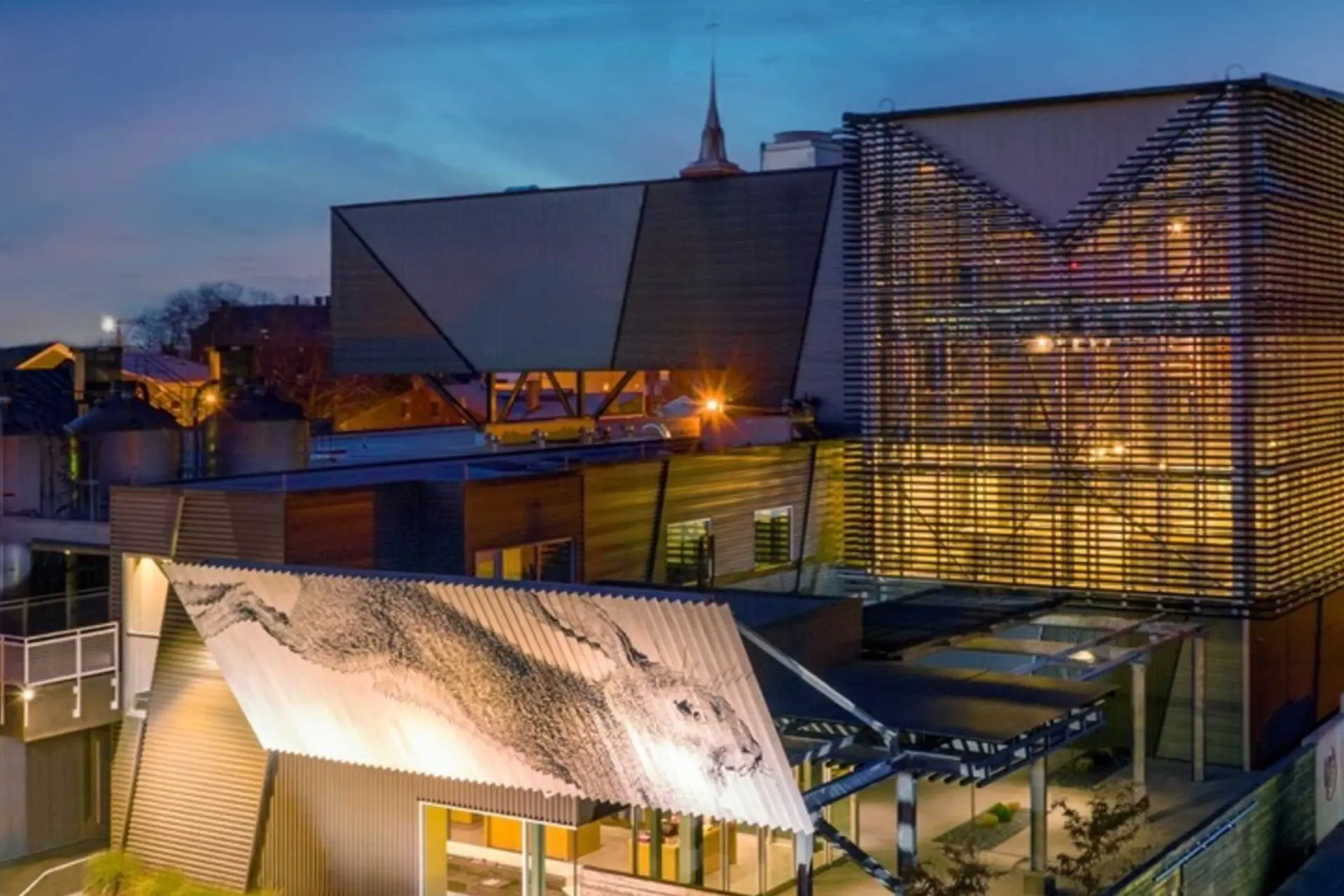
Under their leadership, the distillery was renovated and the brand’s look and feel were reimagined. The visitor center was completely refreshed and a fine-dining restaurant was added.
Whisky production remained untouched. The distillery continues to work by hand, just as it has for decades.
The whisky decanter was redesigned under the direction of Marc Larminaux, Creative Director at Lalique. The new design embodies craftsmanship while also reflecting Lalique’s luxurious aesthetic.

The Glenturret today: living heritage
In September 2022, something special was bottled at The Glenturret: the brand’s first 50-year-old whisky, released in an edition of 150 bottles. The first bottle was auctioned at Sotheby’s for £63,000. The remaining bottles were sold.
Today, several aged expressions from the brand are available, including in the distillery’s core range. Alongside Triple Wood, the lineup features 7-, 10-, 12-, 14-, and 15-year-old single malts. Two of these are still peated, but this year marks the final time peated whiskies will appear in the core range.
Beyond that, limited and older releases appear regularly: sometimes as exclusive collaborations or built around a special theme.

Centuries of history to experience
If you’d like to get closer to The Glenturret story, book a tour at the distillery in Scotland. You’ll find a wide range of tours on their website.
One tour guides you through the historic buildings, while another takes you into the warehouses to breathe in the aroma of maturing whisky. And how about an in-depth tasting of the whisky maker’s rare releases?
For more information about The Glenturret whisky and the tours available to book, visit the distillery’s website.
loading
POPULAR NEWS

Next year’s exclusive Johnnie Walker whisky is already on sale

The 10 whisky brands connoisseurs admire most
You’ll never drink whisky the same way after trying these chocolate pairings
Scottish community distillery sounds the alarm as whisky industry downturn bites

A brand new Ardbeg is coming and the current whiskies are getting a new look
UK government shuts down whisky company over the sale of non-existent casks

Laphroaig honors its savior with an extraordinarily old and rare whisky

Whisky Names Explained: Highland Park Dragon Legend
This rare whisky combines Belgian spirit with Japanese craftsmanship
Breaking: English whisky wins historic protection
LATEST COMMENTS
- Thank you for the compliment. I really appreciate it.M0nkey31-08-2026
- I enjoyed reading the different approaches to building a whisky collection. Whether you collect by region, style, or limited releases, discovering new brands keeps the hobby interesting. Soorahi is another premium whisky worth considering for collectors looking to explore the evolving world of quality whiskies.dinesh04-08-2026
- There is no distillery equipment there and also no licences to produce or sell alcohol.TRC19-12-2025
- Hi Yvonne, Thank you for your response and for sharing the video. Unfortunately, the evidence you referred to consists only of two people talking about the whisky, without any explanation or identification. We have not spoken to the individuals in the video ourselves, nor can we verify who they are. We describe it as a Chinese whisky because it is released by a Chinese distillery. As you mentioned, the distillery has chosen to label the product as “pure malt” instead of “Chinese whisky.” Based on that, we do not believe they are doing anything illegal.M0nkey16-11-2025
- So - you have the proof......where's your write up?Yvonne16-11-2025
- You are absolutely right. Luckily that doesn't matter for the taste of the whisky. Have you tried it yet?M0nkey05-11-2025
- Guess what? Finland is not part of Scandinavia.Gray105-11-2025
- Throw in the towel? You mean restructure to compete and win in a challenging industry environment.WestwardFounder21-10-2025
- There is nothing legally to prevent the English whisky GI from coming into force, it complies with all the relevant laws and the single malt definition follows the precedent of Welsh whisky and US whiskyChefBear15-10-2025
- Three emails sent (two with videos, linked to a Google Drive Share). 1. The original video. 2. The video with subtitles as it was shared on YouTube 3. Screen grab of the YouTube channel where the video was blocked due to Pernod Ricard lobbying. The story was covered on Drinks Intel at the time - link here - https://drinks-intel.com/subscriber-news/pernod-ricards-the-chuan-pure-malt-whisky-not-sourced-solely-from-china-global-drinks-intel-exclusive/Yvonne10-10-2025
Loading