Lost casks, ghost stories and sherry: The fascinating history of Glengoyne
SectionsThursday, 11 June 2026 at 14:12
Never miss whisky news, reviews, and new releases again.
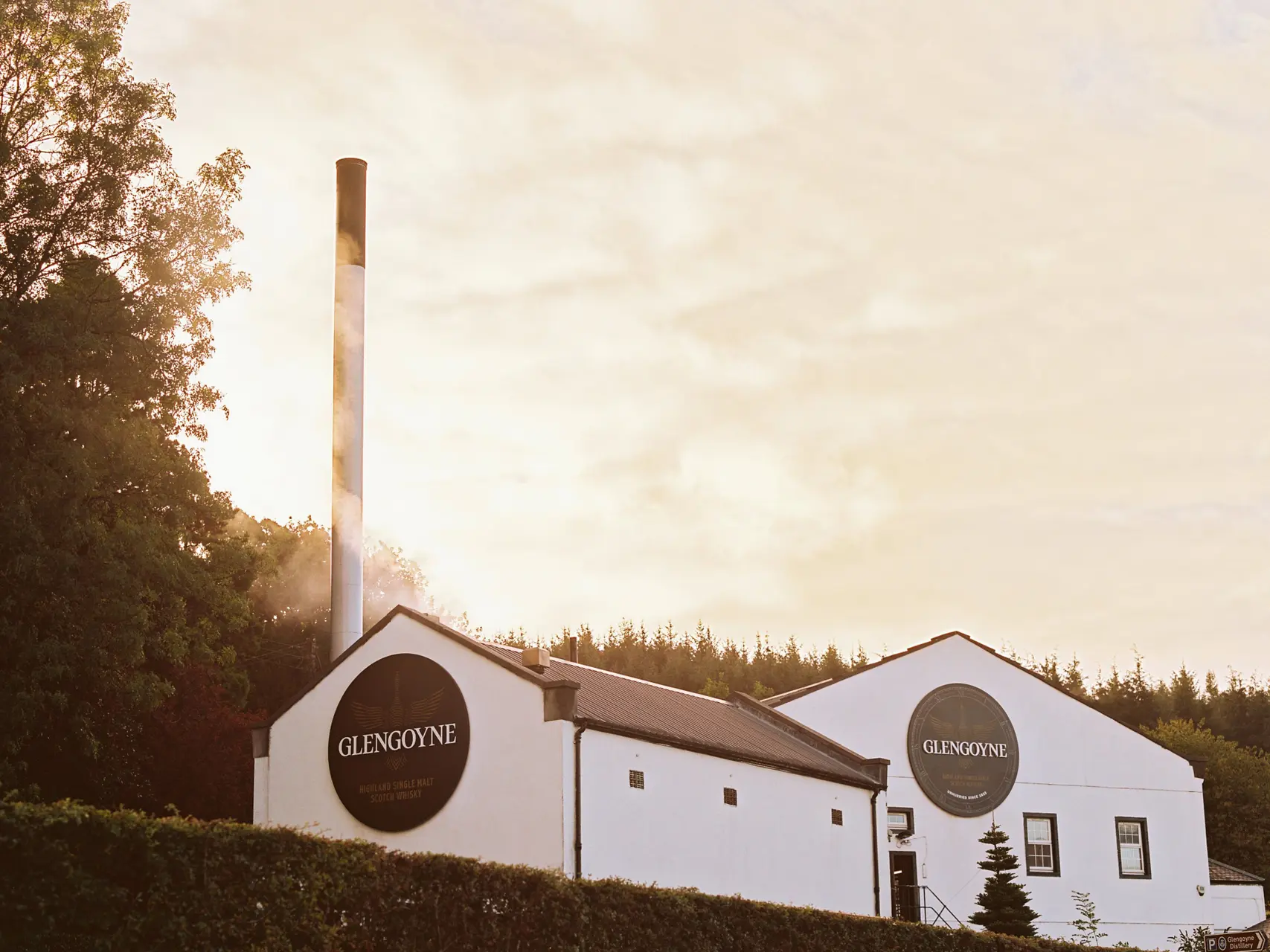
Add Whisky Monkeys as a Google favoriteLike many other Scottish distilleries, Glengoyne has a story that reaches far back into the past. The distillery’s roots lie in the 19th century, a time when illicit distilling was still widespread in Scotland, especially in the Highlands.
A perfect spot for a secret still
In this Distillery Thursday we travel back to 1820, the year Scotsman George Connell decided to set up a hidden distillery at Burnfoot Farm. It became one of thirteen illegal stills in the area.
The location for the clandestine operation was ideal. The farm he transformed into a distillery sat beside a waterfall fed by the waters of Carron Valley.
A small stream, now known as the Glengoyne Burn, or the Distillery Burn, runs from there along Dumgoyne Hill all the way to a small dam beside the farm.
The site didn’t just have the perfect water source; it was also well concealed. Burnfoot lies behind a small hill, keeping it out of sight of the exciseman, the tax inspector. Distilleries were required to pay duty, but McConnell had little interest in that.
Unhurried distillation
Although the distillery had been running for several years, it wasn’t until 1833 that it became official. That’s when Connell chose to obtain a license and leave his illicit days behind.
The distillery was christened Burnfoot, also known as Burnfoot of Dumgoyne. Connell worked at his own pace and coined a fitting motto that still rings true today: “Unhurried since 1833.”
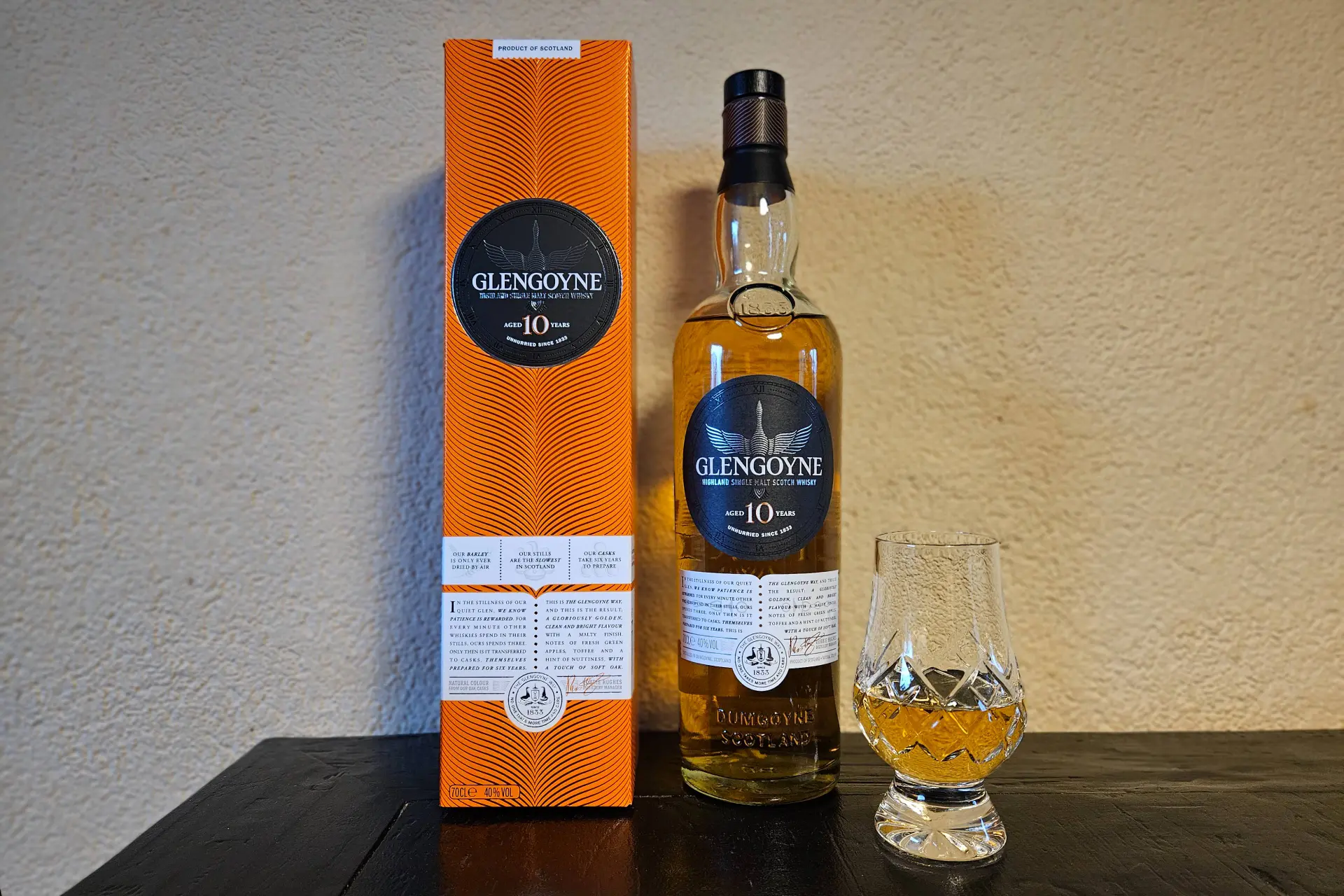
This unhurried character shines through in how the malt is dried—entirely by air, with no peat involved. Distillation is deliberately slow in steam-heated stills, yielding a spirit with a gentle, supple character.
In 1836, the owner secured the rights to the waterfall’s water for 99 years, paying a mere pittance for it (around eight pounds).

The distillery’s unhurried nature is almost literally written on the door.
The arrival of sherry casks
In the years that followed, the distillery changed hands several times while another drink, sherry, steadily grew in popularity. Good news for sherry lovers, and for whisky makers too: sherry casks were plentiful and relatively cheap at the time.
Burnfoot Distillery chose to mature its spirit in sherry casks. With casks in abundance and their beneficial influence on Highland spirit, the whisky’s profile softened and gained in complexity.
Valley of the Geese
In 1876 the distillery was sold to Lang Brothers, the firm of Gavin and Alexander Lang. The blender and whisky merchant had acquired its first distillery.
To make the site truly their own, Lang Brothers changed the name. Instead of Burnfoot of Dumgoyne, the sign now read Glen Guin, meaning “Valley of the Geese.”
The whisky maker continued in the established way: setting their own pace and working hand in hand with nature. The barley was still air-dried as standard, and the stills were cooled with cold water pumped in a closed loop.
Calamity
Nature, however, had other plans a few years later. In 1888 a ferocious storm struck. One of Glenguin’s warehouses was destroyed, and countless casks of the water of life bobbed away down the River Endrick. A few casks were retrieved, but all were broken or bone dry.
Eleven years later, another tragedy hit the distillery. Cochrane Cartwright, distillery manager at Glen Guin, was found in the reservoir beside the stillhouse. He had drowned, rumor had it he’d overindulged.
Cartwright was succeeded by William McGeachie. To this day, the spirit of the former distillery manager is said to wander the grounds.
New make spirit under the road
The early 20th century marked a period of change at the Glen Guin distillery. First came a new name on the gate: Glen Guin was anglicized to Glengoyne, easier to pronounce, with the same meaning.
Demand for Glengoyne whisky rose, and production followed suit. By 1910, space at the distillery had run out. The malting floor was torn out, and Glengoyne began sourcing malt elsewhere. Even so, space remained tight.
Land was purchased across the busy road from the distillery. The filling store was built there, but that created an immediate logistical puzzle: how to get the new make from the stillhouse to the filling store?
Lugging buckets of new make spirit across the road was never going to work, so a pipeline had to be installed. It couldn’t simply run over the busy road, of course, so it was routed beneath the asphalt. From that moment on, Glengoyne’s new make spirit travels quite a distance before it finally reaches the casks.
Care for a little more?
By 1966, demand for Glengoyne whisky was so high that production had to be ramped up again. Another major redevelopment swept through this Highland distillery. By then, Lang Brothers had already become part of Robertson & Baxter Ltd. (which would later evolve into The Edrington Group).
The buildings were refurbished inside and out, and plenty changed on the production floor as well. After the renovation, the stillhouse housed two small spirit stills and a larger wash still.
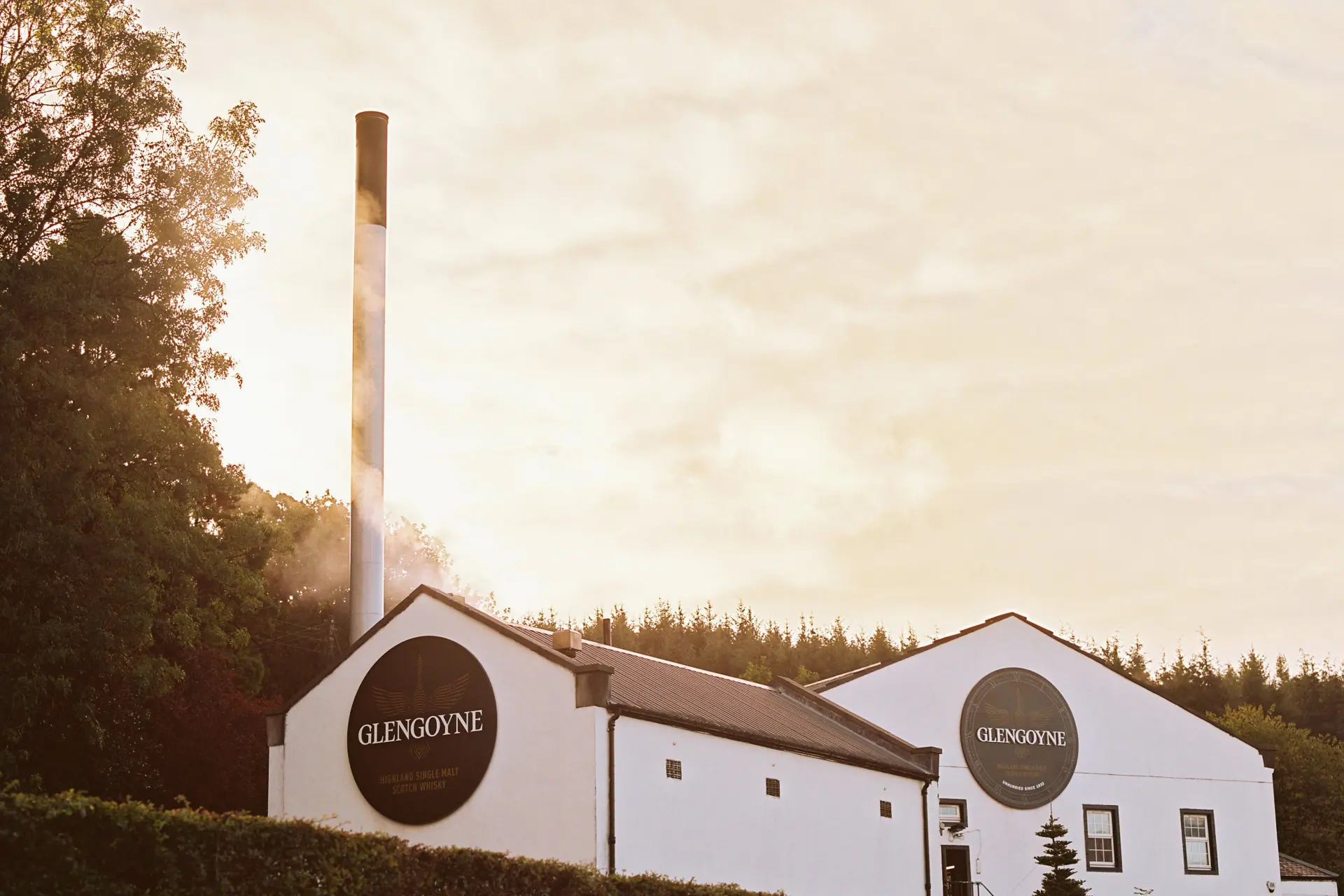
There were also six wooden washbacks. The stills continued to be heated by steam, which for years afterwards sent up a billow of vapor above the distillery, visible from far away.
Only 20 percent single malt whisky
While the Highland spirit flowed generously from the stills, we fast-forward to 2003. That year, Glengoyne changed hands once more. The new owner was Ian Macleod Distillers.
For the company, acquiring Glengoyne was the realization of a long-held dream: owning a distillery of their own. In the years that followed, Ian Macleod Distillers added more distilleries to its name, including Tamdhu and the recently reopened Rosebank Distillery.
Under Ian Macleod Distillers, Glengoyne Distillery continues to craft its Highland whisky to this day. Around 20 percent of Glengoyne’s output is single malt, most of it proudly carrying an age statement. The remaining 80 percent goes into blended expressions.

The Glengoyne 12 Years Old single malt whisky
Well worth a visit
If you find yourself in Scotland and visiting Glasgow, Glengoyne is well worth the detour. The distillery sits close to the city, boasts a large visitor centre, and offers a range of tours.
Every tour tells the story of the distillery, and each offers something unique, think rare drams to sample and the chance to step into the malt master’s shoes for ninety minutes.
loading
POPULAR NEWS

The 10 whisky brands connoisseurs admire most

Bowmore's new whisky tastes like charred mango, says the distillery
The best whiskies from all of Speyside: these are the ones to pour this year

These 10 whiskies taste even better with chocolate
Scottish community distillery sounds the alarm as whisky industry downturn bites

A brand new Ardbeg is coming and the current whiskies are getting a new look

Laphroaig honors its savior with an extraordinarily old and rare whisky
Indian ban forces sudden recipe change for a popular Diageo whisky

This might be the secret behind Indias rapid whisky rise

Whisky Names Explained: Highland Park Dragon Legend
LATEST COMMENTS
- Thank you for the compliment. I really appreciate it.M0nkey31-08-2026
- I enjoyed reading the different approaches to building a whisky collection. Whether you collect by region, style, or limited releases, discovering new brands keeps the hobby interesting. Soorahi is another premium whisky worth considering for collectors looking to explore the evolving world of quality whiskies.dinesh04-08-2026
- There is no distillery equipment there and also no licences to produce or sell alcohol.TRC19-12-2025
- Hi Yvonne, Thank you for your response and for sharing the video. Unfortunately, the evidence you referred to consists only of two people talking about the whisky, without any explanation or identification. We have not spoken to the individuals in the video ourselves, nor can we verify who they are. We describe it as a Chinese whisky because it is released by a Chinese distillery. As you mentioned, the distillery has chosen to label the product as “pure malt” instead of “Chinese whisky.” Based on that, we do not believe they are doing anything illegal.M0nkey16-11-2025
- So - you have the proof......where's your write up?Yvonne16-11-2025
- You are absolutely right. Luckily that doesn't matter for the taste of the whisky. Have you tried it yet?M0nkey05-11-2025
- Guess what? Finland is not part of Scandinavia.Gray105-11-2025
- Throw in the towel? You mean restructure to compete and win in a challenging industry environment.WestwardFounder21-10-2025
- There is nothing legally to prevent the English whisky GI from coming into force, it complies with all the relevant laws and the single malt definition follows the precedent of Welsh whisky and US whiskyChefBear15-10-2025
- Three emails sent (two with videos, linked to a Google Drive Share). 1. The original video. 2. The video with subtitles as it was shared on YouTube 3. Screen grab of the YouTube channel where the video was blocked due to Pernod Ricard lobbying. The story was covered on Drinks Intel at the time - link here - https://drinks-intel.com/subscriber-news/pernod-ricards-the-chuan-pure-malt-whisky-not-sourced-solely-from-china-global-drinks-intel-exclusive/Yvonne10-10-2025
Loading