Never miss whisky news, reviews, and new releases again.
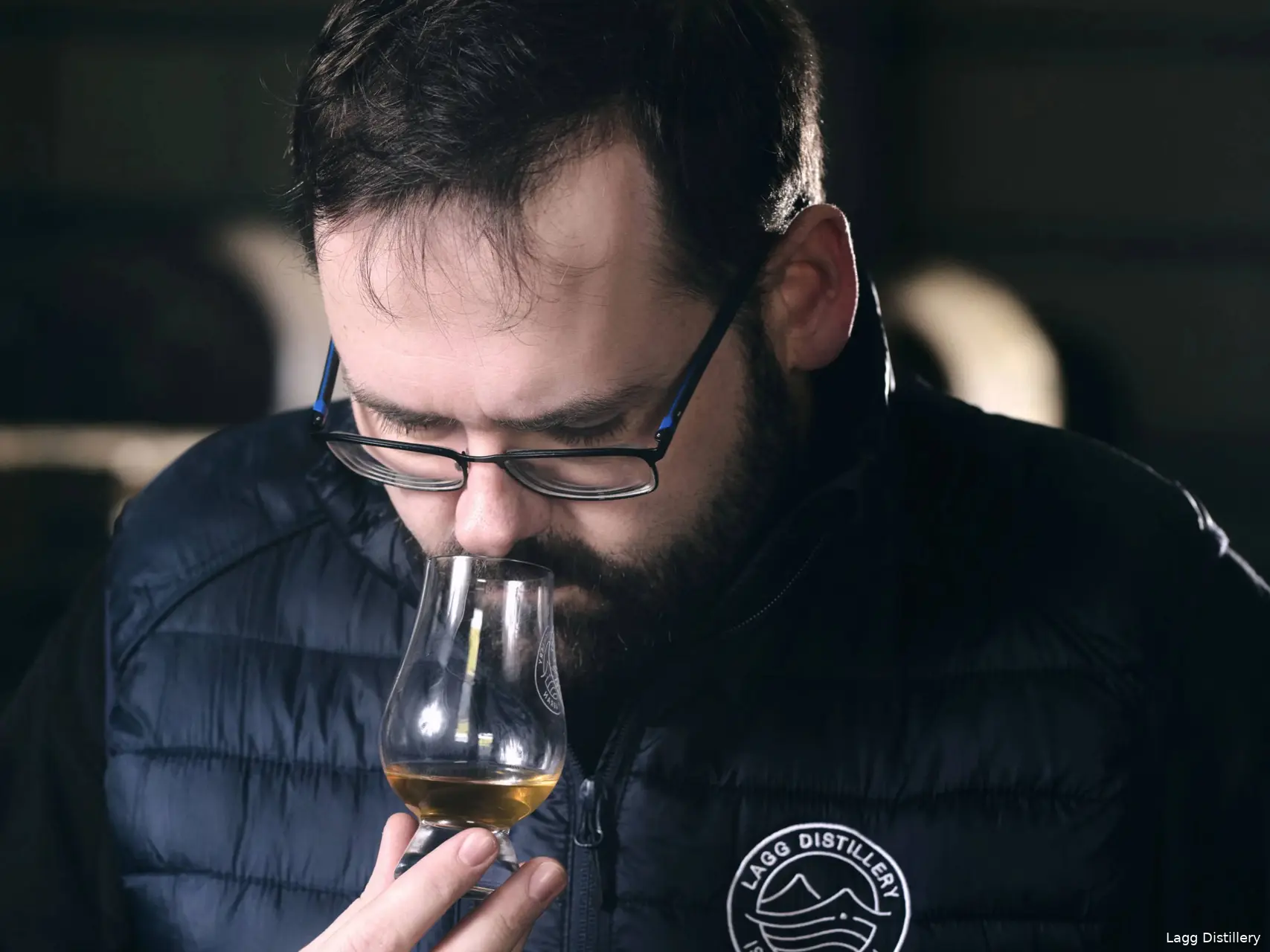
Add Whisky Monkeys as a Google favoriteOn the southern tip of Arran, LAGG Distillery is quietly building one of the most intriguing young whisky stories in Scotland. Peated spirit, sherry casks and a clear sense of place are at the heart of its identity.
We got to talk to Graham Omand (37), distillery manager at Lagg Distillery, about Islay roots, the pressure of leading a young distillery, upcoming small batch releases and why LAGG could be one of the whisky names to watch closely on the road to 2030.
You grew up on Islay. What part of Islay did you bring to Lagg?
'Probably a sense of place first and
foremost. Growing up on Islay taught me that whisky is tied to the landscape,
the weather, the people and the pace of life. That’s stayed with me, from my
time as a stillman in Lochranza to my role now as Distillery Manager at Lagg:
respecting history, place and patience, while also thinking about where a young
spirit can go next.'

I read something about imposter syndrome when you just started. Can you elaborate?
'Aye, I think that’s true of quite a few
people when they step into a new role, especially one with a lot of
responsibility. At the beginning, you’re very aware of what’s at stake and how
much you still have to learn. Over time, you settle into it, you trust your
experience a bit more, and you realise that no one has all the answers from day
one. You learn by doing, and by listening.'
LAGG Distillery was founded with a clear vision and identity. How do you see that identity evolving over the next 10 years?
'I don’t think the identity should change
dramatically. It’s already got a clear direction, and that’s important for a
young distillery. The spirit will continue to develop, of course, but the core
idea should stay the same. If anything, the next 10 years should make Lagg’s
style more obvious, more confident, and more trusted.'

How do you balance staying true to a young distillery’s DNA while adapting to global market pressures?
'It’s definitely a balance. There’s always
pressure to move quickly, respond to trends, or try to fit into what the market
seems to want at any given moment. But the danger with that is losing sight of
the whisky itself. For me, the key is to stay grounded in the spirit and the
process, then be flexible around how you present it. You can adapt on the
commercial side without compromising the heart of what makes the distillery
unique.'
How is LAGG Distillery experiencing the current whisky market?
'It’s a challenging market at the moment,
and I think most distilleries would say the same. People are being more
selective, and there’s more competition for attention than ever. But I also
think that gives a distillery like Lagg a chance, because if you’re clear about
who you are and what you’re making, people respond to that.'

What does success look like for LAGG in 2030, scale, reputation, innovation, or something else?
'For me, success would be reputation first.
If people know Lagg for whisky with its own distinctive voice - interesting and
full of character - that would mean a lot. Scale matters for a healthy,
sustainable business, but bigger isn’t always better. I’d want Lagg first seen
as a distillery that does things properly, with an exciting future ahead,
making whisky people are genuinely thrilled to drink.'
Read also
What are the plans for 2026 in terms of whisky and visitors? Are there any significant expansions planned in production capacity, warehousing, or visitor facilities?
'We’re in a really good place now. The
distillery’s running well and the visitor centre is exactly what we hoped it
would be - a variety of tours, tastings, good food, those unbeatable views… It
all comes together nicely and gives people a real feel for Lagg. On the whisky
side, the core range is there and something we’re proud to share always, and
we’re also starting to explore some smaller batches in more interesting casks.
It’s good fun and lets us show a different side of the spirit. Right now, we’re
sticking to what works so well. We are always with an eye on the future, but
nothing concrete planned for big expansions this year.'
Will we see more experimental releases- unusual cask types, longer fermentations, or alternative barley varieties?
'One of the advantages of a distillery like
Lagg is that we’ve got the space to explore. The spirit’s got that contrasting
mix of sweetness, peat and a nice oily weight to it, and we’ve found it works
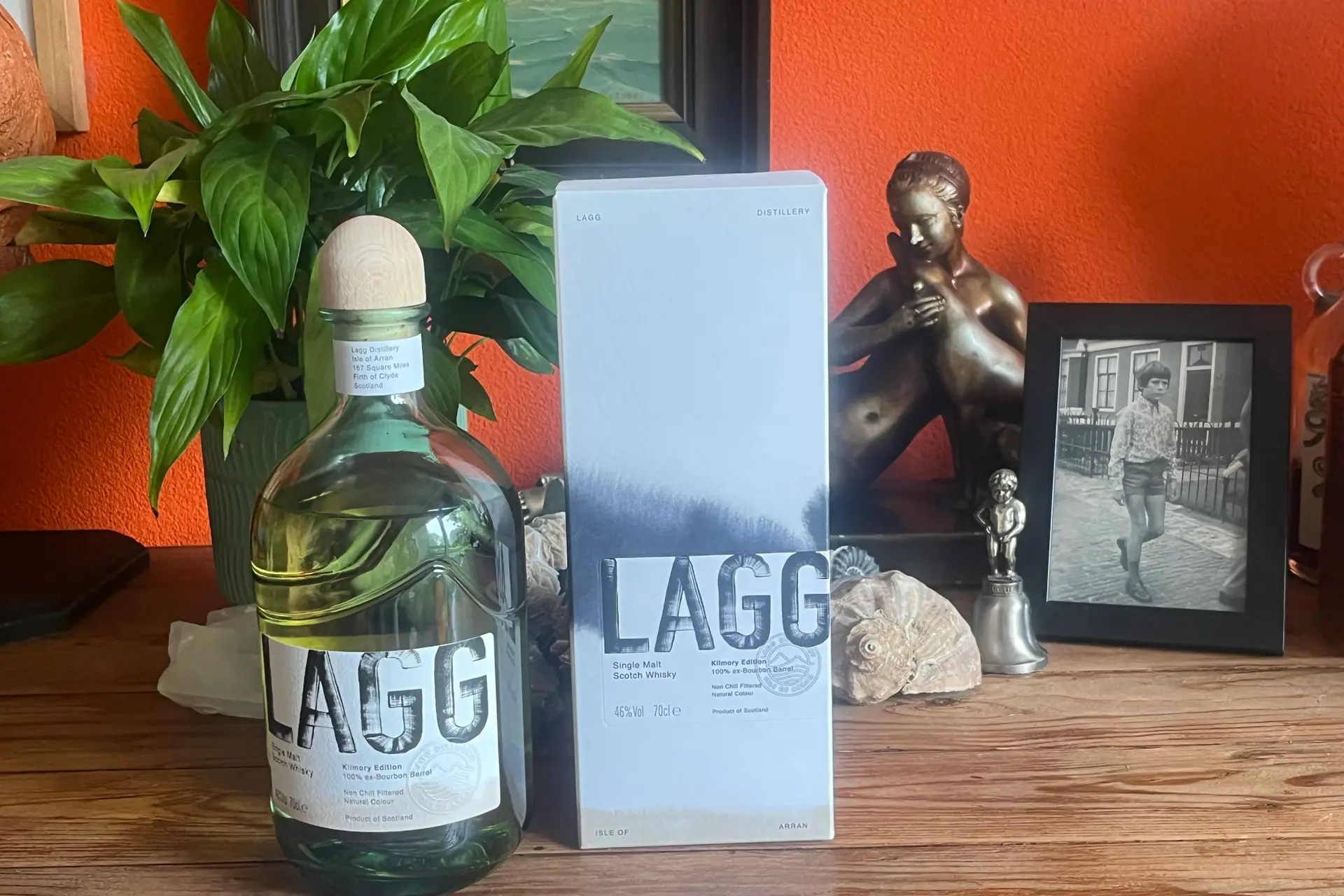
particularly well with drier styles of sherry cask. We released a Palo Cortado
Small Batch last year, really nutty, salty and delicious, and this year we’re
following that with a Manzanilla Small Batch edition. In terms of things like
barley varieties or ppm, we do the odd bit of experimenting, but at the end of
the day the casks need time. We’re only seven years in, so there’s no rush!'

If we were to speak again in 3 years, what headline would you hope I’d be writing about LAGG?
'I’d hope it would be something that says
Lagg has really come into its own. Something like “Lagg establishes itself as a
standout whisky.” That would mean we’ve done the important work of defining who
we are and building a whisky people connect with and want to enjoy.'
Can you hint at any upcoming release, collaboration, or milestone that hasn’t been publicly announced yet?
'We do have ideas, and there are things in
development, but I don’t want to talk about anything before it’s ready. There
will be more to come, and hopefully some nice moments along the way that people
will be excited about when the time’s right.'
If there is only one whisky left in the world. What would yours be?
'That’s a hard one, for me it really depends
what mood I’m in. If I had to pick though, I’d probably go for Arran 18. It’s
balanced, it’s easy to sit with, it's tasty and it does exactly what you want
it to without overcomplicating things. That said, I’d be just as tempted to go
for a Bruichladdich, especially something like Black Art, with that intriguing
coastal, slightly peated edge. It’s got texture, richness and you tend to get
something new out of it at each sip.'
Read also

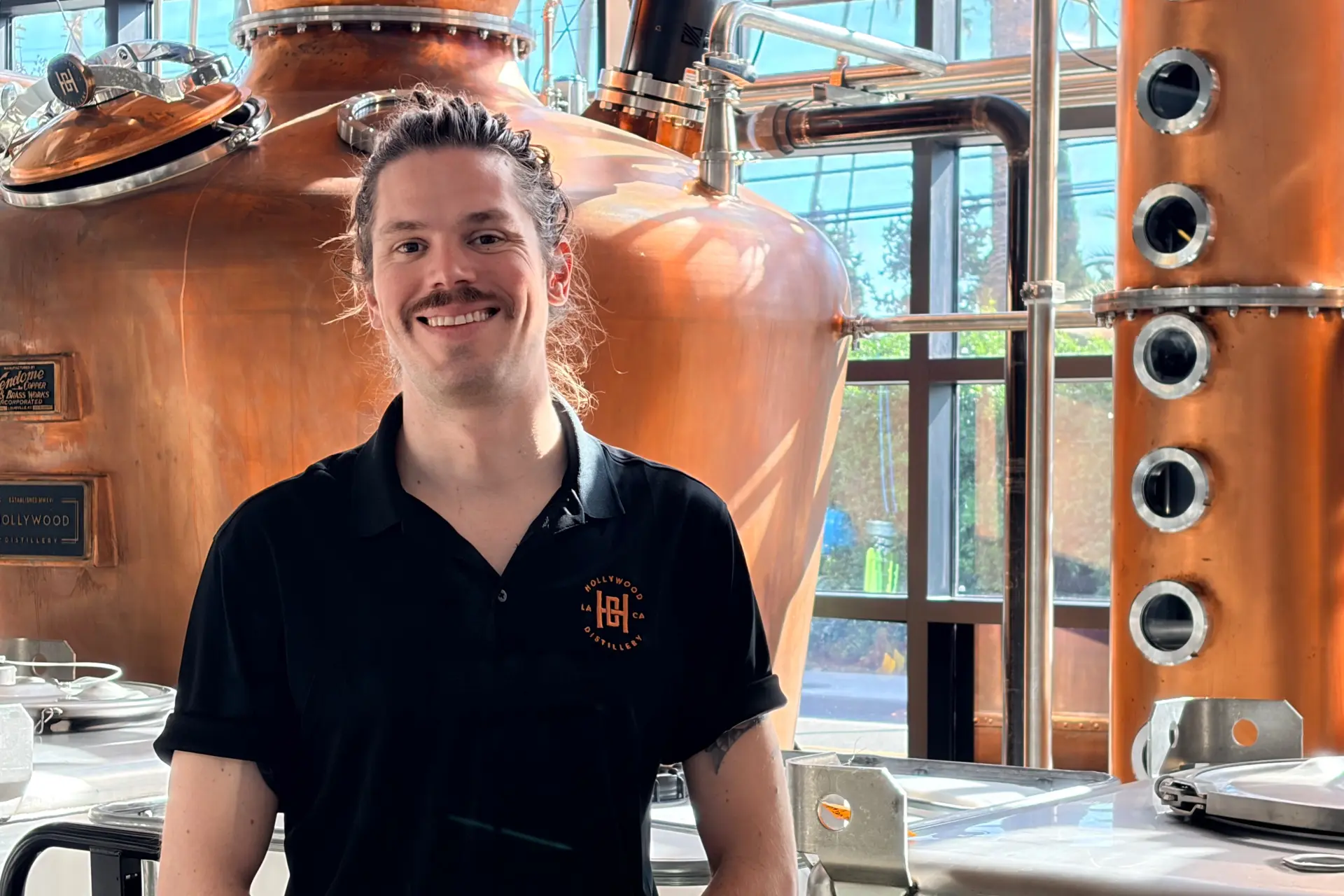
Want to discover more interviews? Find them on this speciale page.
loading
POPULAR NEWS
Next year’s exclusive Johnnie Walker whisky is already on sale

You’ll never drink whisky the same way after trying these chocolate pairings
Whisky Names Explained: Octomore

This rare whisky combines Belgian spirit with Japanese craftsmanship

Breaking: English whisky wins historic protection

Ardbeg ends popular whiskyseries with one more bottle
Glenfiddich, Ardbeg, and Jameson are joined by new names on the 2026 Best Whiskies list
The hidden numbers on your whisky bottle reveal more than you think
World famous Dutch whisky pioneer celebrates 50 years with a mythological whisky series
Japanese Oak Lends a Distinctive Twist to This Belgian Whisky (Review)
LATEST COMMENTS
- Thank you for the compliment. I really appreciate it.M0nkey31-08-2026
- I enjoyed reading the different approaches to building a whisky collection. Whether you collect by region, style, or limited releases, discovering new brands keeps the hobby interesting. Soorahi is another premium whisky worth considering for collectors looking to explore the evolving world of quality whiskies.dinesh04-08-2026
- There is no distillery equipment there and also no licences to produce or sell alcohol.TRC19-12-2025
- Hi Yvonne, Thank you for your response and for sharing the video. Unfortunately, the evidence you referred to consists only of two people talking about the whisky, without any explanation or identification. We have not spoken to the individuals in the video ourselves, nor can we verify who they are. We describe it as a Chinese whisky because it is released by a Chinese distillery. As you mentioned, the distillery has chosen to label the product as “pure malt” instead of “Chinese whisky.” Based on that, we do not believe they are doing anything illegal.M0nkey16-11-2025
- So - you have the proof......where's your write up?Yvonne16-11-2025
- You are absolutely right. Luckily that doesn't matter for the taste of the whisky. Have you tried it yet?M0nkey05-11-2025
- Guess what? Finland is not part of Scandinavia.Gray105-11-2025
- Throw in the towel? You mean restructure to compete and win in a challenging industry environment.WestwardFounder21-10-2025
- There is nothing legally to prevent the English whisky GI from coming into force, it complies with all the relevant laws and the single malt definition follows the precedent of Welsh whisky and US whiskyChefBear15-10-2025
- Three emails sent (two with videos, linked to a Google Drive Share). 1. The original video. 2. The video with subtitles as it was shared on YouTube 3. Screen grab of the YouTube channel where the video was blocked due to Pernod Ricard lobbying. The story was covered on Drinks Intel at the time - link here - https://drinks-intel.com/subscriber-news/pernod-ricards-the-chuan-pure-malt-whisky-not-sourced-solely-from-china-global-drinks-intel-exclusive/Yvonne10-10-2025
Loading