Never miss whisky news, reviews, and new releases again.
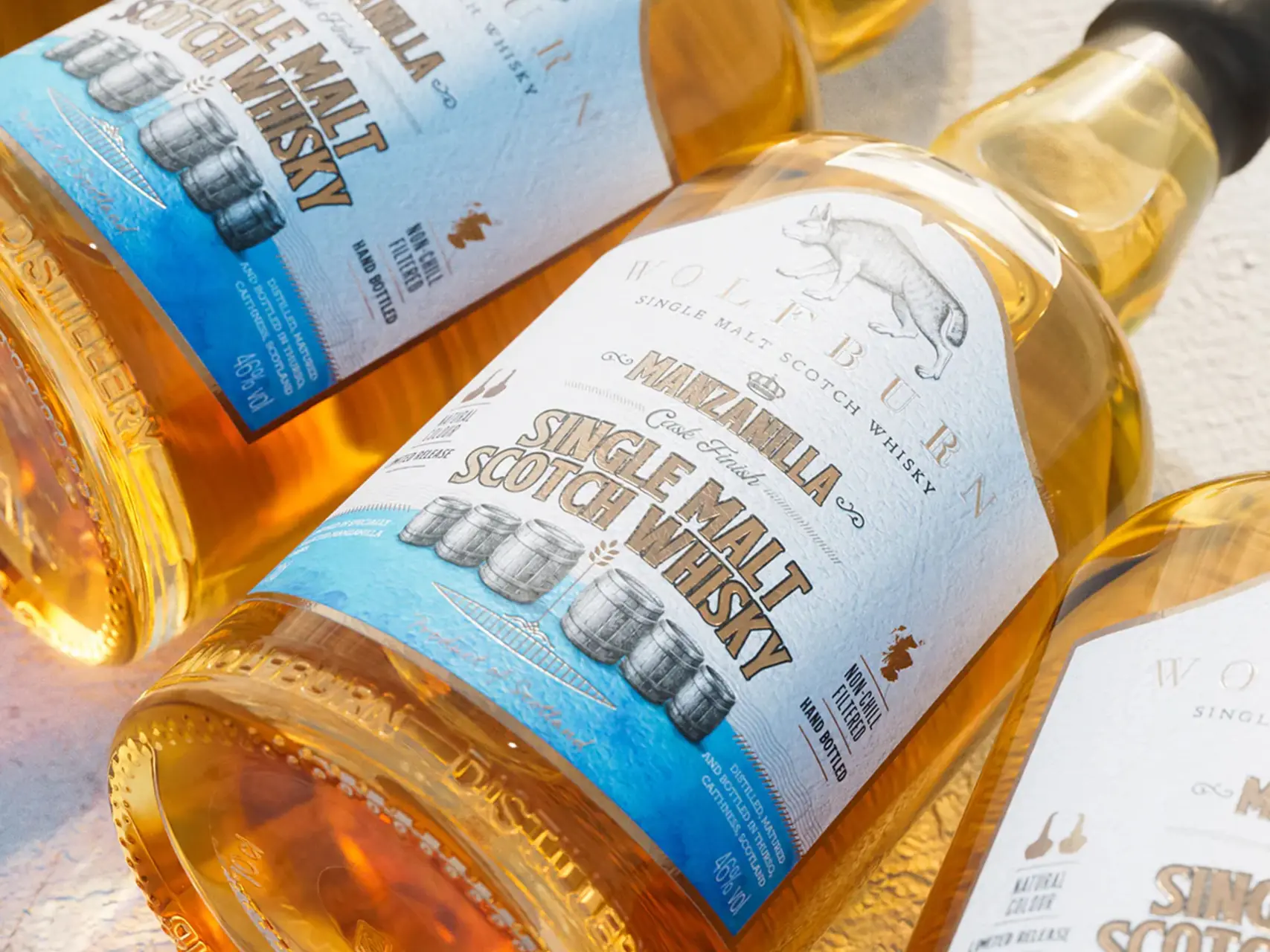
Add Whisky Monkeys as a Google favoriteAs we do every week, in this edition of Whisky Names Explained we’re diving into a whisky name. We often spotlight a specific bottle, but this time we’re exploring the name of a whisky brand: Wolfburn. Where does the name come from?
The northernmost distillery on the Scottish mainland
Wolfburn is the northernmost whisky distillery on the Scottish mainland, close to the port of Thurso. It’s also a relatively new distillery, founded in 2013. At the same time, it’s an old acquaintance: the new distillery was built on the site where a Wolfburn distillery once stood in the 19th century.
In Caithness, in the far north of Scotland, many traces remain from the long period when the Vikings held sway. During the Viking era, the north fell under Norse Orcadian rule, and Thurso served as the gateway to Scandinavia and the northern isles and of course, the route back. Along with the Norse came customs and names, but also myths and legends that took root in Scotland.
Named for a bringer of good luck
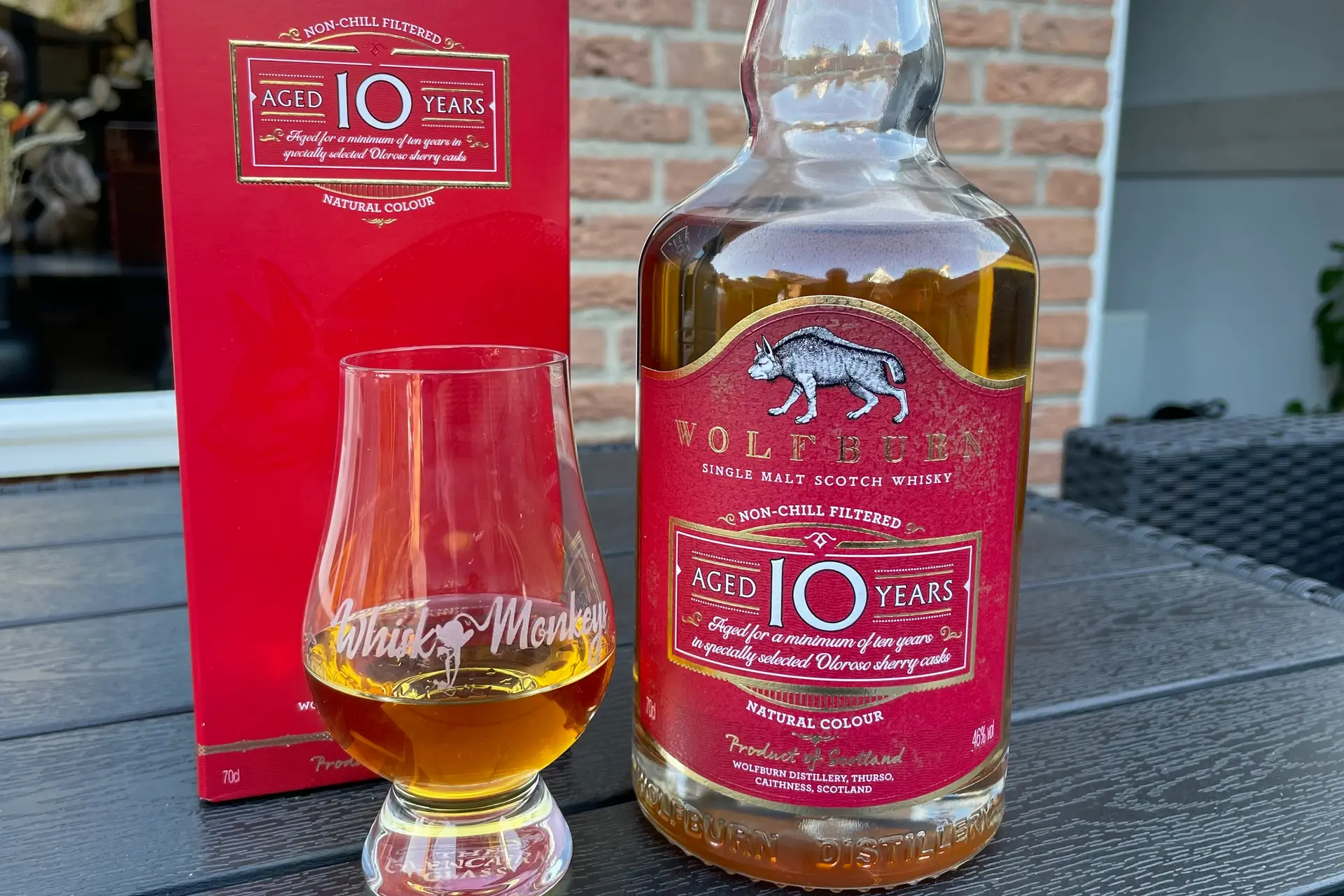
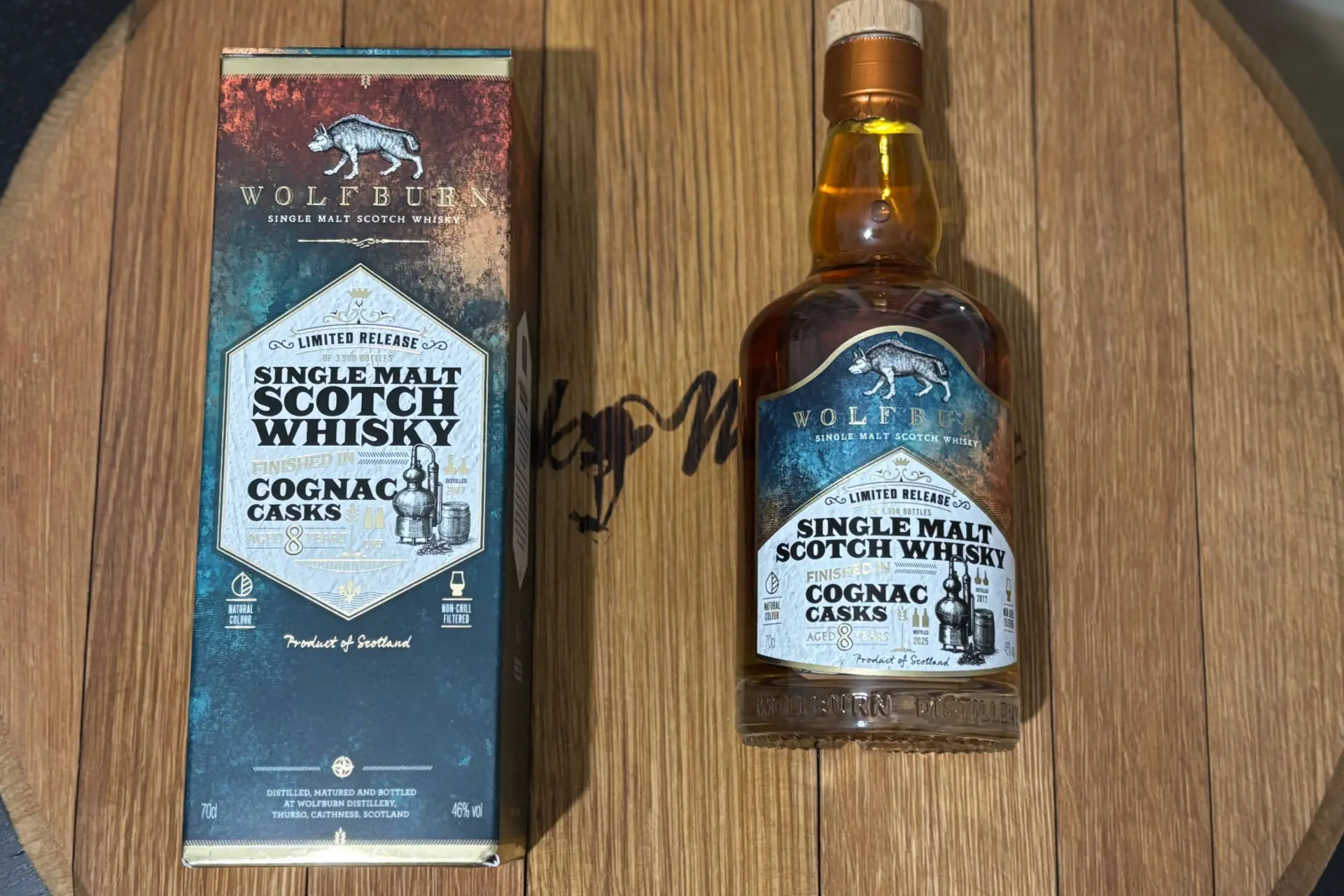
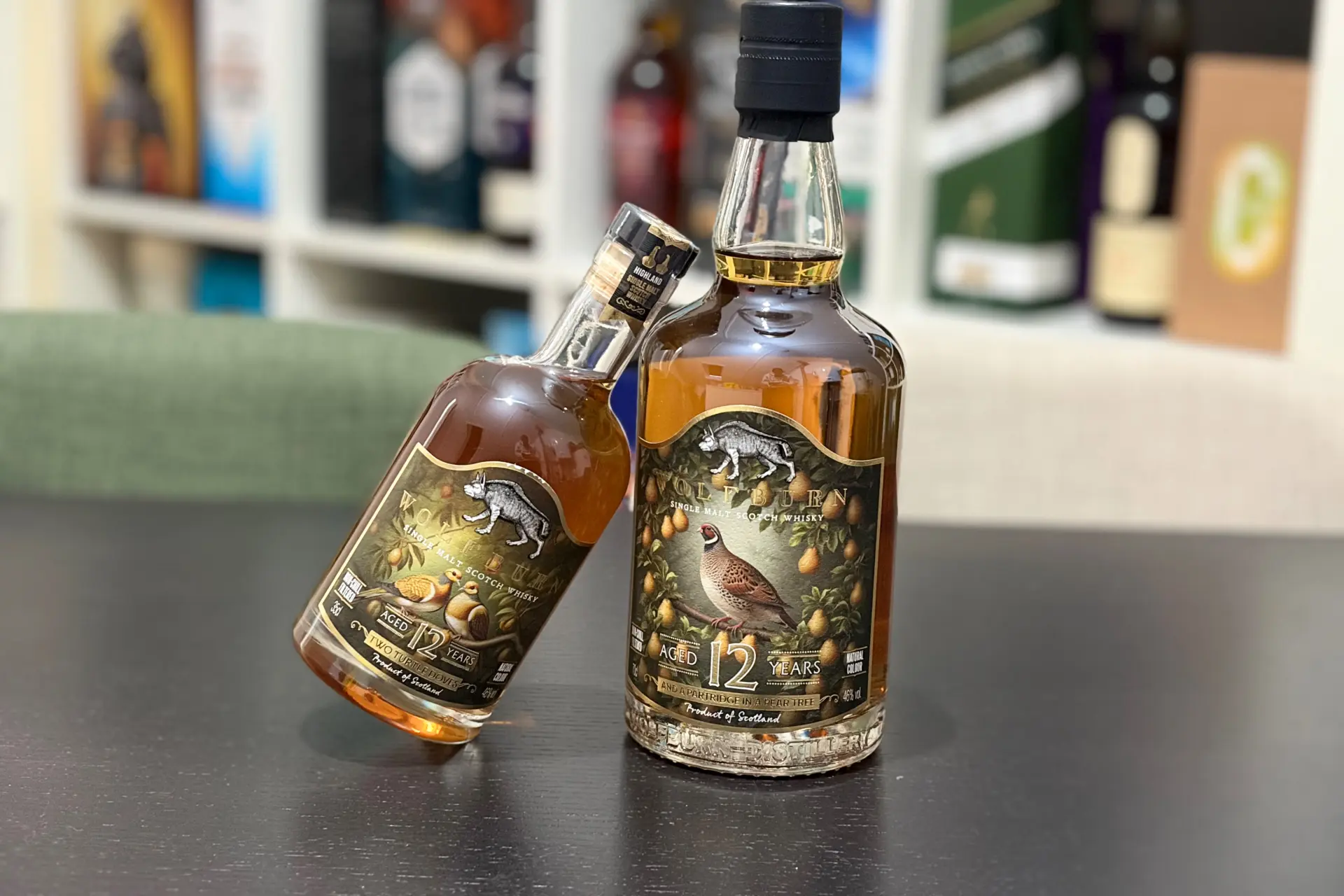
In 1821, William Smith founded the first Wolfburn distillery. The name and logo of his whisky stillhouse are inspired by a 16th-century drawing by Conrad Gessner. In Smith’s time, wolves were common in the far north of Scotland. The illustration specifically depicted a sea-wolf, a creature said to bring good fortune to anyone who caught sight of it.
The second part of the name, burn, comes from the Scots word for a stream or small river. By combining the two, William Smith, founder of Wolfburn Distillery, coined the name for his whisky.

A logo from an encyclopedia
Wolfburn Whisky’s current logo was designed in 2011. The wolf sketch is derived from a drawing in Gessner’s Historiae Animalium. The Swiss scholar Gessner (1516–1565) wrote and illustrated the world’s first animal encyclopedia. His extensive travels allowed him to observe and document a great deal, while also incorporating stories and earlier publications.
Gessner understood that not everything included in the encyclopedia could be literal truth. When a fictional creature appeared, he searched for the moral or message behind its description. The sea-wolf, the supernatural cousin of the wolf, likely came from the sagas the Vikings brought with them. Gessner included both the creature and its tale in his book.
Thanks to that story, we have Wolfburn whisky today. And that’s something to smile about.
Want to read more about Wolfburn? Visit our Wolfburn overview.
loading
POPULAR NEWS

The 10 whisky brands connoisseurs admire most

Bowmore's new whisky tastes like charred mango, says the distillery
The best whiskies from all of Speyside: these are the ones to pour this year
You’ll never drink whisky the same way after trying these chocolate pairings
Scottish community distillery sounds the alarm as whisky industry downturn bites
A brand new Ardbeg is coming and the current whiskies are getting a new look

Laphroaig honors its savior with an extraordinarily old and rare whisky
Indian ban forces sudden recipe change for a popular Diageo whisky
This might be the secret behind Indias rapid whisky rise
Whisky Names Explained: Highland Park Dragon Legend
LATEST COMMENTS
- Thank you for the compliment. I really appreciate it.M0nkey31-08-2026
- I enjoyed reading the different approaches to building a whisky collection. Whether you collect by region, style, or limited releases, discovering new brands keeps the hobby interesting. Soorahi is another premium whisky worth considering for collectors looking to explore the evolving world of quality whiskies.dinesh04-08-2026
- There is no distillery equipment there and also no licences to produce or sell alcohol.TRC19-12-2025
- Hi Yvonne, Thank you for your response and for sharing the video. Unfortunately, the evidence you referred to consists only of two people talking about the whisky, without any explanation or identification. We have not spoken to the individuals in the video ourselves, nor can we verify who they are. We describe it as a Chinese whisky because it is released by a Chinese distillery. As you mentioned, the distillery has chosen to label the product as “pure malt” instead of “Chinese whisky.” Based on that, we do not believe they are doing anything illegal.M0nkey16-11-2025
- So - you have the proof......where's your write up?Yvonne16-11-2025
- You are absolutely right. Luckily that doesn't matter for the taste of the whisky. Have you tried it yet?M0nkey05-11-2025
- Guess what? Finland is not part of Scandinavia.Gray105-11-2025
- Throw in the towel? You mean restructure to compete and win in a challenging industry environment.WestwardFounder21-10-2025
- There is nothing legally to prevent the English whisky GI from coming into force, it complies with all the relevant laws and the single malt definition follows the precedent of Welsh whisky and US whiskyChefBear15-10-2025
- Three emails sent (two with videos, linked to a Google Drive Share). 1. The original video. 2. The video with subtitles as it was shared on YouTube 3. Screen grab of the YouTube channel where the video was blocked due to Pernod Ricard lobbying. The story was covered on Drinks Intel at the time - link here - https://drinks-intel.com/subscriber-news/pernod-ricards-the-chuan-pure-malt-whisky-not-sourced-solely-from-china-global-drinks-intel-exclusive/Yvonne10-10-2025
Loading