Never miss whisky news, reviews, and new releases again.
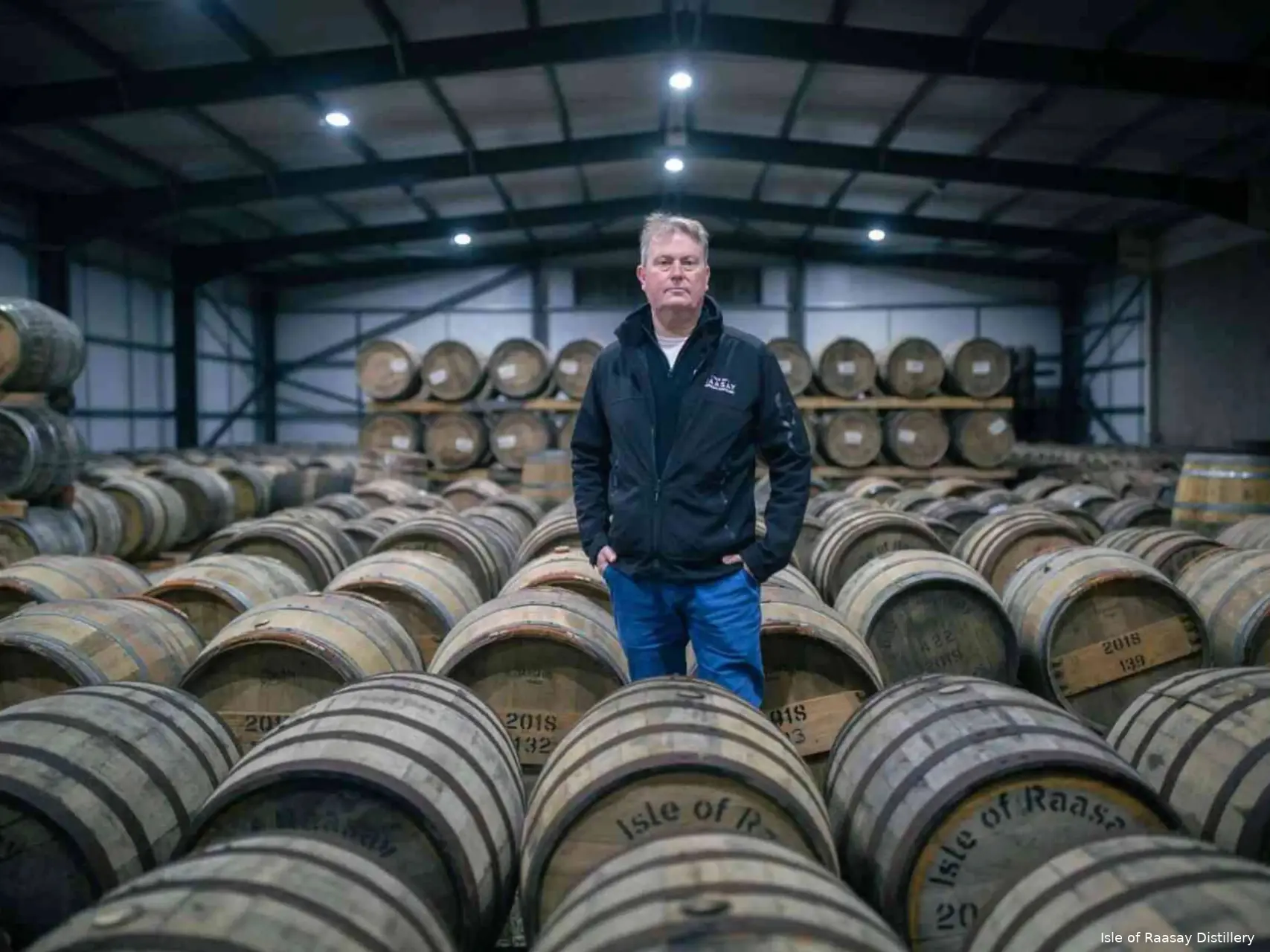
Add Whisky Monkeys as a Google favoriteAlasdair Day is the co-founder of Isle of Raasay Distillery and one of the people shaping the island’s modern whisky scene. With a background in food and drinks, he looks at whisky through flavour, origin and the stories behind it. Whisky Monkeys spoke with him about building a distillery from the ground up, Scottish heritage and how the island of Raasay influences the whisky they make.
For Alasdair, whisky became more than just a drink when he inherited his great-grandfather’s cellar book, filled with blending recipes dating back to 1899. That discovery sparked a fascination with flavour, provenance and storytelling, elements that still define his work today. Under his guidance, Isle of Raasay has developed a signature style built around light peat, dark fruit notes and a strong sense of island identity, with every step of production taking place on Raasay itself.
But where did his ambition come from? And where did he get his love for whisky from? We got to ask him some questions about this and a lot more.

How would you describe yourself as a person, apart from whisky and distilling?
Scottish, family guy
that loves rugby.
Can you tell us about the first time you drank whisky?
From a young age I was
determined to “like” whisky. So, I drowned it in Iron Bru and over the years
reduced the amount of Iron Bru until eventually I was enjoying whisky, which
may well have coincided with reaching the age when I could legally enjoy
whisky.

When did whisky become more than a drink for you?
When I inherited my
Great Grandfather’s cellar book with all the blends created by J&A Davidson
from 1899 to 1916.
You have a background in food and drinks. What did that broader experience teach you about flavour, patience and storytelling?
The food industry is
very much about flavour and the nuances of flavour but also traceability which
is all about the provenance of the product and its ingredients, Dairy, was an
introduction to fermentation (lactobacillus) and maturation. Provenance is the
basis for storytelling.
What felt like the bigger personal leap: reviving Tweeddale Whisky, or building a distillery on Raasay?
By far the biggest personal
leap was reviving The Tweeddale. Coming from outside the whisky industry was a
real challenge but has proved to be very beneficial in the longer term,
approaching things with a different mindset. It certainly was a great learning
curve for building our distillery on Raasay.

How important is the local community to what Isle of Raasay Distillery is today?
The local community is
a huge part of the distillery on Raasay and it is great to see the community on
Raasay growing and prospering.
The distillery started producing spirit in 2017, and the first single malt was released in 2020. What did it feel like to finally share that first whisky with the world?
You don’t really get
time to stop and look back but it certainly was a very special occasion when we
released our very first Isle of Raasay Hebridean single malt.

The distillery is heading towards an anniversary next year. Are there any special plans you can tell us about?
Yes, we are currently
discussing what we might do in October / November 2027 when we have our 10 year
old Isle of Raasay single malt.
Many distilleries talk about ‘place’ and ‘terroir’. What does Raasay actually contribute to the whisky in the glass?
We do everything on
Raasay milling, mashing, fermentation, distilling, cask filling, maturation and
bottling. We have our own well that goes down 60 meters below the distillery.
We use the water from our well for mashing, fermentation, cooling, reducing the
spirit to cask strength and after maturation reducing to bottling strength. Our
single malt is truly of Raasay.

Your whisky is often described as having fruit, smoke, spice and maritime notes. Which of those elements feels most essential to Raasay’s identity?
Our Isle of Raasay
single malt can be described simply as lightly peated with dark fruits. If we
achieve that then I’m very happy indeed.
What have you learned from your earliest casks that changed how you think about maturation?
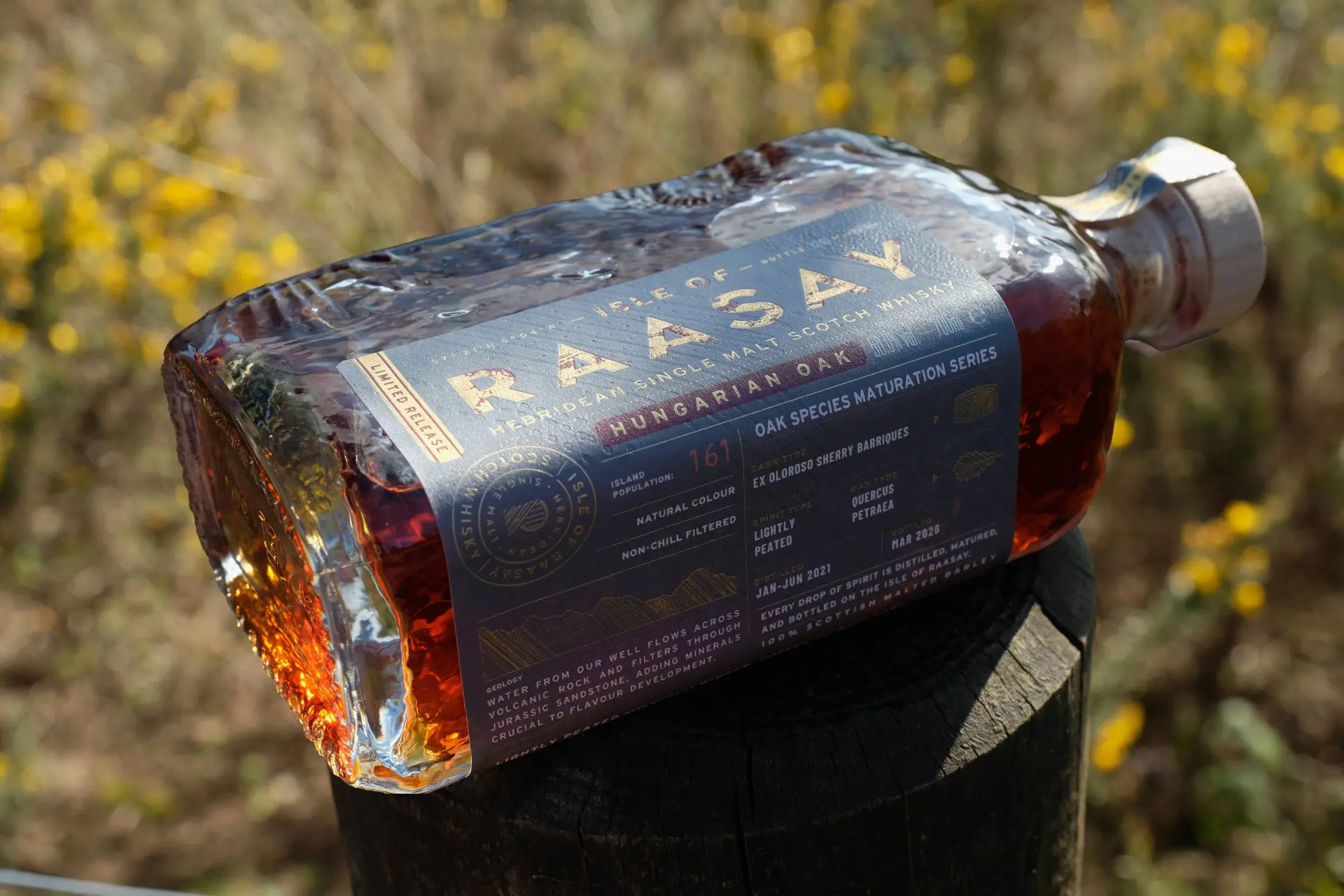
I designed our oak
policy (six cask recipe) to create our lightly peated single malt with dark
fruit flavours. We haven’t deviated from this, but we have built on it for
example “The Chinkapin” and deconstructed it for the “Nia Sia” seven years
evolved being released this year. We also have our Oak Species Maturation
series that demonstrates the flavour impact of different oak species on the
maturation of our new make spirit.
Read also
How important is the island climate in the maturation process?
That’s a very good
question! In time 15 plus years of maturation then yes, I think we will start
to see our temperate maritime climate showing it’s influence on the maturation
of our single malt particularly in the dunnage warehouse.
What should whisky drinkers pay attention to when tasting Isle of Raasay for the first time?
I would say the light
peat and the dark fruits. Many people are surprised that they enjoy the light
peat even when the say they do not like peated whisky. The dark fruits flavours
are very different from the typical apples, pears and bananas usual found in
Scotch whisky. I would describe Raasay as an elegant, approachable single malt.

Do you think age statements still matter as much as they used to?
Although people are now
more willing to try and drink single malts with no age statement, I would say
that most whisky drinkers still rely on an age statement when choosing a
whisky.
When someone opens a bottle of Isle of Raasay 50 years from now, what do you hope they taste, not only in terms of flavour, but in terms of story?
I hope they taste an
elegant, approachable Hebridean single malt that is lightly peated with dark
fruits. By then more of the maritime influences will be present as well.
Favorite whisky: The Balvenie,
Bowmore & Caol Ila
Number of whisky glasses per week: I don’t count.
Most fun bottle owned: Glenury
Royal
Most expensive whisky ever tasted: Gordon and MacPhail 70-Year-Old Glenlivet (1940)
Whisky countries to watch: The Nordics
A whisky you wish you’d created: 1965 Bowmore
Least favourite whisky ever tasted: There is no bad whisky just good
whisky and better whisky.
Want more interviews? Find them here.
loading
POPULAR NEWS
Next year’s exclusive Johnnie Walker whisky is already on sale
You’ll never drink whisky the same way after trying these chocolate pairings
Whisky Names Explained: Octomore
This rare whisky combines Belgian spirit with Japanese craftsmanship
Breaking: English whisky wins historic protection

Ardbeg ends popular whiskyseries with one more bottle
Glenfiddich, Ardbeg, and Jameson are joined by new names on the 2026 Best Whiskies list
The hidden numbers on your whisky bottle reveal more than you think
World famous Dutch whisky pioneer celebrates 50 years with a mythological whisky series
Japanese Oak Lends a Distinctive Twist to This Belgian Whisky (Review)
LATEST COMMENTS
- Thank you for the compliment. I really appreciate it.M0nkey31-08-2026
- I enjoyed reading the different approaches to building a whisky collection. Whether you collect by region, style, or limited releases, discovering new brands keeps the hobby interesting. Soorahi is another premium whisky worth considering for collectors looking to explore the evolving world of quality whiskies.dinesh04-08-2026
- There is no distillery equipment there and also no licences to produce or sell alcohol.TRC19-12-2025
- Hi Yvonne, Thank you for your response and for sharing the video. Unfortunately, the evidence you referred to consists only of two people talking about the whisky, without any explanation or identification. We have not spoken to the individuals in the video ourselves, nor can we verify who they are. We describe it as a Chinese whisky because it is released by a Chinese distillery. As you mentioned, the distillery has chosen to label the product as “pure malt” instead of “Chinese whisky.” Based on that, we do not believe they are doing anything illegal.M0nkey16-11-2025
- So - you have the proof......where's your write up?Yvonne16-11-2025
- You are absolutely right. Luckily that doesn't matter for the taste of the whisky. Have you tried it yet?M0nkey05-11-2025
- Guess what? Finland is not part of Scandinavia.Gray105-11-2025
- Throw in the towel? You mean restructure to compete and win in a challenging industry environment.WestwardFounder21-10-2025
- There is nothing legally to prevent the English whisky GI from coming into force, it complies with all the relevant laws and the single malt definition follows the precedent of Welsh whisky and US whiskyChefBear15-10-2025
- Three emails sent (two with videos, linked to a Google Drive Share). 1. The original video. 2. The video with subtitles as it was shared on YouTube 3. Screen grab of the YouTube channel where the video was blocked due to Pernod Ricard lobbying. The story was covered on Drinks Intel at the time - link here - https://drinks-intel.com/subscriber-news/pernod-ricards-the-chuan-pure-malt-whisky-not-sourced-solely-from-china-global-drinks-intel-exclusive/Yvonne10-10-2025
Loading