Everything you need to know about Thy Whisky from Denmark
InterviewsSunday, 14 December 2025 at 12:02
Never miss whisky news, reviews, and new releases again.
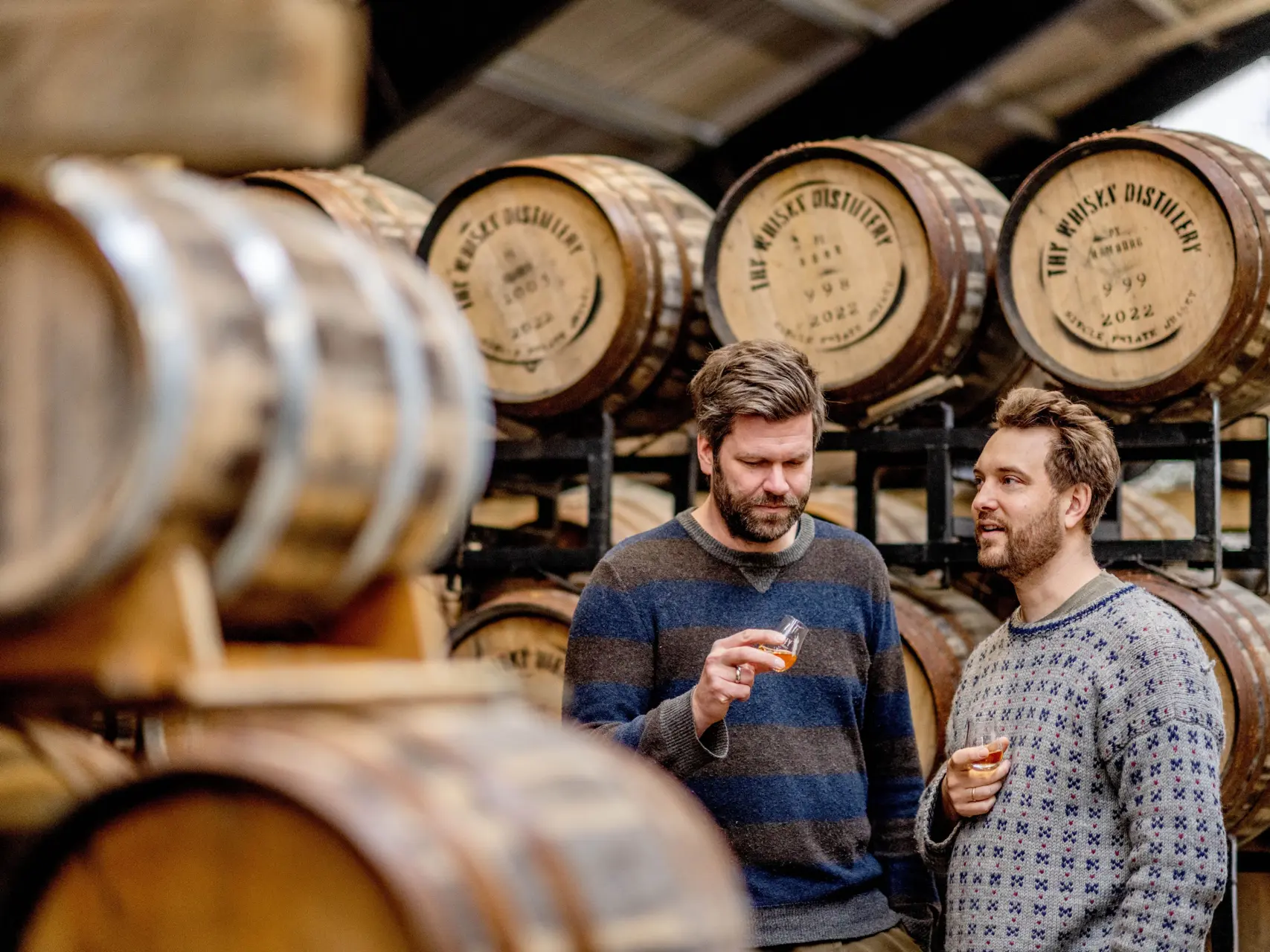
Add Whisky Monkeys as a Google favoriteOn Denmark’s northwest coast, the Thy Whisky Distillery sits on a working farm. We had the opportunity to ask Jakob Stjernholm, Thy’s master distiller, some questions about the distillery and it's whisky. Here are his answers.
Thy Whisky Distillery is owned by the Gyrup family, who use only their own organic grains for their whiskies. That makes Thy one of the few whisky producers that can truly call itself single estate, 100 percent organic, and family-run. And it hasn’t escaped anyone’s notice that Thy whisky is currently taking the Dutch market by storm.
This article was previously published on our Dutch website.
How did you get the idea to start making whisky?
'I credit my father-in-law Nicolaj (who sadly passed away from cancer, ed.). He took the first steps toward making whisky on our family farm. In 2010 he filled the first two casks in collaboration with a local distillery, a brewery, and a small maltster.
He was driven by curiosity: to see what would happen if we used our own grains to make whisky. There’s a real sense of pride in holding a bottle at the end of the day that represents hard farm work and the creation of a unique local product. (...)
We were still living in Copenhagen until 2016, when we finally decided to quit our jobs and move back to Thy with the plan and ambition to take over the family farm and build a fully fledged single estate distillery for Thy whisky. From 2016 to 2019 we built the malthouse and the distillery, and later the visitor center, a new warehouse, and more grain and barley facilities.'
How does Thy keep the whisky tasting consistent year after year?
'Every year we grow our own organic barley. Every year is different. We have dry years and wet years, cold and warm years. All of that affects the barley we harvest. There will always be differences between harvests.
We believe the main driver of flavor differences is the barley variety. Differences between fields and harvest years are much smaller. We also find that the new make we get from modern varieties tends to taste similar. Likely because the varieties are genetically closely related. (...)
That said, each harvest can have a significant impact on the malting process, so we have to adjust the malting parameters for every crop and every variety to ensure an optimal process. Some of the differences between varieties come down to how they behave during malting.'
Does Thy plan to age some whiskies in casks beyond the more traditional bourbon, sherry, port, and virgin oak?
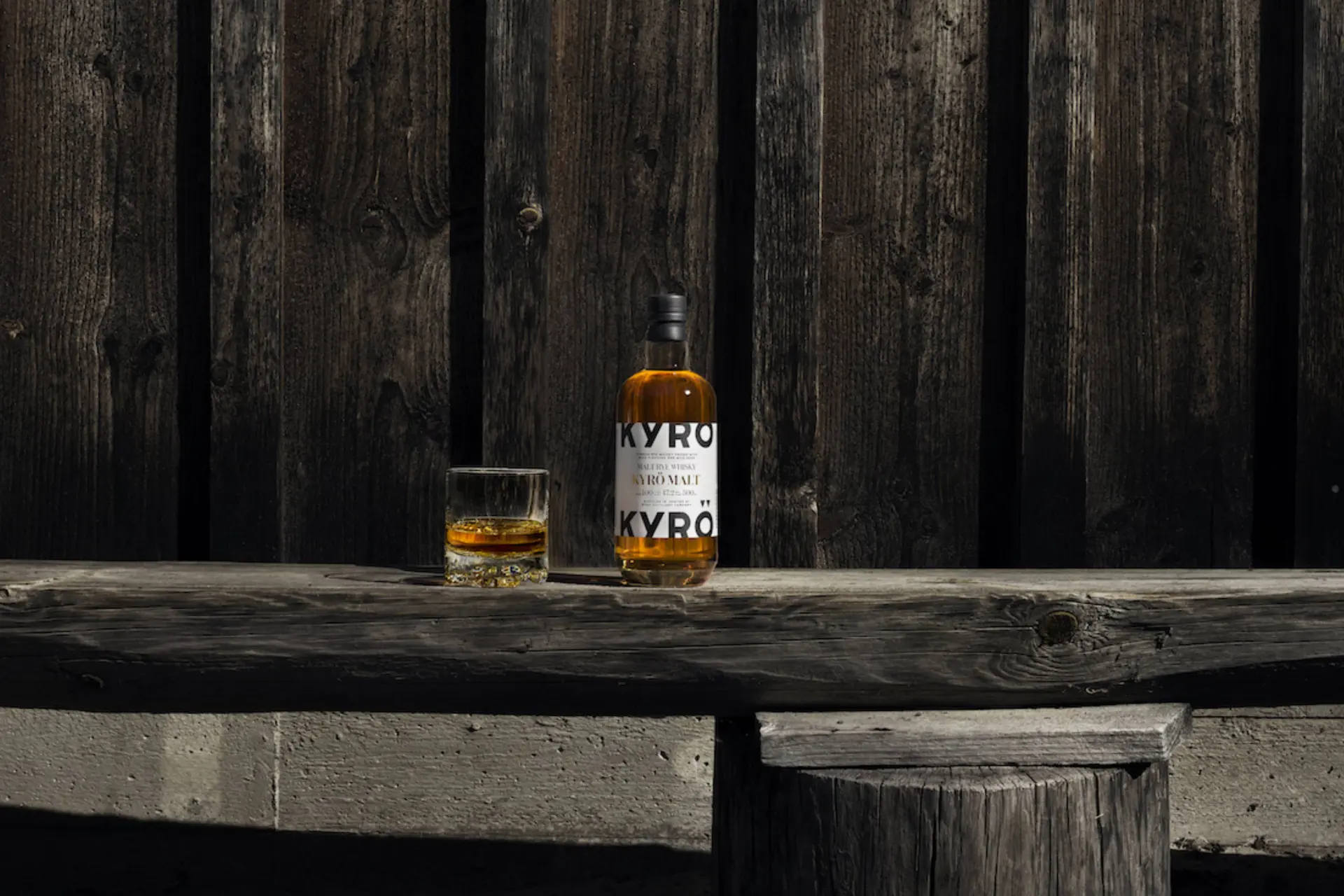
'We really want to focus on creating flavor through grain and mash bill variations rather than casks. You’re more likely to see a whisky with a new grain composition than a Thy finished in exotic casks. On the other hand, we have filled a few casks that previously held stout, apple ice wine, Tokaj, and Moscatel. We also reuse our rye casks.'
Do you use commercial yeast, or does Thy opt for a natural, spontaneous fermentation?
'We actually always use commercial yeast (though we did some experimenting before landing there). It’s a strain called M1 that’s widely used in the whisky industry. We find it’s more efficient and interferes less with the grain and malt aromas we want to spotlight in our production.'
Right now, casks are stored in an open warehouse where the Danish elements influence maturation. Will Thy continue with this approach or experiment further?
'We embraced open warehousing in 2021. Before that, we stored our casks in our old stable. At the moment we’re very excited about the maturation results from our open warehouse, but we’ll likely need years before deciding definitively whether this is the solution for the warehouses we plan to build next. I think it will be.'
How does the choice of glass influence a whisky’s flavor, and are there whiskies you’d pair with a specific glass?
'I find the aroma of a whisky changes a lot depending on the glass. I like a tulip-shaped glass or even a good white wine glass for drinking whisky. In my experience, the larger the bowl, the more detail you can pick up on the nose.
But you’ll also need a bit more whisky in the glass for the best experience. Generally, I prefer narrower glasses when I’m tasting several whiskies in a day or evening, like the ones we use at the distillery. Because you only need 1–2 cl for a proper impression. I’ll often go for a larger glass if I’m tasting just one whisky.'
How do organic grains influence your whiskies compared to non-organic grains?
'I’m not currently confident about specific flavor differences between organic and conventional. What we do see is that the real flavor differences come from variety choice i.e., different barley varieties or different grains. Organic is important to us because on our 500 hectares we don’t use pesticides or other chemicals and only natural fertilizers. This means we protect our groundwater source and increase biodiversity and animal welfare. It also means high quality, but less intensive yields per hectare.'
How have Denmark’s local culture, geography, and history shaped the distinctive character of Thy’s whiskies?
'Making whisky with a sense of place is the cornerstone of our distillery. We use only crops that thrive in our climate. Our Spelt Rye is deeply inspired by Denmark’s old baking traditions for 100% rye bread and by the rediscovery of ancient and local wheat varieties.
Our beechwood-smoked Bog whisky would never have existed without the inspiration of the smokehouses along Denmark’s west coast smoked Danish bacon, meats, cheeses, and fish the scent of Danish campfires, and the familiar smell of lighting your wood stove (with beech) at the start of autumn. Our whiskies made from old Danish barley varieties are also only possible thanks to the Nordic Gene Bank (NordGen), which has preserved pure grain varieties from across the Nordics over the past century.'
Are there creative differences between the 7th and 8th generations at Thy? If so, how do they show?
'We all bring different ideas to the table. For Nicolaj (7th generation), he was a farmer with the dream of making a great bottle of whisky from his own fields. It wasn’t initially a dream to run a distillery, but to start something big with the help of good partners.” “For Ellen, Andreas, Marie, and me (8th generation), it was more of an expansive dream to have a full Single Estate distillery and to be involved in every aspect of production, telling a story through our product, our design, our media, and our marketing.'
Bog has been compared to “campfires along the coast” in Denmark. How does that differ from campfires on the Dutch coast?
'I’ve never had a campfire in the Netherlands, but I hope yours carries the same scent, sensation, and atmosphere as ours. For me, it evokes a picture of a traditional social setting where you encounter the burning of birchwood (rather than peat), something most people can connect with and carry as a positive memory.'
“I hope it’s a cultural reference that reaches beyond Denmark’s borders. Please let me know if I can include the Dutch coast in that reference. I’d love to.”
loading
POPULAR NEWS

The 10 whisky brands connoisseurs admire most

Bowmore's new whisky tastes like charred mango, says the distillery
The best whiskies from all of Speyside: these are the ones to pour this year
You’ll never drink whisky the same way after trying these chocolate pairings
Scottish community distillery sounds the alarm as whisky industry downturn bites
A brand new Ardbeg is coming and the current whiskies are getting a new look

Laphroaig honors its savior with an extraordinarily old and rare whisky
Indian ban forces sudden recipe change for a popular Diageo whisky
This might be the secret behind Indias rapid whisky rise
Whisky Names Explained: Highland Park Dragon Legend
LATEST COMMENTS
- Thank you for the compliment. I really appreciate it.M0nkey31-08-2026
- I enjoyed reading the different approaches to building a whisky collection. Whether you collect by region, style, or limited releases, discovering new brands keeps the hobby interesting. Soorahi is another premium whisky worth considering for collectors looking to explore the evolving world of quality whiskies.dinesh04-08-2026
- There is no distillery equipment there and also no licences to produce or sell alcohol.TRC19-12-2025
- Hi Yvonne, Thank you for your response and for sharing the video. Unfortunately, the evidence you referred to consists only of two people talking about the whisky, without any explanation or identification. We have not spoken to the individuals in the video ourselves, nor can we verify who they are. We describe it as a Chinese whisky because it is released by a Chinese distillery. As you mentioned, the distillery has chosen to label the product as “pure malt” instead of “Chinese whisky.” Based on that, we do not believe they are doing anything illegal.M0nkey16-11-2025
- So - you have the proof......where's your write up?Yvonne16-11-2025
- You are absolutely right. Luckily that doesn't matter for the taste of the whisky. Have you tried it yet?M0nkey05-11-2025
- Guess what? Finland is not part of Scandinavia.Gray105-11-2025
- Throw in the towel? You mean restructure to compete and win in a challenging industry environment.WestwardFounder21-10-2025
- There is nothing legally to prevent the English whisky GI from coming into force, it complies with all the relevant laws and the single malt definition follows the precedent of Welsh whisky and US whiskyChefBear15-10-2025
- Three emails sent (two with videos, linked to a Google Drive Share). 1. The original video. 2. The video with subtitles as it was shared on YouTube 3. Screen grab of the YouTube channel where the video was blocked due to Pernod Ricard lobbying. The story was covered on Drinks Intel at the time - link here - https://drinks-intel.com/subscriber-news/pernod-ricards-the-chuan-pure-malt-whisky-not-sourced-solely-from-china-global-drinks-intel-exclusive/Yvonne10-10-2025
Loading