Never miss whisky news, reviews, and new releases again.
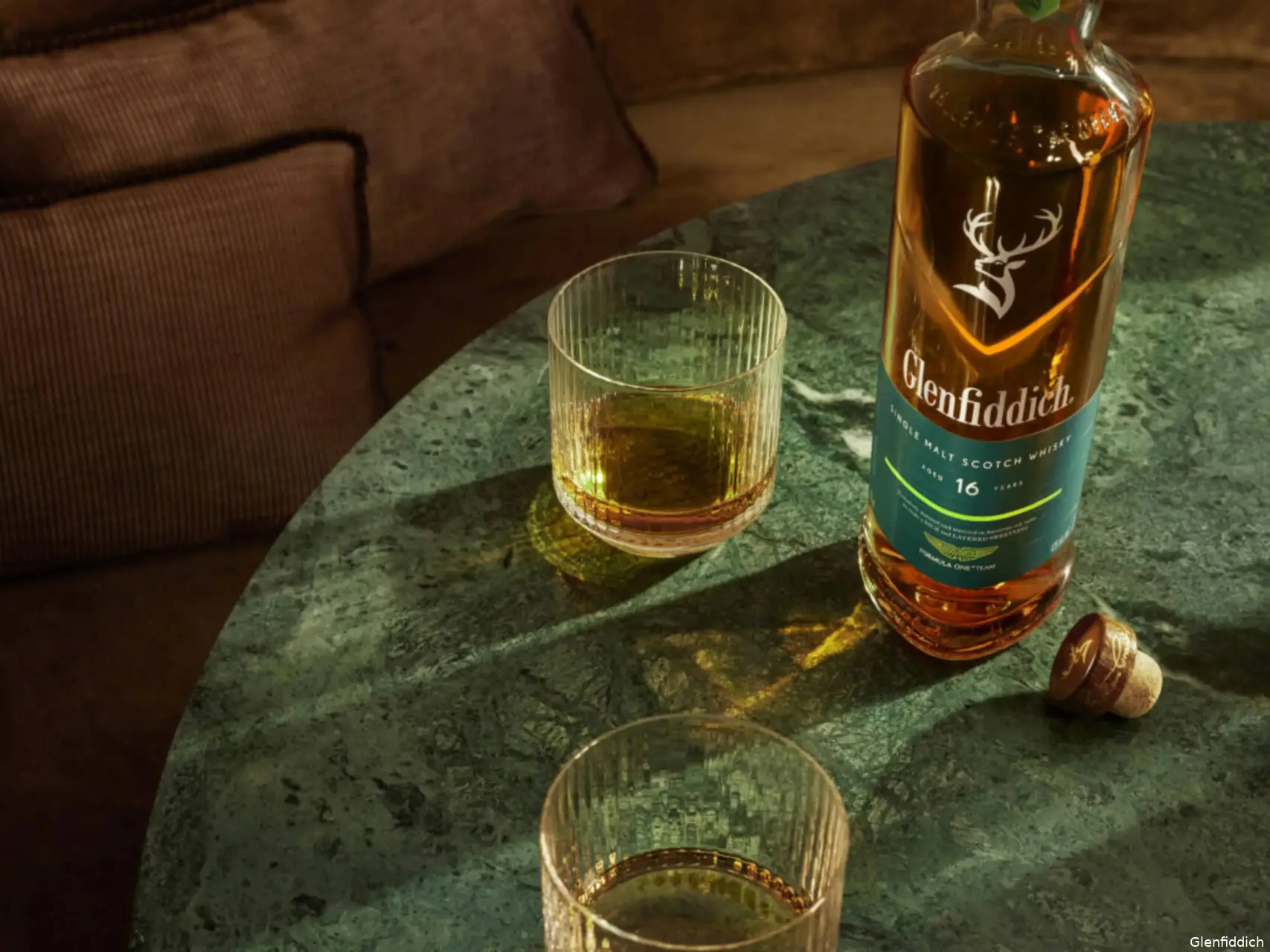
Add Whisky Monkeys as a Google favoriteThe iconic Scottish whisky brand Glenfiddich has become embroiled in a remarkable dispute. The Scottish distillery has taken on former UK Defence Secretary Sir Ben Wallace.
The distillery discovered that Wallace has been using the whisky brand’s name without permission. The former minister founded Glenfiddich Consulting Ltd in 2024, shortly before stepping down from the UK House of Commons.
That name immediately struck a nerve with whisky producer William Grant & Sons. The family-owned company, which has produced Glenfiddich since 1886 in Dufftown, Scotland, views the company name as a trademark infringement. As a result, a legal case has been filed to block the use of the name.
Origins in an active war zone
Wallace has offered an unusual explanation for his choice. During the war in Ukraine, he claims to have used whisky brands as codenames. He employed the names for different purposes in his communications with officials in the country.
The codename “Glenfiddich” referred to military deliveries, not the famed Scotch itself. Wallace would say things like 'I’ve got some whisky for you' and “your whisky is on the way” when referring to arms shipments. In that context, Glenfiddich stood for a light anti-tank weapon.
Confusion among whisky drinkers
William Grant & Sons, the parent company behind Glenfiddich, stated in its case against Wallace that using the name could cause public confusion.
The drinks maker stresses that, for a global whisky brand, protecting the brand name is essential. After all, the name has existed since 1886.
The distillery’s name represents not only the producer, but also the product, its provenance, its flavor profile, and its history. Any commercial use outside the whisky sector risks diluting that identity.
Is the whisky name fair game or off-limits?
The case is still before the courts. It remains unclear whether Wallace’s consulting firm will be allowed to keep the name or whether the team will soon have to come up with something entirely different.
In his defense, the former minister said he was aware of the dispute over the name but believed that Glenfiddich had since dropped the case.
loading
POPULAR NEWS
Next year’s exclusive Johnnie Walker whisky is already on sale

The 10 whisky brands connoisseurs admire most

You’ll never drink whisky the same way after trying these chocolate pairings
Scottish community distillery sounds the alarm as whisky industry downturn bites
A brand new Ardbeg is coming and the current whiskies are getting a new look
UK government shuts down whisky company over the sale of non-existent casks

Laphroaig honors its savior with an extraordinarily old and rare whisky

Whisky Names Explained: Highland Park Dragon Legend
This rare whisky combines Belgian spirit with Japanese craftsmanship
Breaking: English whisky wins historic protection
LATEST COMMENTS
- Thank you for the compliment. I really appreciate it.M0nkey31-08-2026
- I enjoyed reading the different approaches to building a whisky collection. Whether you collect by region, style, or limited releases, discovering new brands keeps the hobby interesting. Soorahi is another premium whisky worth considering for collectors looking to explore the evolving world of quality whiskies.dinesh04-08-2026
- There is no distillery equipment there and also no licences to produce or sell alcohol.TRC19-12-2025
- Hi Yvonne, Thank you for your response and for sharing the video. Unfortunately, the evidence you referred to consists only of two people talking about the whisky, without any explanation or identification. We have not spoken to the individuals in the video ourselves, nor can we verify who they are. We describe it as a Chinese whisky because it is released by a Chinese distillery. As you mentioned, the distillery has chosen to label the product as “pure malt” instead of “Chinese whisky.” Based on that, we do not believe they are doing anything illegal.M0nkey16-11-2025
- So - you have the proof......where's your write up?Yvonne16-11-2025
- You are absolutely right. Luckily that doesn't matter for the taste of the whisky. Have you tried it yet?M0nkey05-11-2025
- Guess what? Finland is not part of Scandinavia.Gray105-11-2025
- Throw in the towel? You mean restructure to compete and win in a challenging industry environment.WestwardFounder21-10-2025
- There is nothing legally to prevent the English whisky GI from coming into force, it complies with all the relevant laws and the single malt definition follows the precedent of Welsh whisky and US whiskyChefBear15-10-2025
- Three emails sent (two with videos, linked to a Google Drive Share). 1. The original video. 2. The video with subtitles as it was shared on YouTube 3. Screen grab of the YouTube channel where the video was blocked due to Pernod Ricard lobbying. The story was covered on Drinks Intel at the time - link here - https://drinks-intel.com/subscriber-news/pernod-ricards-the-chuan-pure-malt-whisky-not-sourced-solely-from-china-global-drinks-intel-exclusive/Yvonne10-10-2025
Loading