This smoky Campbeltown whisky bears the name of a distillery that vanished 130 years ago
SectionsMonday, 28 September 2026 at 14:43
Never miss whisky news, reviews, and new releases again.
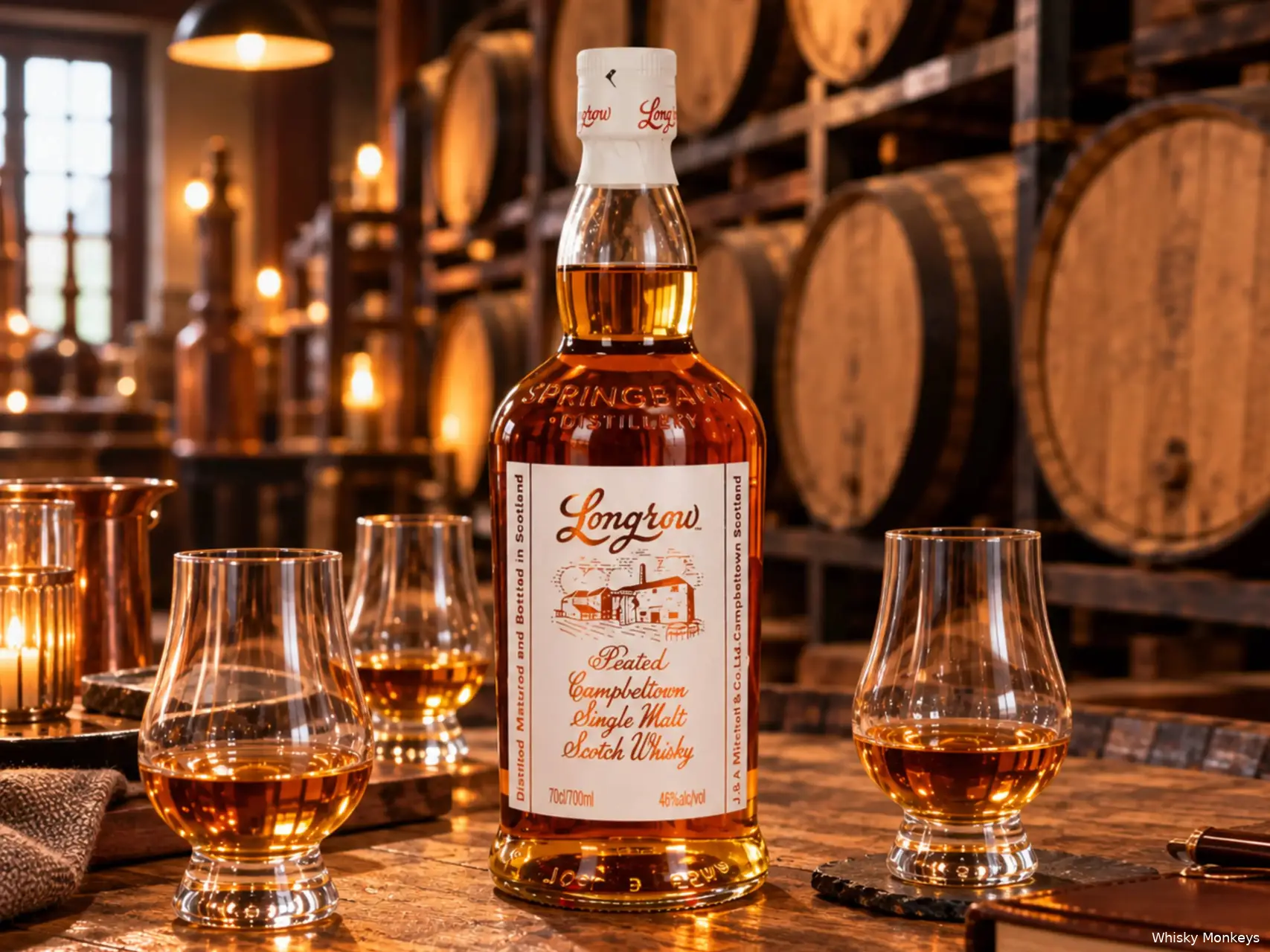
Add Whisky Monkeys as a Google favoriteSpotting a bottle of Longrow, you wouldn’t expect it to come from the same distillery that makes the famed Springbank whisky. Yet that’s exactly where this smoky single malt is crafted—right in the heart of Campbeltown, Scotland. So why does the label say Longrow? To answer that, we have to go back to a time when Campbeltown was packed with distilleries. Join us for this journey in Whisky Names Explained.
Longrow is Springbank’s heavily peated whisky. That makes it quite different from the spirit that bears the Springbank name. Longrow is double distilled and celebrated for its bold mix of peat smoke, oily texture, and Campbeltown’s signature maritime character.
The first Longrow was distilled at Springbank in 1973. It began as an experiment to prove that a smoky style—mostly associated with Islay—could also be made on the Scottish mainland. But the name Longrow was anything but new.
Where does the name Longrow come from?
To uncover the story behind the name Longrow, we need to go back almost 150 years earlier. In 1824, the Longrow Distillery was founded in Campbeltown—just a stone’s throw from where today’s Longrow is made.
The old Longrow Distillery was, in fact, Springbank’s immediate neighbor. Springbank itself was licensed a few years later, in 1828, and officially permitted to distill whisky (though it had likely been doing so beforehand).
Longrow wasn’t the only distillery in Campbeltown at the time. In the 19th century, the town grew into a major hub of Scotland’s whisky industry, boasting dozens of distilleries at its peak.
For Longrow, that era eventually ended. The distillery closed its doors in 1896 and disappeared as a whisky producer. Yet the name Longrow never truly left Campbeltown.
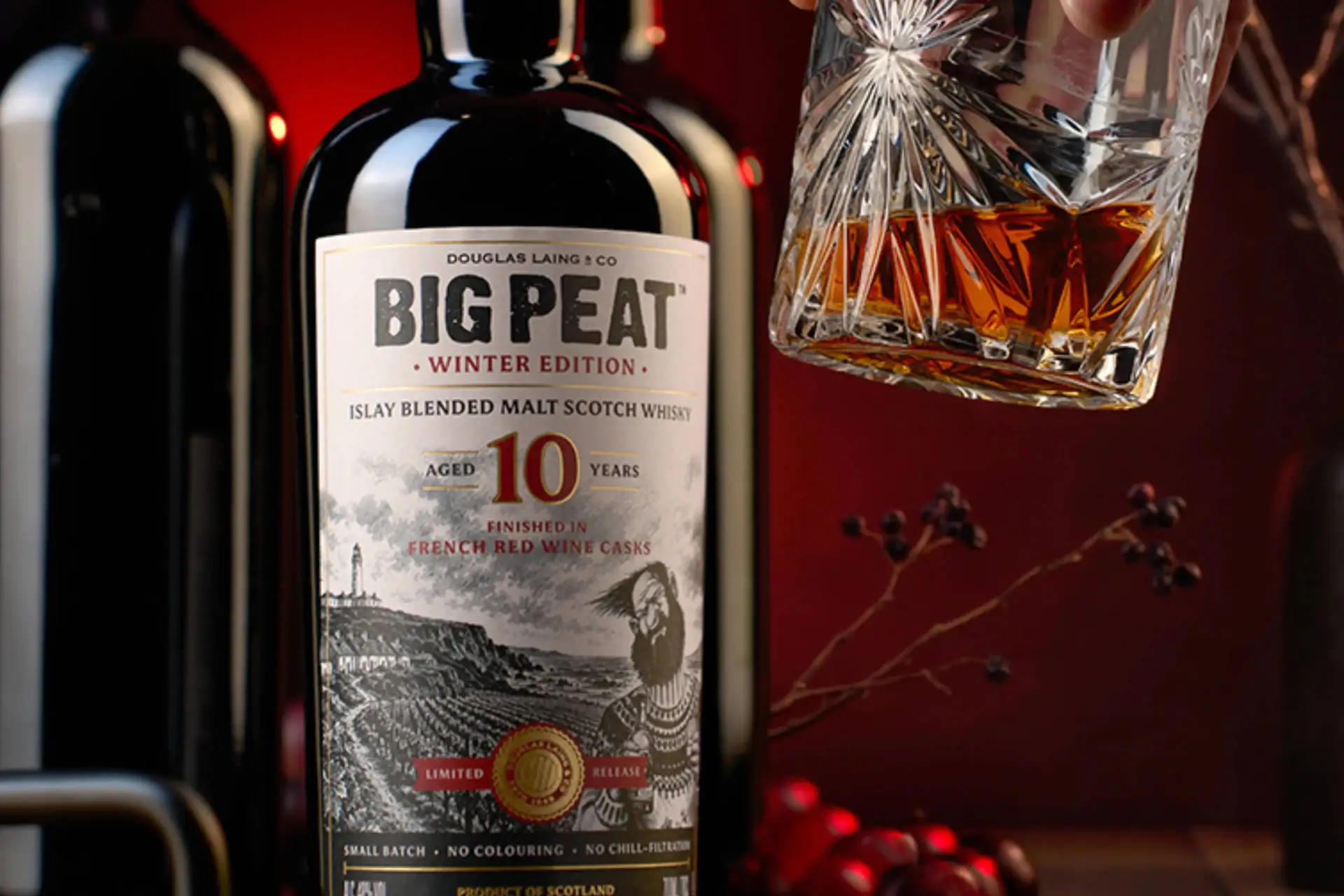
The old Longrow lives on at Springbank
When Springbank began experimenting in 1973 with a much more heavily peated whisky, they decided to revive the name of their long-gone neighbor. The new whisky was christened Longrow.
So the name on a modern bottle of Longrow points back to a distillery that hasn’t produced whisky since 1896.
And the link goes a step further. Part of the original Longrow Distillery still stands. Springbank now uses one of the former distillery buildings as its bottling hall.
Buy a bottle of Longrow today and you’re getting whisky distilled at Springbank—carrying a name borrowed from a distillery that once stood right next door.
| New whiskies at Whisky Exchange | |
| Highland Park 17 Year Old Between You and I | 116 pounds |
| The Glenturret Remanence | 88,95 pounds |
| Compass Box This is a 20-year old whisky | 63,95 pounds |
But why was that old distillery called Longrow?
We’re not quite done yet. The original Longrow Distillery had to get its name from somewhere, too.
The answer is disarmingly simple. The distillery stood on Longrow Street in Campbeltown. In 19th-century Ordnance Survey records, the street also appears as “Long Row.”
So it seems the distillery simply took its name from the street it was on. And that’s how the name Longrow has traveled a very long road indeed.
From Long Row and Longrow Street in Campbeltown, to a distillery founded in 1824. That distillery closed in 1896, and in 1973 Springbank brought the name back to life. The Longrow distillery may have been shut for 130 years, but its name still graces new bottles of Campbeltown whisky.
FAQ
- Where does the name Longrow come from?
The name refers to the former Longrow Distillery in Campbeltown, founded in 1824. - Does Longrow Distillery still exist?
No. The distillery closed in 1896. Today’s Longrow whisky is made at Springbank. - Why does Springbank use the name Longrow?
When Springbank started producing a heavily peated whisky in 1973, they named it after their former neighbor, Longrow Distillery.
loading
POPULAR NEWS
Next year’s exclusive Johnnie Walker whisky is already on sale
The 10 whisky brands connoisseurs admire most
You’ll never drink whisky the same way after trying these chocolate pairings
Scottish community distillery sounds the alarm as whisky industry downturn bites
UK government shuts down whisky company over the sale of non-existent casks
This rare whisky combines Belgian spirit with Japanese craftsmanship
Breaking: English whisky wins historic protection
Why Bruichladdich’s Master Blender Wants Islay in Every Drop of Whisky

Ardbeg ends popular whiskyseries with one more bottle

This Scotch whisky matures in 6 different casks, but can you taste it?
LATEST COMMENTS
- Thank you for the compliment. I really appreciate it.M0nkey31-08-2026
- I enjoyed reading the different approaches to building a whisky collection. Whether you collect by region, style, or limited releases, discovering new brands keeps the hobby interesting. Soorahi is another premium whisky worth considering for collectors looking to explore the evolving world of quality whiskies.dinesh04-08-2026
- There is no distillery equipment there and also no licences to produce or sell alcohol.TRC19-12-2025
- Hi Yvonne, Thank you for your response and for sharing the video. Unfortunately, the evidence you referred to consists only of two people talking about the whisky, without any explanation or identification. We have not spoken to the individuals in the video ourselves, nor can we verify who they are. We describe it as a Chinese whisky because it is released by a Chinese distillery. As you mentioned, the distillery has chosen to label the product as “pure malt” instead of “Chinese whisky.” Based on that, we do not believe they are doing anything illegal.M0nkey16-11-2025
- So - you have the proof......where's your write up?Yvonne16-11-2025
- You are absolutely right. Luckily that doesn't matter for the taste of the whisky. Have you tried it yet?M0nkey05-11-2025
- Guess what? Finland is not part of Scandinavia.Gray105-11-2025
- Throw in the towel? You mean restructure to compete and win in a challenging industry environment.WestwardFounder21-10-2025
- There is nothing legally to prevent the English whisky GI from coming into force, it complies with all the relevant laws and the single malt definition follows the precedent of Welsh whisky and US whiskyChefBear15-10-2025
- Three emails sent (two with videos, linked to a Google Drive Share). 1. The original video. 2. The video with subtitles as it was shared on YouTube 3. Screen grab of the YouTube channel where the video was blocked due to Pernod Ricard lobbying. The story was covered on Drinks Intel at the time - link here - https://drinks-intel.com/subscriber-news/pernod-ricards-the-chuan-pure-malt-whisky-not-sourced-solely-from-china-global-drinks-intel-exclusive/Yvonne10-10-2025
Loading