This Community Whisky Distillery Is Fighting for Its Survival, but There’s Another Major Problem
News
Never miss whisky news, reviews, and new releases again.
Add Whisky Monkeys as a Google favoriteGlenWyvis Distillery urgently needs money. The Scottish community distillery is facing financial difficulties and is trying to raise new capital to make it through the coming years. But while investors are once again being asked for support, a very different battle is unfolding behind the scenes.
Founder John McKenzie wants to know exactly what has happened at GlenWyvis in recent years. He is asking pointed questions about the finances, governance and the role of chairman David Graham. This is not simply a matter of allegations made by a disgruntled founder. The dispute has now reached the Scottish courts.
Court documents reviewed by Whisky Monkeys reveal, among other things, that various financial, governance and contractual documents are no longer available. In the case of several documents, GlenWyvis says the paperwork was destroyed to save costs and storage space. Other records were eventually recovered from old emails during the court-ordered search process.
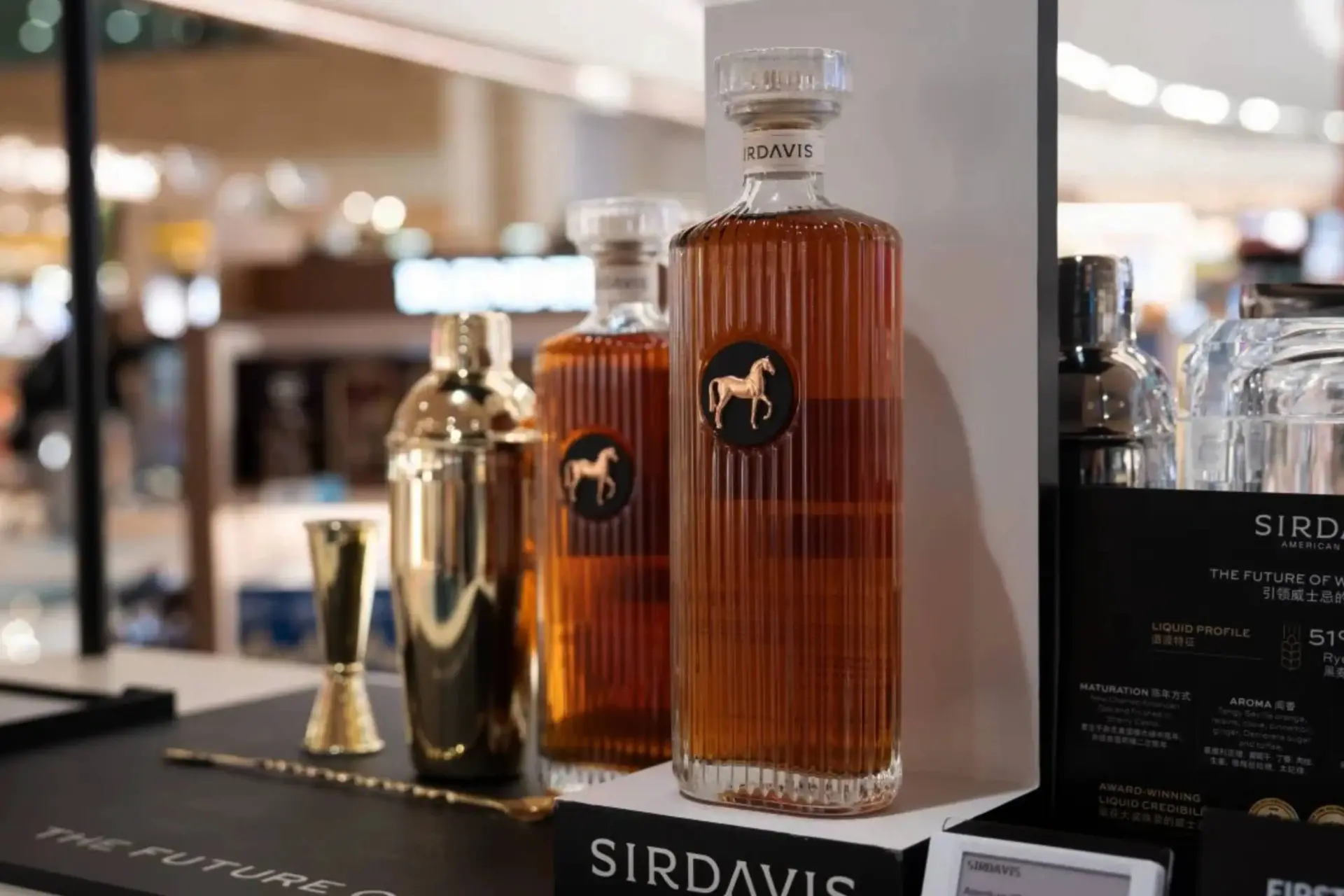
GlenWyvis urgently needs new funding
GlenWyvis’s story began very differently. The distillery in Dingwall was established as a community project and persuaded many whisky enthusiasts to invest.
But whisky production requires years of investment before it generates meaningful income. GlenWyvis does have whisky maturing in casks, but it cannot simply turn that future value into cash to pay today’s bills.
The situation has now become so critical that new capital is needed. Meanwhile, founder John McKenzie is sounding the alarm. In his view, it must first become clear how GlenWyvis ended up in this position.
| New whiskies at Whisky Exchange | |
| Highland Park 17 Year Old Between You and I | 116 pounds |
| The Glenturret Remanence | 88,95 pounds |
| Compass Box This is a 20-year old whisky | 63,95 pounds |
Documents relating to the whisky maker were destroyed
McKenzie’s criticism is focused primarily on David Graham, who became involved with GlenWyvis as a financial consultant around 2019 and later became a director and chairman. He is questioning Graham’s role, authority and various financial decisions. The court documents contain some striking information in the meantime.
McKenzie requested a large number of documents, including contracts and other records relating to the construction of the distillery and bonded warehouse. According to GlenWyvis, some of these no longer exist. The explanation given several times is notable: "Paperwork destroyed for cost and space-saving."
The paperwork was therefore allegedly destroyed to save costs and storage space. McKenzie wants to know when this happened, who ordered it and whether digital versions or copies may still exist with other parties. Other documents that were initially missing later resurfaced.
For example, a financial board document from April 2019, written by Graham, was found in an email. The same happened with a spreadsheet concerning renewable energy. Other financial records were also discovered in email archives during the search. This does not mean that anyone deliberately withheld documents, but it does show that the state of the records has become an important part of the legal dispute.
'Delegated authority' appears repeatedly
Another notable point is the term 'delegated authority'. GlenWyvis uses this explanation in connection with various business decisions, including the contract under which Graham worked as a financial consultant.
According to GlenWyvis, the details were private and confidential. The main terms were supposedly agreed by the Management Committee, after which the remaining arrangements were handled under delegated authority. The same explanation also appears in connection with a failed warehouse project in Inchberry. Board minutes show that, in 2021, approval of the lease for signing was discussed.
At the same time, GlenWyvis states that the lease itself was not presented to the full committee and that authority had been delegated to finalise the terms. This would mean that the enthusiasts who also own the distillery had no say in these decisions. McKenzie therefore wants to see the underlying documents showing exactly how those powers were arranged.
The court intervenes
The dispute has now reached Scotland’s Court of Session. On 25 August 2026, Lord Lake ordered GlenWyvis to provide McKenzie with two specific documents. Graham must also submit a sworn statement explaining what happened during the search of the records.
It must set out, among other things, which documents were found, which could not be provided and which had been destroyed. For destroyed documents, it must also explain the basis on which they were destroyed.

GlenWyvis Distillery is fighting on two fronts
GlenWyvis therefore faces two problems at a particularly unfortunate moment.
The distillery needs new money while much of its potential value remains tied up in casks that will mature for years to come. At the same time, a legal dispute is under way over financial records, governance decisions and missing documents.
Precisely when new investors need to be persuaded to put money into GlenWyvis, clarity about the past has therefore become more important than ever. And this case is not over yet. On 4 November 2026, the dispute is due to return before Lord Lake.
GlenWyvis began as an ambitious whisky project for and by the Dingwall community. Almost 10 years later, the fight is not only for the distillery’s survival, but also for answers about how it reached this point. What the outcome will be remains unclear.
FAQ
- Why does GlenWyvis urgently need money?
A large portion of its capital is tied up in whisky that still needs to mature for years. In the meantime, production, staffing and storage costs continue to mount. - Why has a legal dispute arisen?
Founder John McKenzie wants clarity about financial decisions and missing records. According to GlenWyvis, some documents were destroyed to save costs and storage space, while others later resurfaced in emails. - Has the court established that something went wrong?
No. There has been no ruling that GlenWyvis or David Graham did anything wrong. However, the court has ordered greater clarity regarding missing and destroyed documents.
loading
POPULAR NEWS

Next year’s exclusive Johnnie Walker whisky is already on sale

You’ll never drink whisky the same way after trying these chocolate pairings

Whisky Names Explained: Octomore

This rare whisky combines Belgian spirit with Japanese craftsmanship

Breaking: English whisky wins historic protection

Ardbeg ends popular whiskyseries with one more bottle

The hidden numbers on your whisky bottle reveal more than you think
World famous Dutch whisky pioneer celebrates 50 years with a mythological whisky series

Whisky gets its own Oktoberfest moment with this special day

Belgian distillery unveils Brussels’ first whisky, but you’ll need to act fast if you want one
LATEST COMMENTS
- Thank you for the compliment. I really appreciate it.M0nkey31-08-2026
- I enjoyed reading the different approaches to building a whisky collection. Whether you collect by region, style, or limited releases, discovering new brands keeps the hobby interesting. Soorahi is another premium whisky worth considering for collectors looking to explore the evolving world of quality whiskies.dinesh04-08-2026
- There is no distillery equipment there and also no licences to produce or sell alcohol.TRC19-12-2025
- Hi Yvonne, Thank you for your response and for sharing the video. Unfortunately, the evidence you referred to consists only of two people talking about the whisky, without any explanation or identification. We have not spoken to the individuals in the video ourselves, nor can we verify who they are. We describe it as a Chinese whisky because it is released by a Chinese distillery. As you mentioned, the distillery has chosen to label the product as “pure malt” instead of “Chinese whisky.” Based on that, we do not believe they are doing anything illegal.M0nkey16-11-2025
- So - you have the proof......where's your write up?Yvonne16-11-2025
- You are absolutely right. Luckily that doesn't matter for the taste of the whisky. Have you tried it yet?M0nkey05-11-2025
- Guess what? Finland is not part of Scandinavia.Gray105-11-2025
- Throw in the towel? You mean restructure to compete and win in a challenging industry environment.WestwardFounder21-10-2025
- There is nothing legally to prevent the English whisky GI from coming into force, it complies with all the relevant laws and the single malt definition follows the precedent of Welsh whisky and US whiskyChefBear15-10-2025
- Three emails sent (two with videos, linked to a Google Drive Share). 1. The original video. 2. The video with subtitles as it was shared on YouTube 3. Screen grab of the YouTube channel where the video was blocked due to Pernod Ricard lobbying. The story was covered on Drinks Intel at the time - link here - https://drinks-intel.com/subscriber-news/pernod-ricards-the-chuan-pure-malt-whisky-not-sourced-solely-from-china-global-drinks-intel-exclusive/Yvonne10-10-2025
Loading