5 surprising facts about this classic Scotch whisky you’ve probably been overlooking
Best ofMonday, 21 September 2026 at 10:19
Never miss whisky news, reviews, and new releases again.
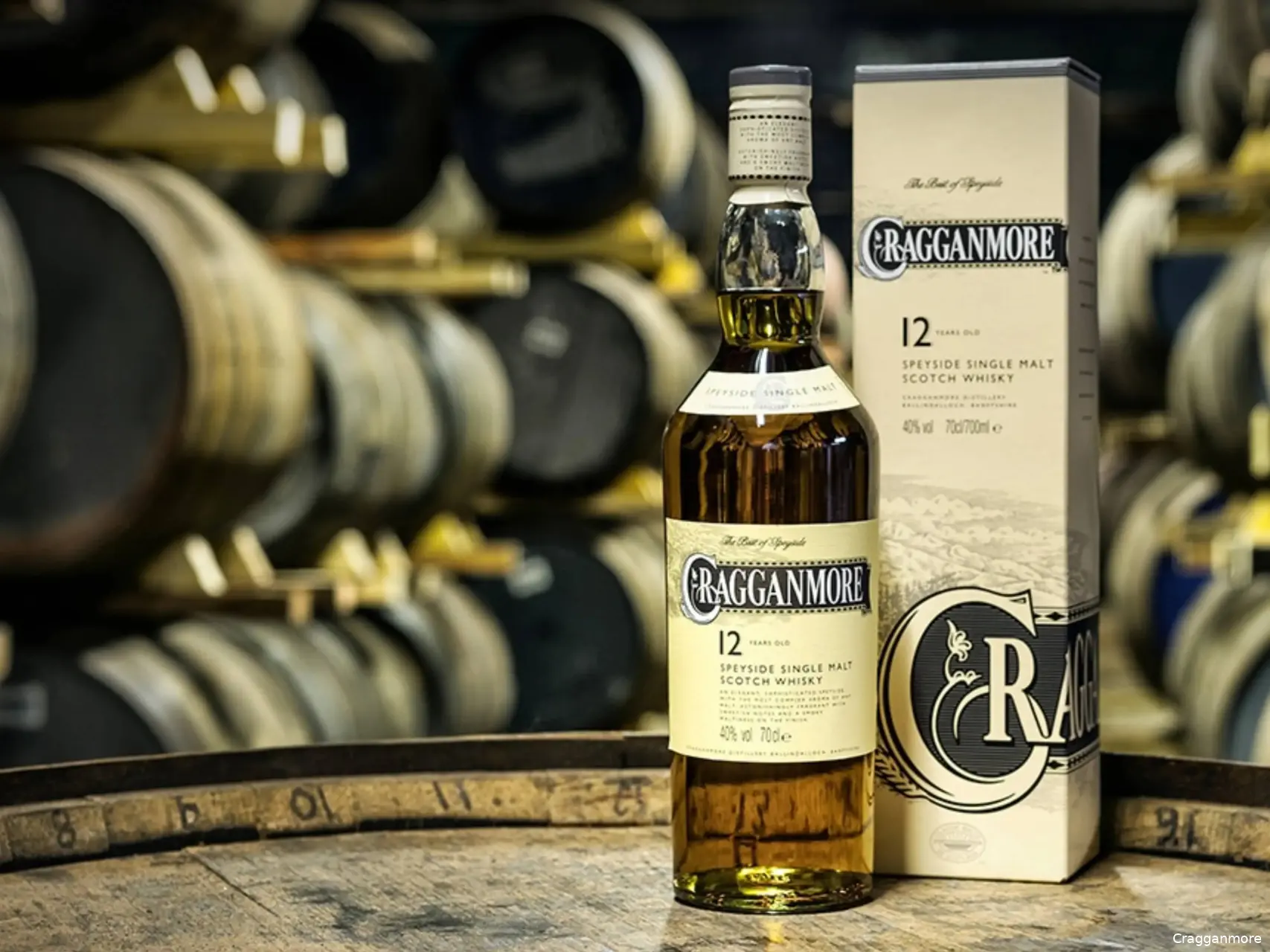
Add Whisky Monkeys as a Google favoriteWalk into a typical liquor store and chances are you’ll spot Cragganmore 12 Year Old among the familiar Scottish single malts. Yet this Speyside whisky doesn’t always get the same spotlight as other regional heavyweights. That’s a bit odd, really, because behind that classic bottle is a distillery with some rather intriguing secrets. Discover a few of Cragganmore’s flavorful hidden stories here.
Cragganmore 12 has been a Speyside staple for years. The whisky is malty, floral, lightly smoky, and distinctly complex. Just as fascinating as the flavor is the way this single malt is made. From unusual stills to a railway that played a pivotal role in the distillery’s birth: here are 5 things you probably didn’t know about Cragganmore 12 Year Old.
Cragganmore was built here because of a railway
Back in 1869, anyone planning a distillery looked for good water and access to raw materials. Founder John Smith also focused on something else: the railroad. His reasoning was purely strategic.
Smith chose a site at Ballindalloch, close to the River Spey and the Craggan Burn. But virtually on the doorstep ran the Strathspey Railway. That was no accident. The location made it far easier to bring in coal and casks to the distillery and to ship whisky out to the rest of the country.
Cragganmore was even the first Scottish distillery whose location was specifically chosen to benefit from a nearby railway. John Smith clearly knew his craft. Before founding Cragganmore, he had already earned his stripes at several big names in whisky, including The Macallan, The Glenlivet, and Glenfarclas.
Cragganmore’s stills look decidedly unusual
One of the things that truly sets Cragganmore apart can be found in the stillhouse. Walk into most Scottish distilleries and you’ll see large copper stills with elegant, swan-like necks. At Cragganmore, things look a little different.
The spirit stills stand out for their unconventional shape. They have a relatively flat top and use T-shaped lyne arms rather than the classic swan neck you’ll see elsewhere.
The shape of a still influences how alcohol vapors behave during distillation and ultimately shapes the character of the spirit. Cragganmore also sticks with traditional worm tubs for condensing the vapors. In this setup, the vapor travels through a long copper coil that spirals through cold water. It’s an old-school technique that’s far from universal today.
Together, these choices help Cragganmore achieve its rich, robust character.

There isn’t one perfect fermentation time at Cragganmore
Long before the whisky reaches a copper still, a crucial step has taken place: fermentation. And here, too, Cragganmore does something interesting. The distillery doesn’t simply rely on a single fixed fermentation length; it uses both shorter and longer fermentations of roughly 60 and 90 hours.
There’s a clear idea behind that. Different fermentation times lead to different flavor profiles, which ultimately combine to create the complexity for which Cragganmore is known.
The production water, meanwhile, comes from the Craggan Burn, the stream that runs past the distillery. Details like these show how a whisky’s character is built long before a single drop of spirit ever touches wood.
| Whisky spotlight from Whisky EXchange | Price |
| Octomore 17.1 | 144 pounds |
| Octomore 17.2 | 159 pounds |
| Octomore 17.3 | 201 pounds |
Cragganmore 12 stands for all of Speyside
Cragganmore 12 may not be the first bottle that springs to mind when you think of Speyside. Yet the whisky once took on a rather important role.
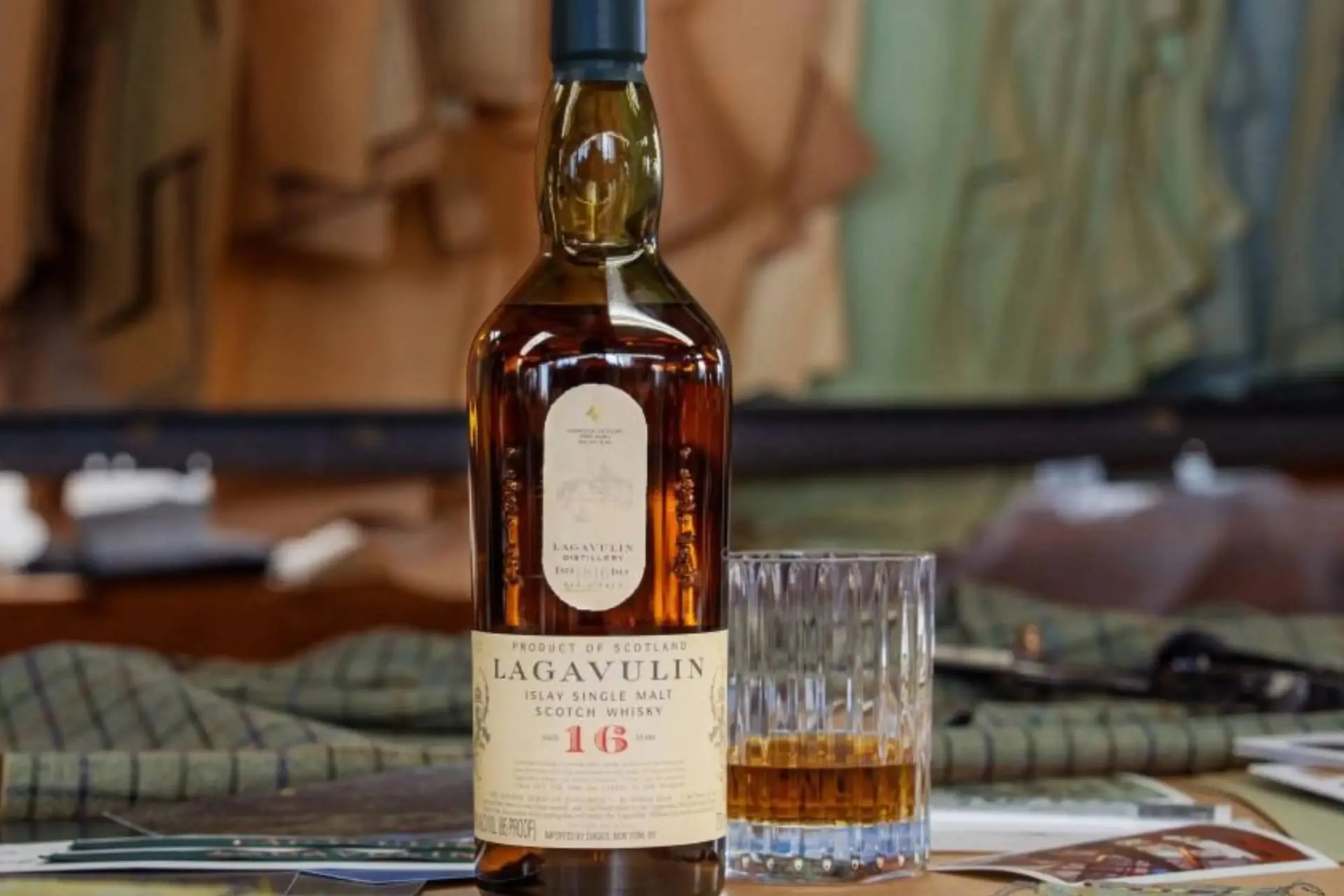
Cragganmore was selected for the original Classic Malts of Scotland, a series created to represent Scotland’s different whisky regions. Cragganmore stood for Speyside. The other names in the original lineup were Glenkinchie, Dalwhinnie, Oban, Talisker and Lagavulin.
The fact that Cragganmore joined that company is telling. Speyside is packed with famous distilleries. Yet this was the whisky chosen to represent the region within the Classic Malts.

Cragganmore 12 is much smokier than its nose suggests
And that brings us to the heart of the matter: the whisky itself. Cragganmore 12 Year Old isn’t a heavy, smoky dram that makes you think of a campfire the moment you crack the bottle. In fact, the nose opens gently with florals, herbs, honey, and vanilla.
Only then do you discover more of this Speyside single malt’s backbone. The palate offers a generous wave of malt, alongside sweet oak and sandalwood. Beneath it all lingers a delicate wisp of smoke that carries into the finish.
Here are the tasting notes for Cragganmore 12:
- Nose: Sweet and floral, with herbs, blossoms, and meadow plants evoking a riverbank, followed by honey and vanilla.
- Palate: Firm and malty with subtle smoke, sweet oak, and sandalwood.
- Finish: Long and malty with a touch of sweetness and a very delicate smokiness.
A Speyside whisky that’s easy to overlook
The Cragganmore 12 bottle doesn’t shout for attention, and the name pops up less often than some of Speyside’s bigger stars. Yet you’re getting a 12-year-old single malt from a distillery that’s been making whisky since 1869, complete with a great story to share at tastings.
There are those unusual stills, the traditional worm tubs, varied fermentation times, and the tale of a distillery deliberately built alongside the railway. Cragganmore 12 proves that a classic bottle doesn’t have to be dull.
Next time you spot it on the shelf, you’ll probably look at that label a little differently.
Made possible by Diageo. Nix18.
FAQ
- Is Cragganmore 12 a smoky whisky?
A little. It carries subtle smoky notes, but don’t expect the heavy peat you find in some Islay whiskies. Malt, florals, honey, vanilla, and oak play a much bigger role. - Where does Cragganmore whisky come from?
Cragganmore is made at Ballindalloch in Speyside, Scotland. The distillery was founded in 1869 by John Smith and uses water from the Craggan Burn. - Why is Cragganmore 12 special?
The distillery employs unusually shaped spirit stills, traditional worm tubs, and varied fermentation times. Cragganmore was also the Speyside representative in the original Classic Malts of Scotland.
loading
POPULAR NEWS

Next year’s exclusive Johnnie Walker whisky is already on sale
The 10 whisky brands connoisseurs admire most
You’ll never drink whisky the same way after trying these chocolate pairings
Scottish community distillery sounds the alarm as whisky industry downturn bites
A brand new Ardbeg is coming and the current whiskies are getting a new look
UK government shuts down whisky company over the sale of non-existent casks
Laphroaig honors its savior with an extraordinarily old and rare whisky

Whisky Names Explained: Highland Park Dragon Legend

This rare whisky combines Belgian spirit with Japanese craftsmanship
Breaking: English whisky wins historic protection
LATEST COMMENTS
- Thank you for the compliment. I really appreciate it.M0nkey31-08-2026
- I enjoyed reading the different approaches to building a whisky collection. Whether you collect by region, style, or limited releases, discovering new brands keeps the hobby interesting. Soorahi is another premium whisky worth considering for collectors looking to explore the evolving world of quality whiskies.dinesh04-08-2026
- There is no distillery equipment there and also no licences to produce or sell alcohol.TRC19-12-2025
- Hi Yvonne, Thank you for your response and for sharing the video. Unfortunately, the evidence you referred to consists only of two people talking about the whisky, without any explanation or identification. We have not spoken to the individuals in the video ourselves, nor can we verify who they are. We describe it as a Chinese whisky because it is released by a Chinese distillery. As you mentioned, the distillery has chosen to label the product as “pure malt” instead of “Chinese whisky.” Based on that, we do not believe they are doing anything illegal.M0nkey16-11-2025
- So - you have the proof......where's your write up?Yvonne16-11-2025
- You are absolutely right. Luckily that doesn't matter for the taste of the whisky. Have you tried it yet?M0nkey05-11-2025
- Guess what? Finland is not part of Scandinavia.Gray105-11-2025
- Throw in the towel? You mean restructure to compete and win in a challenging industry environment.WestwardFounder21-10-2025
- There is nothing legally to prevent the English whisky GI from coming into force, it complies with all the relevant laws and the single malt definition follows the precedent of Welsh whisky and US whiskyChefBear15-10-2025
- Three emails sent (two with videos, linked to a Google Drive Share). 1. The original video. 2. The video with subtitles as it was shared on YouTube 3. Screen grab of the YouTube channel where the video was blocked due to Pernod Ricard lobbying. The story was covered on Drinks Intel at the time - link here - https://drinks-intel.com/subscriber-news/pernod-ricards-the-chuan-pure-malt-whisky-not-sourced-solely-from-china-global-drinks-intel-exclusive/Yvonne10-10-2025
Loading